In the shadowy corners of Greek mythology, one goddess stands apart from the others—not for ruling the sky or sea, but for guiding souls through darkness and mystery. Her name is Hecate (pronounced HEK-uh-tee), and she is the goddess of magic, witchcraft, night, ghosts, and crossroads.
Unlike the Olympians, Hecate walks between worlds—of life and death, light and dark, seen and unseen.
Who Is Hecate in Greek Mythology?
Hecate is an ancient goddess, older than even some of the Olympians. She is often described as a Titaness, yet she was honored and allowed to remain after the Titanomachy, the war between Titans and Olympians.
She is the goddess of sorcery, necromancy, moonlight, spirits, and transitions. While other gods ruled over physical elements, Hecate was given power over the hidden forces of the world.
In myths, she helps Persephone travel to and from the underworld and is often called upon in rituals, spells, and protection charms.
Read more: Hera in Greek Mythology: Queen of the Gods
Hecate Greek Mythology Pronunciation
The name Hecate can be tricky to say. The most common pronunciation in English is: HEK-uh-tee (three syllables)
In Ancient Greek, it may have sounded closer to HE-ka-tay. Knowing how to say her name properly shows respect for her ancient roots and helps connect more deeply with her mythology.
What Does Hecate Look Like in Greek Mythology?
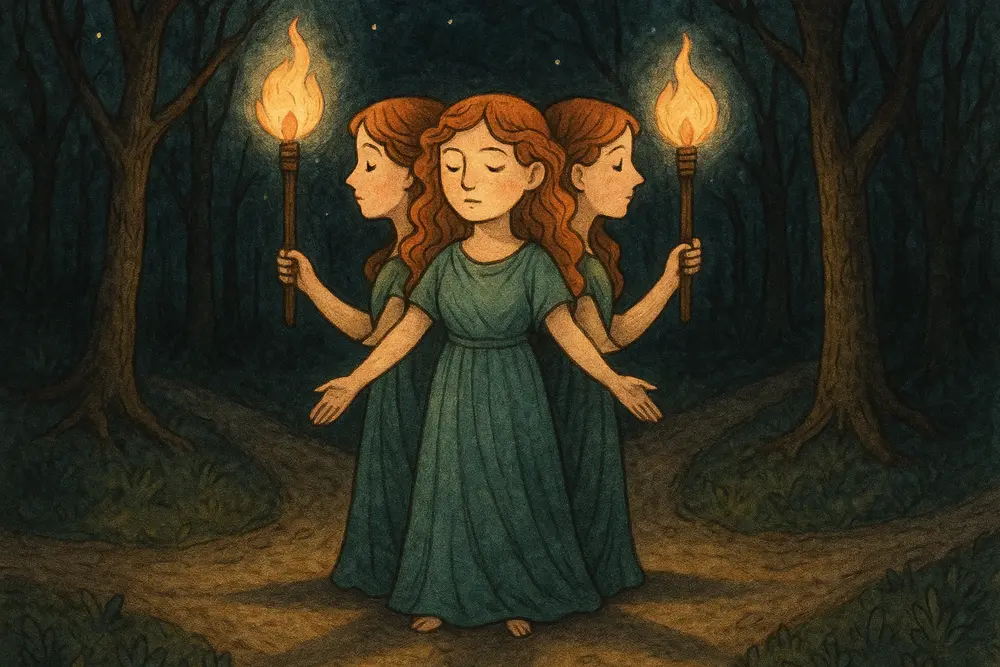
Hecate’s appearance is both striking and mystical. She is usually shown in three forms at once—a triple goddess, facing three directions. This represents her control over the past, present, and future, and her watch over crossroads.
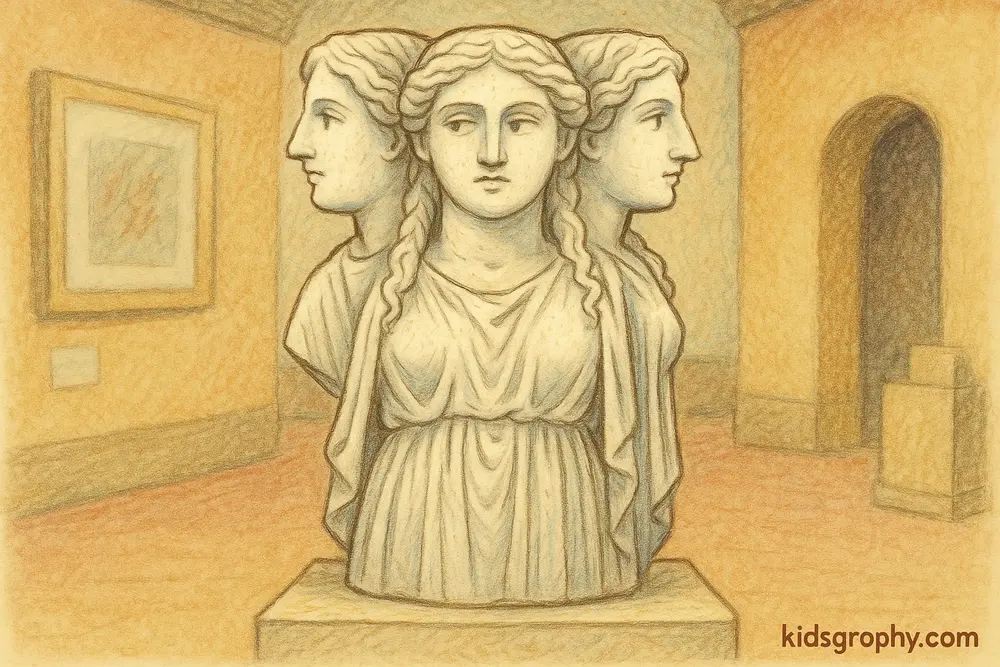
Some features often associated with Hecate include:
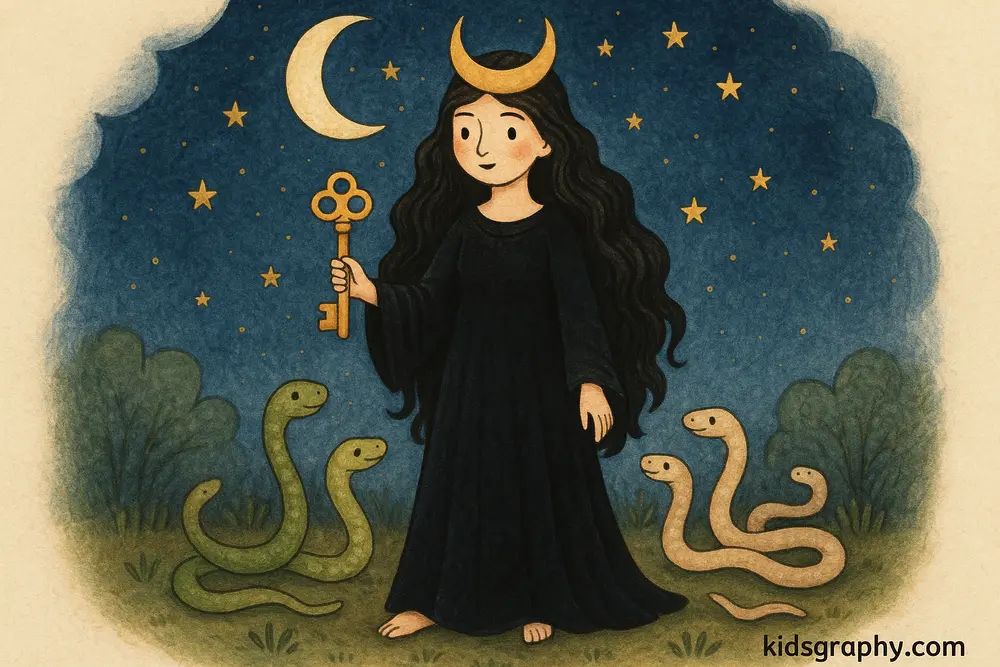
- A long black cloak or robes
- Torches in each hand, lighting dark paths
- A crown shaped like the moon
- Snakes, dogs, or keys as companions or symbols
- Sometimes, a ghostly or shadowy glow around her
In ancient statues and pottery, Hecate is often shown with three bodies or three faces, symbolizing her role as guardian of thresholds and choices.
Read More: Cronus in Greek Mythology: Titan of Time and Power
Symbols and Powers of Hecate
Hecate’s powers are unique and mysterious. She is not a loud or dramatic goddess like Zeus or Ares. Instead, her magic is quiet, deep, and powerful. She rules over:
- Crossroads (where paths meet or change)
- Spells and witchcraft
- Ghosts and spirits
- The moon and night
- Herbal medicine and potions
Her most sacred symbols include:
- Torches – guiding light in the dark
- Keys – opening hidden doors and gates
- Snakes and dogs – loyal companions and guardians
- The moon – especially the dark or waning moon
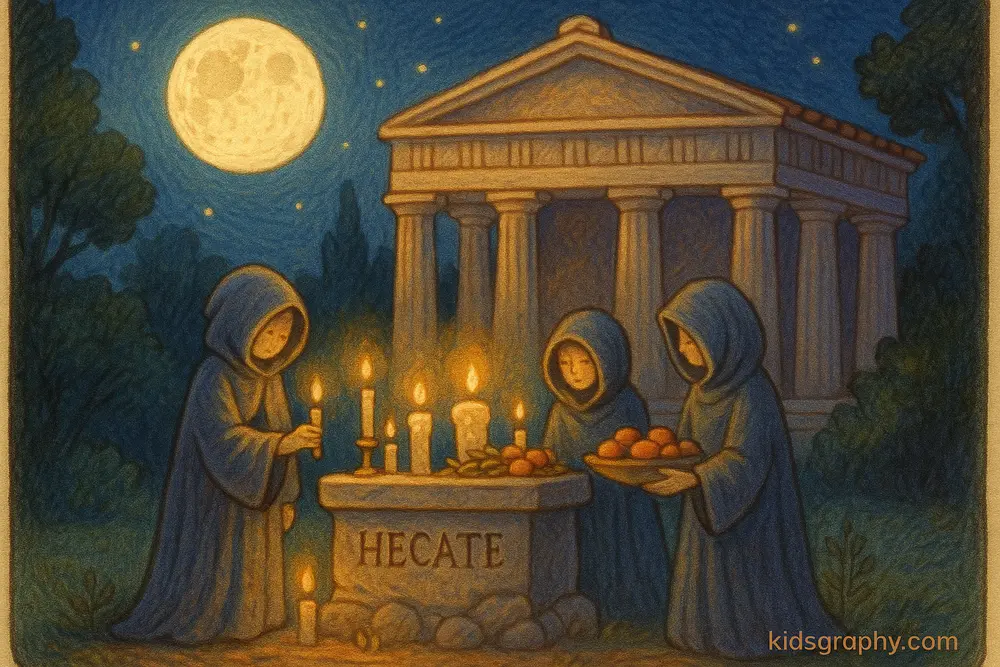
Witches and priestesses often prayed to Hecate during midnight rituals, asking for guidance, wisdom, and protection from evil spirits.
Read More: Chaos in Greek Mythology: The First Being of Creation
Hecate’s Role in the Underworld
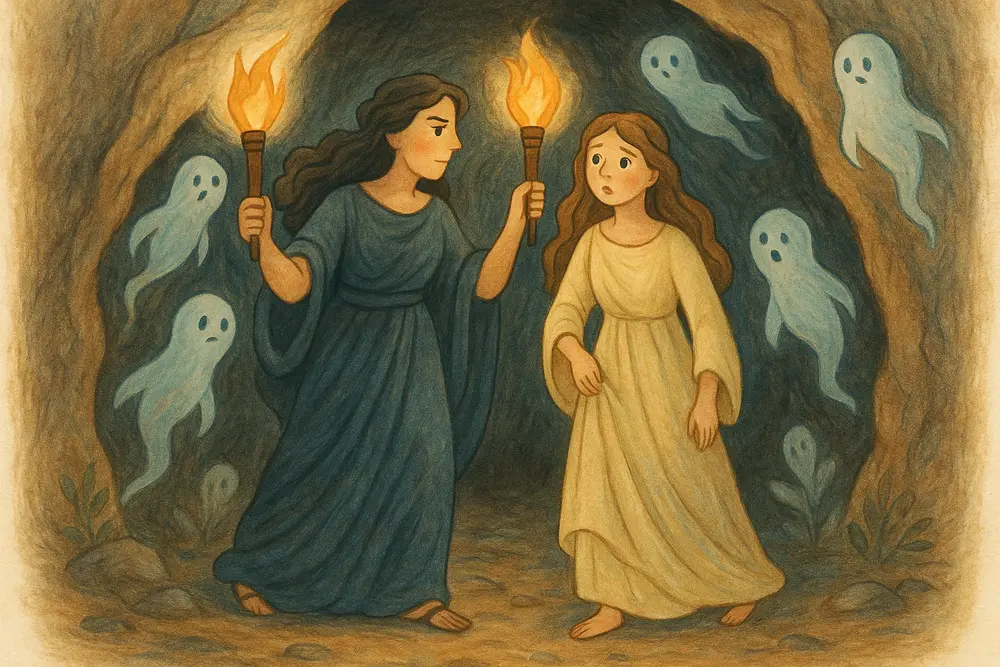
One of Hecate’s most important myths involves Persephone, the daughter of Demeter, who was taken by Hades into the underworld.
When Persephone vanished, Hecate helped Demeter search for her. Later, Hecate became Persephone’s trusted companion, guiding her to and from the land of the dead each year.
Because of this, Hecate is deeply connected to the underworld. But unlike Hades, she is not a ruler of the dead—she is a guide and protector between worlds.
Hecate’s Worship and Legacy
Hecate was worshipped widely across Thessaly, Asia Minor, and Athens. People left offerings at crossroads—often food, candles, or small statues—to honor her.
She was especially loved by:
- Women seeking strength and independence
- Travelers at night
- Witches and healers
- Those mourning the dead or dealing with loss
In modern times, Hecate remains a powerful symbol in neo-paganism, Wicca, and spiritual circles. She represents intuition, protection, and transformation.
Final Thoughts: Why Hecate Still Matters
Hecate in Greek mythology is not a goddess of war, beauty, or thunder. She is a goddess of the in-between—the dark paths we walk when we are changing, grieving, growing, or deciding.
She reminds us that there is strength in shadow, and that wisdom often comes from silence and stillness.
More Stories: Greek Mythology
FAQ: Hecate in Greek Mythology
Hecate is the goddess of magic, crossroads, the night, ghosts, and witchcraft. She is known for guiding souls and holding deep spiritual power.
Hecate is usually pronounced “HEK-uh-tee” in English, with three syllables. In Ancient Greek, it may have sounded like “HE-ka-tay.”
She often appears with three faces or three bodies, holding torches, keys, or a sickle. She is usually dressed in dark robes and linked to the moon.
Her key symbols include torches, keys, snakes, dogs, and the moon. These represent her powers of guidance, protection, and mystery.
Hecate was neither fully good nor evil. She protected people from harm but was also feared because of her connection to spirits and the underworld.