In the ancient world of Greek mythology, where Titans clashed with gods and legends filled the skies, one powerful figure quietly shaped the destiny of Mount Olympus. Her name was Rhea—a Titaness, a mother, and a protector of future gods.
Though not as loud or vengeful as others, Rhea played a key role in the rise of the Olympians. Her story is filled with love, pain, courage, and quiet strength.
Read More: Cronus in Greek Mythology: Titan of Time and Power
Who Was Rhea in Greek Mythology?
Rhea was one of the original 12 Titans, born to Gaia (Earth) and Uranus (Sky). She was the sister and wife of Cronus, and together, they ruled before the time of the Olympian gods.
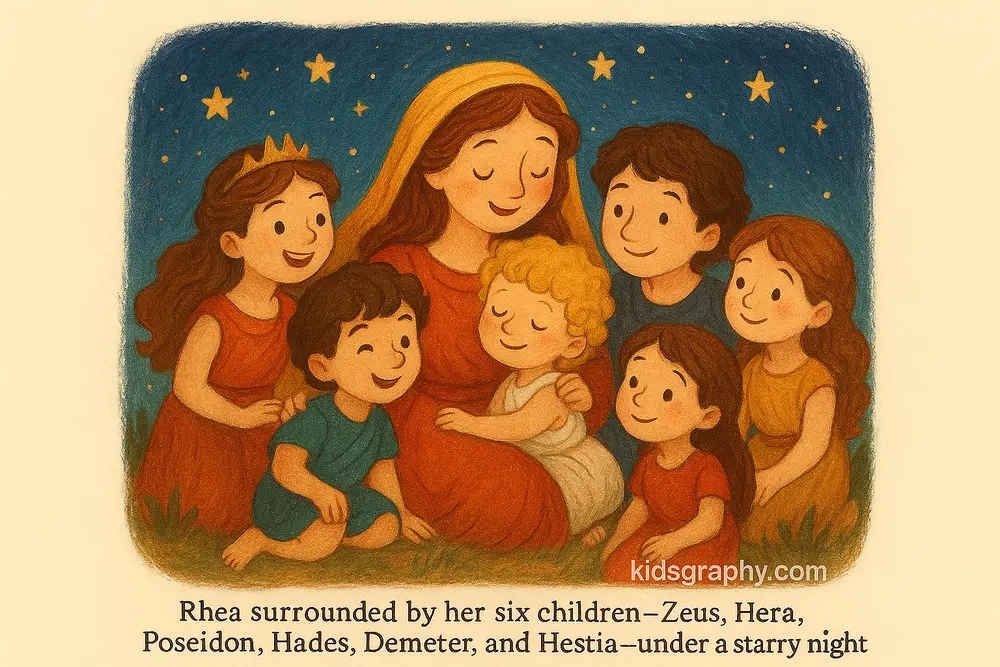
But Rhea’s most important role was being a mother. She gave birth to some of the most powerful gods in mythology:
- Hestia
- Demeter
- Hera
- Hades
- Poseidon
- Zeus
Each one of them would go on to shape the world, but not without great danger at birth.
Cronus and the Devouring of Children
There was a prophecy: one day, one of Cronus’s children would overthrow him—just as he had overthrown his own father, Uranus.
Terrified of this future, Cronus swallowed each of his children the moment they were born. Rhea was heartbroken, but she felt powerless to stop him.
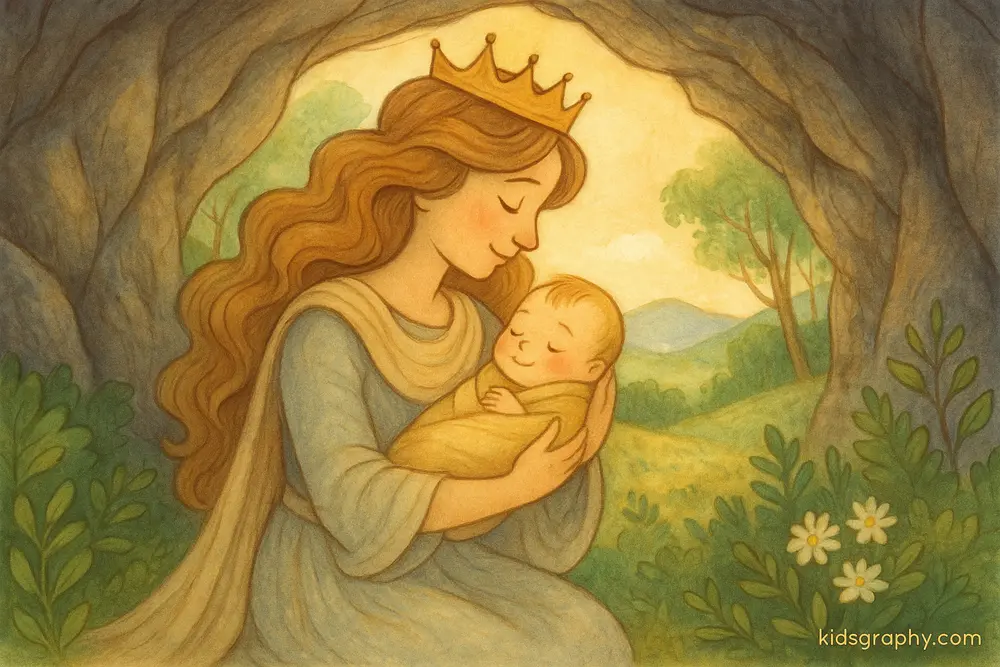
When her sixth child, Zeus, was born, Rhea made a plan.
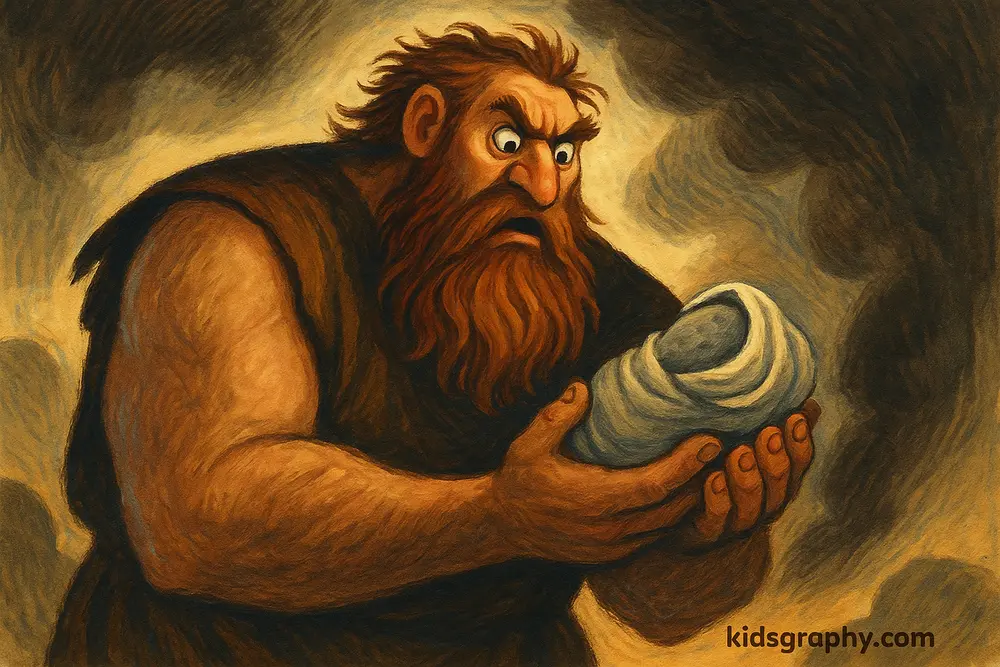
She hid baby Zeus in a cave on the island of Crete and gave Cronus a stone wrapped in cloth instead. Cronus swallowed the stone, thinking it was his newborn son.
This bold act would change the fate of all gods.
Read More: Chaos in Greek Mythology: The First Being of Creation
Rhea and the Rise of Olympus
Rhea kept Zeus safe until he was grown. When the time was right, Zeus returned, defeated Cronus, and freed his siblings from their father’s belly.
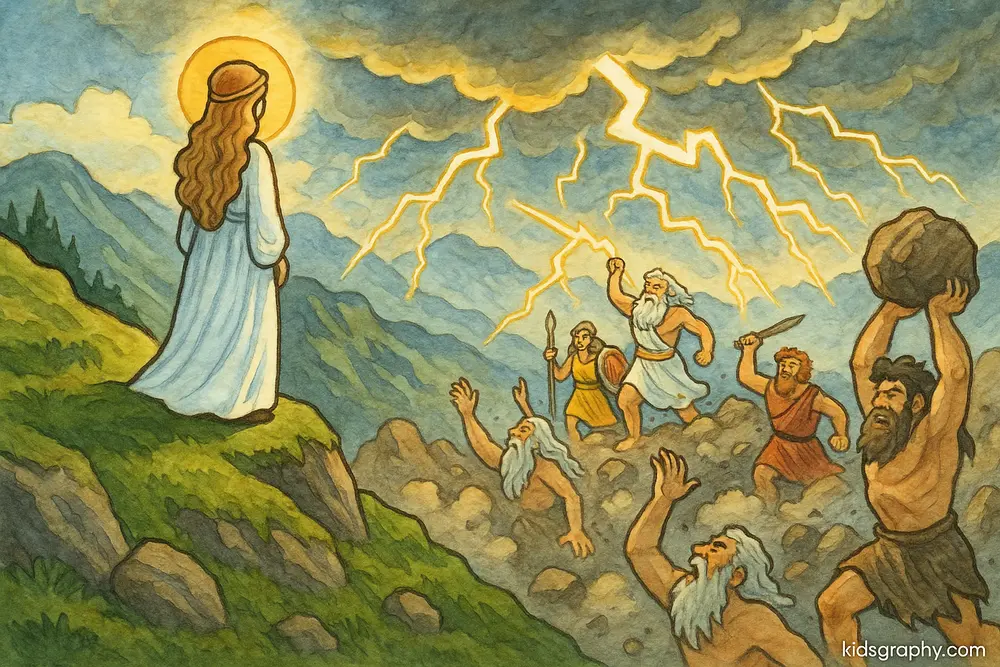
With the help of Rhea and others, the Olympian gods overthrew the Titans. This war was known as the Titanomachy.
Though she was a Titan, Rhea supported the new age, and her children honored her deeply. She was one of the few Titans not punished or banished after the war.
Rhea’s Role After the War
After Zeus became king of the gods, Rhea lived in peace. She didn’t seek power or revenge. Some stories say she spent her days in Crete or wandered among sacred mountains.
Unlike most Titans, Rhea wasn’t cast into Tartarus (the deep prison). She was respected as the mother of the Olympians, and many temples and altars were built in her honor.
As for her death, there is no clear story of Rhea dying. She was considered immortal, like many gods and Titans. Her memory lives on through her children and her legacy.
Rhea in the Trojan War
Rhea didn’t take an active role in the Trojan War, which happened much later in Greek myth history. By then, her children—especially Zeus and Hera—were ruling the world.
However, as the mother of the Olympians, Rhea’s influence lived through their choices. Hera, one of her daughters, played a major part in the war, often taking sides against the Trojans.
While Rhea herself stayed in the background, her presence was felt in the power and decisions of her divine family.
Rhea’s Symbols and Worship
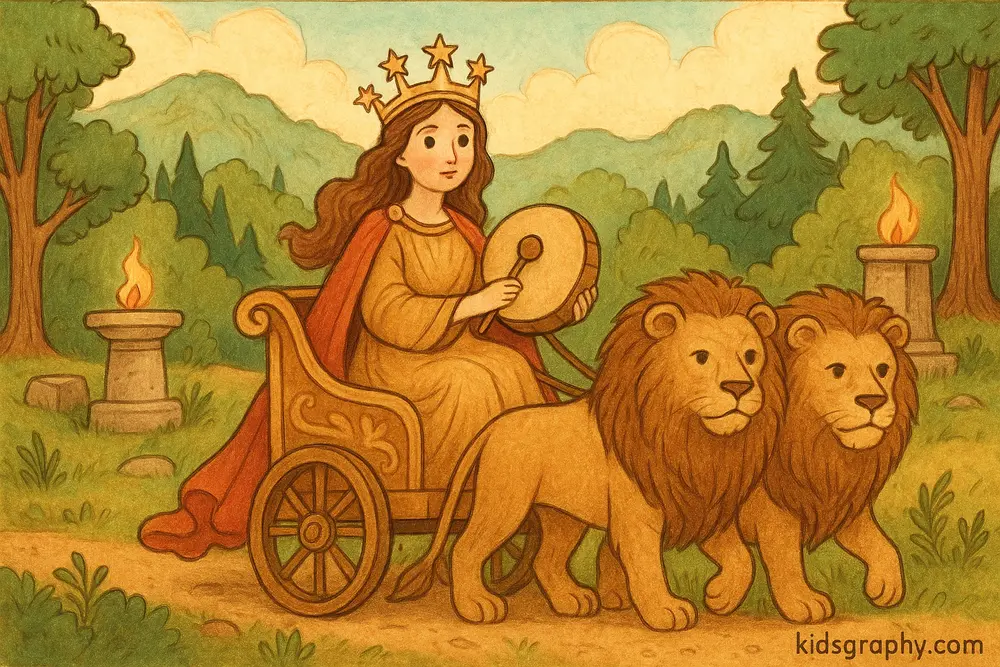
Rhea was closely connected to motherhood, fertility, and the earth. Her symbols often include:
- Lions or chariots drawn by lions
- Cymbals or drums (she is sometimes linked with music and ritual)
- Mountain caves, especially in Crete
She was worshipped in many ancient cities, and in some myths, she blends with other mother goddesses like Cybele.
Read More: Titans in Greek Mythology: Gods Before Olympus
What Rhea Represents Today
Rhea’s story reminds us of quiet strength and protection. She didn’t fight with weapons or rule with lightning. Instead, she used her wisdom and love to protect her children and shape the future of the gods.
She is a symbol of:
- Maternal courage
- Rebellion through cleverness
- The power of nurturing
- The peaceful end of an old age
More Stories: Greek Mythology
FAQ: Rhea in Greek Mythology
Rhea was a Titaness and the mother of the Olympian gods like Zeus, Hera, and Poseidon. She was known for her strength and wisdom.
Rhea was not punished like other Titans. She was respected by the Olympian gods and lived peacefully after the war.
No, Rhea did not play an active role in the Trojan War, but her daughter Hera was deeply involved.
Rhea tricked Cronus by giving him a stone wrapped in cloth and hid baby Zeus in a cave on the island of Crete.
There is no clear story about Rhea’s death. As a Titaness, she was believed to be immortal.
Read More: Hera in Greek Mythology: Queen of the Gods