This Thanksgiving Bible lesson for kids helps children discover what it means to have a thankful heart, through the story of Jesus and the ten lepers in Luke 17. It’s ready to use in Sunday school, children’s church, homeschool or a family devotion, with a story script, memory verse, discussion questions, games and a simple craft.
Lesson length: 30–45 minutes · Ages 4–11 · Includes a free printable lesson PDF with coloring page and memory-verse card.
Download the Thanksgiving Bible Lesson pack (PDF) — 9 pages: lesson overview, teacher script, discussion questions, coloring page, memory-verse cards, ten paper dolls, the “Thank You, Jesus” hand-turkey template and feathers, and a “Ten Thank-Yous” take-home sheet. US Letter size.
Lesson Overview
- Bible passage: Luke 17:11–19 (Jesus heals ten men with leprosy)
- Big idea: God gives us so many good gifts. We should always come back and say thank you.
- Memory verse: “O give thanks unto the LORD, for he is good: for his mercy endureth for ever.” (Psalm 107:1, KJV)
- Age groups: Preschool (4–5), Early elementary (6–8), Upper elementary (9–11)
- Supplies: Bible, printed lesson pack, crayons, scissors, glue, 10 paper-doll cut-outs or ten craft sticks, a small ball for the game
Lesson Plan at a Glance
- Welcome and opening question (5 minutes)
- Bible story (10 minutes)
- Discussion questions (5–10 minutes)
- Memory verse activity (5 minutes)
- Game (5–10 minutes)
- Craft and closing prayer (10 minutes)
Background for Teachers
Before you teach, it helps to understand a little about the world of this story.
Leprosy in Bible times: The word “leprosy” in the Bible covered several serious skin diseases. Under the Law of Moses (Leviticus 13–14), anyone with these conditions had to live outside the town and call out “Unclean!” to warn others. Only a priest could declare someone clean again, which is why Jesus sent the men to the priests.
Samaritans: Samaritans and Jews had disagreed for centuries about history and worship, and many Jews avoided them completely. Luke points out that the only man who returned was a Samaritan. Just like in the parable of the Good Samaritan, Jesus shows that God’s love and healing are for everyone.
Faith in action: Notice that the men were healed *as they went*. They obeyed Jesus before they saw the miracle. Only one of them, though, recognized who had healed him and returned to worship. Thankfulness is faith that remembers.
Opening: Get Kids Thinking (5 Minutes)
Start by asking: “Has anyone ever given you a present? What did you say?” Let children share. Most will say “thank you”.
Then ask: “Have you ever forgotten to say thank you?” Be honest and share a time when you forgot too. Explain that today’s story is about ten men who received an amazing gift from Jesus, but only one remembered to come back and say thank you.
Bible Story: Jesus Heals Ten Men (Luke 17:11–19)
Read the passage from a children’s Bible, or tell the story in your own words using this script. Hold up ten paper dolls or craft sticks to represent the ten men, and act out the story as you go.
The Ten Sick Men
One day, Jesus was walking along the road to Jerusalem. As He came near a small village, He saw ten men standing far away from everyone else.
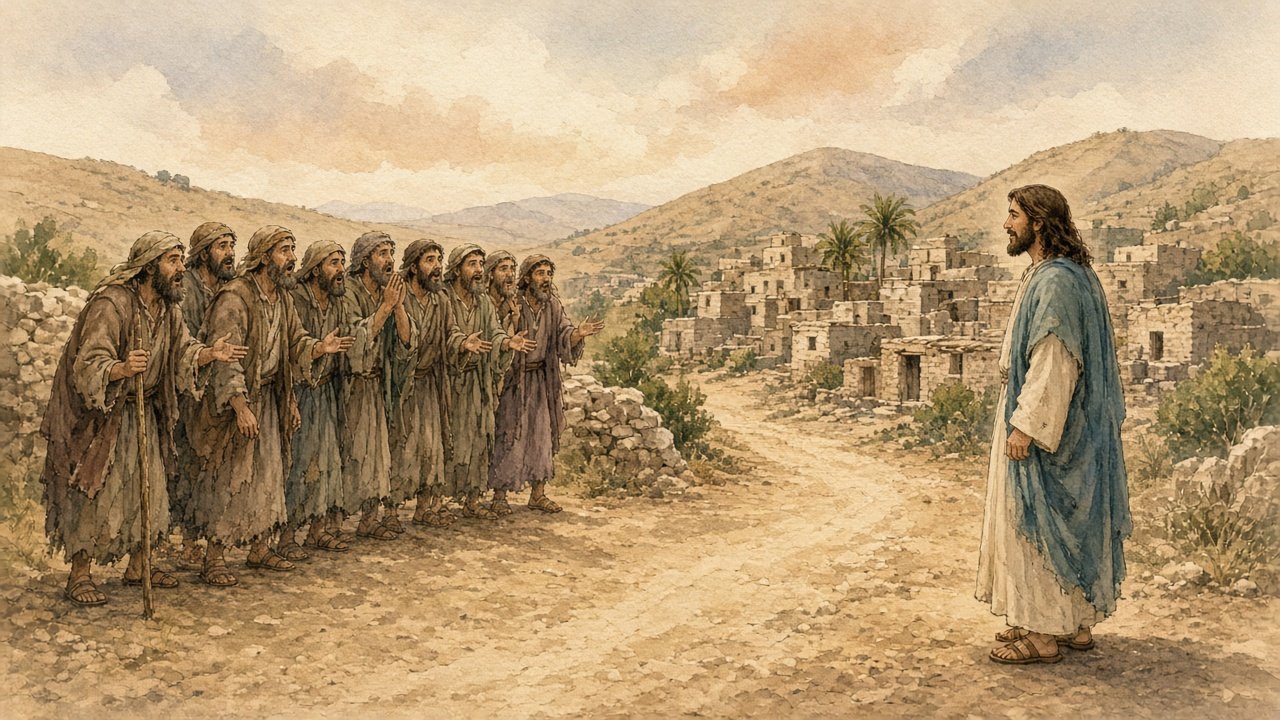
These men were very sick. They had a skin disease called leprosy. Back then, people with leprosy had to live apart from their families and friends so others wouldn’t catch it. They were lonely and sad. They couldn’t go to work, or to the market, or hug the people they loved.
When the ten men saw Jesus, they shouted as loudly as they could: “Jesus, Master, have pity on us!”
Jesus Heals Them
Jesus looked at them with love. He said, “Go and show yourselves to the priests.” In those days, the priests checked whether someone was healed and could go back home.
The ten men started walking. And as they walked, something wonderful happened. They looked down at their hands and arms. Their skin was clean and healthy! They were healed! (Turn all ten paper dolls around to show they’re healed.)
Only One Came Back
Nine of the men kept running. They were so excited to go home that they forgot all about Jesus. (Move nine dolls away.)
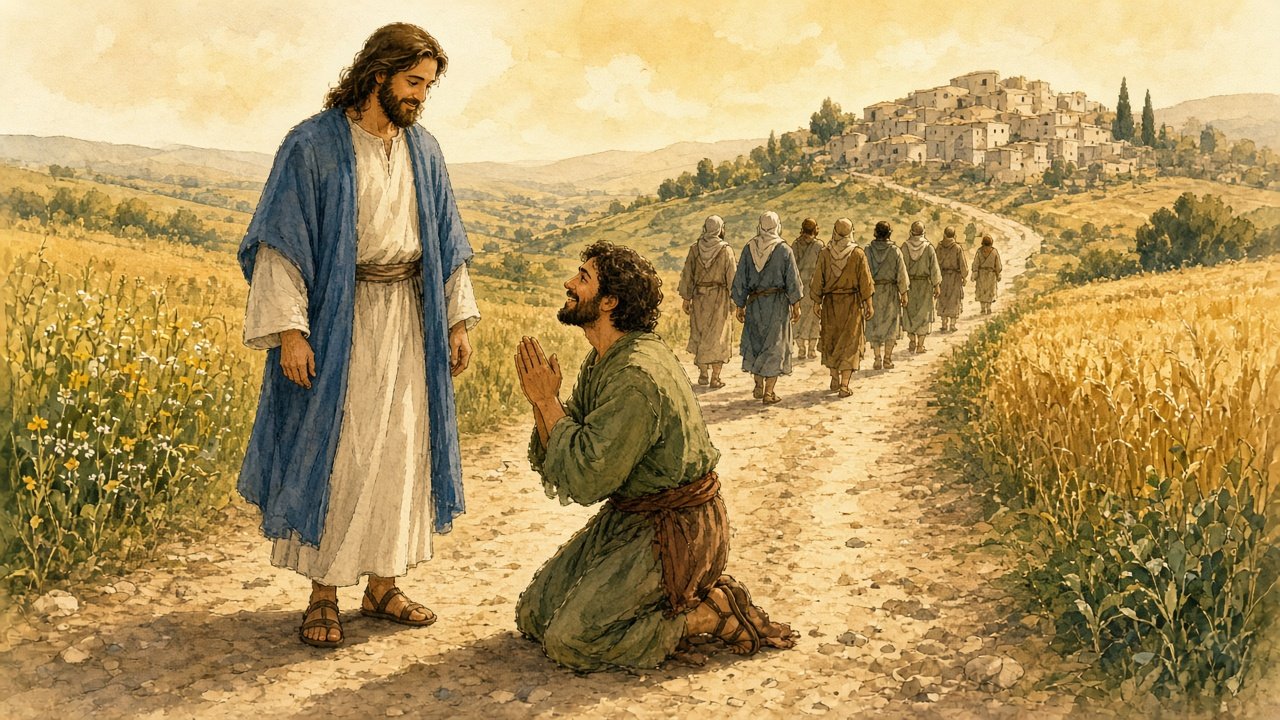
But one man stopped. He turned around and ran back to Jesus, shouting praises to God at the top of his voice. He threw himself down at Jesus’ feet and said, “Thank you!” This man was a Samaritan, someone from a group of people that many others looked down on.
Jesus asked, “Weren’t there ten men who were healed? Where are the other nine? Is this foreigner the only one who came back to give thanks to God?”
Then Jesus said to him, “Get up and go. Your faith has made you well.”
What This Story Teaches Us
All ten men received a gift, but only one remembered to say thank you. God gives every one of us good gifts every day: our families, food, homes, friends, and most of all His love. Thanksgiving is a perfect time to be like the one man who came back. But God wants us to be thankful every day, not just once a year.
For another story about Jesus’ healing power, read Jesus heals the sick. You’ll find many more stories in our Bible stories for kids collection.
Discussion Questions (5–10 Minutes)
Choose questions that suit your group’s age.
For Preschool (Ages 4–5)
- How many sick men were there? (Count together to ten!)
- What did Jesus do for them?
- How many came back to say thank you?
- What can you say thank you to God for today?
For Early Elementary (Ages 6–8)
- Why did the ten men have to live away from their families?
- What did Jesus tell them to do?
- When were they healed?
- Why do you think nine men forgot to say thank you?
- How do you think Jesus felt when only one came back?
For Upper Elementary (Ages 9–11)
- The man who came back was a Samaritan. Why is that detail important?
- Jesus said, “Your faith has made you well.” What do you think He meant?
- What are some “gifts” from God that we often forget to thank Him for?
- What is the difference between feeling thankful and showing thankfulness?
- How can you show thankfulness this week at home or school?
Memory Verse Activity (5 Minutes)
“O give thanks unto the LORD, for he is good: for his mercy endureth for ever.” Psalm 107:1 (KJV) “Mercy” means God’s kind, loving care, and “endureth for ever” means it never ends.
Echo and Action
Say the verse in short phrases and have children echo you, adding actions:
- “O give thanks” — put hands together as if praying
- “unto the LORD” — point up
- “for he is good” — thumbs up
- “for his mercy” — hug yourself
- “endureth for ever” — spread arms wide
Repeat three times, getting faster each time. Then try it in a whisper and in a “big voice”.
Print the memory-verse cards from the PDF so children can take the verse home. For more short verses to learn this month, see our Thanksgiving Bible verses for kids.
Games for a Thanksgiving Bible Lesson (5–10 Minutes)
Thank-You Toss
Children stand in a circle. Toss a soft ball to a child. When they catch it, they say one thing they’re thankful for, then toss it to someone else. No repeats allowed, which makes kids think hard about all of God’s gifts.
Where Are the Nine?
Before class, hide nine paper dolls around the room. Keep the tenth doll at the front. Children search for the “missing nine”. When all are found, remind them that Jesus asked, “Where are the other nine?” Talk about how we can remember to come back and thank God.
Thankful ABCs
Go through the alphabet as a group, naming something to be thankful for with each letter: A for apples, B for brothers, C for church, and so on. Older kids can try it in pairs against a timer.
Craft: “Thank You, Jesus” Hand Turkey (10 Minutes)
This classic craft gets a Bible-lesson twist.
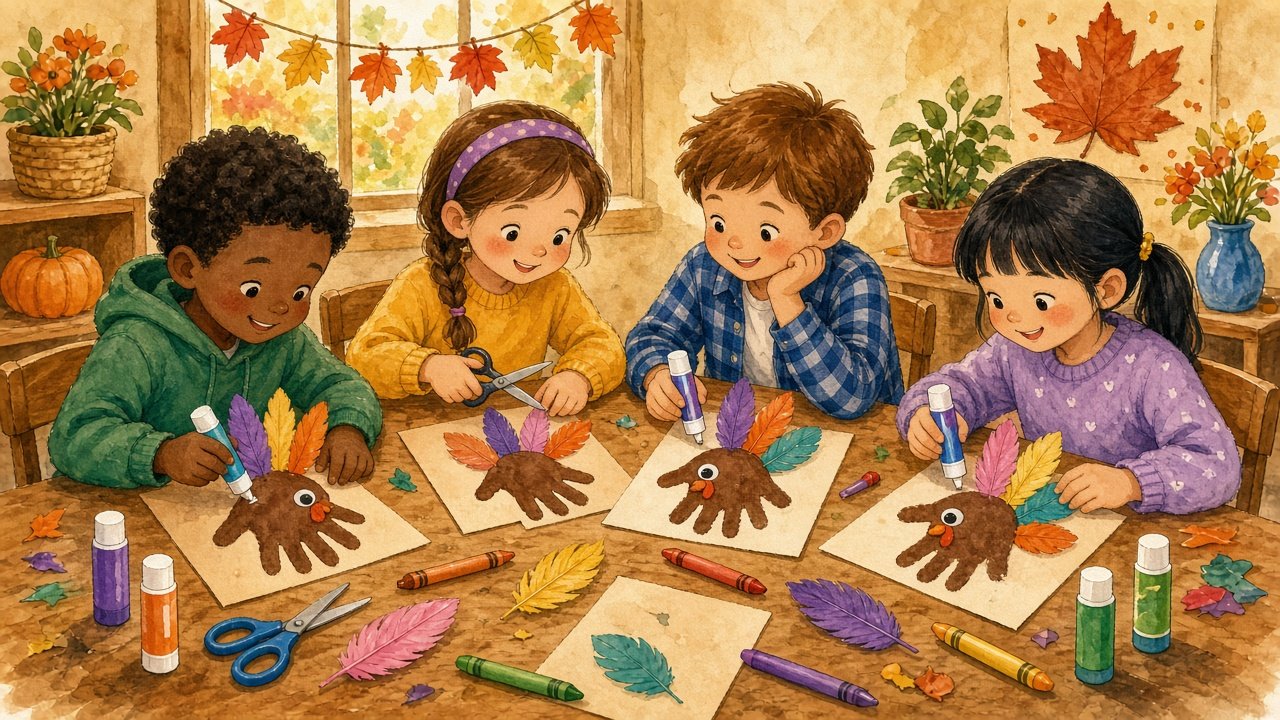
- Children trace their hand on brown paper and cut it out (or use the template in the PDF).
- Glue the hand onto a sheet of card stock. The thumb becomes the turkey’s head and the fingers become feathers.
- Cut five feathers from colored paper. On each one, children write or draw something they’re thankful to God for.
- Glue the feathers behind the fingers and add a googly eye and a red wattle.
- Write the memory verse across the bottom.
Download the hand-turkey template and feather cut-outs (PDF, pages 7–8) — opens the lesson pack at page 7. Print pages 7–8.
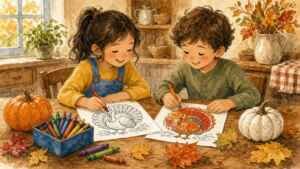
Alternative for preschool: Use the coloring page from the lesson pack showing the healed man thanking Jesus.
Tips for Teaching This Lesson
- Keep it visual: The ten paper dolls make the numbers concrete, especially for younger children.
- Model gratitude: Share one specific thing you thanked God for this week before asking children to share.
- Include everyone: Some children may have a hard home situation. Keep thankfulness prompts simple, like sunshine, a friend or a favorite food.
Closing Prayer
Gather the children and pray together:
“Dear God, thank You for all the good gifts You give us every day: our families, our food, our homes and our friends. Thank You most of all for loving us. Help us to be like the man who came back to say thank you. Help us to remember You every day. In Jesus’ name, Amen.”
Take-Home Challenge
Send each child home with a “Ten Thank-Yous” challenge: for one week, they write or draw ten things they thank God for, one for each of the men in the story. Encourage parents to talk about the list at dinner.
More Thanksgiving Ideas for Sunday School
- Pair this lesson with another story about God providing, such as Jesus feeds the five thousand.
- Read Ruth and Naomi, a beautiful story set during the barley harvest, to talk about God’s care and faithfulness.
FAQ: Thanksgiving Bible Lesson for Kids
What Bible story is good for Thanksgiving?
The story of Jesus healing the ten lepers (Luke 17:11–19) is one of the best Thanksgiving Bible stories for kids, because it clearly teaches the importance of saying thank you to God.
What is a good Thanksgiving memory verse for children?
Psalm 107:1, “O give thanks unto the LORD, for he is good: for his mercy endureth for ever” (KJV), is short, easy to learn and perfect for Thanksgiving. 1 Thessalonians 5:18, “In every thing give thanks” (KJV), is another good choice.
How long does this lesson take?
The full lesson takes 30–45 minutes. For a shorter session, use the story, two discussion questions and the closing prayer (about 15 minutes).
Is this lesson suitable for preschoolers?
Yes. Use the preschool questions, the counting activity with ten paper dolls, and the coloring page instead of the craft.