Every December, red poinsettias fill stores, churches and front windows across the United States. But the plant comes from Mexico, and so does the Legend of the Poinsettia, a Christmas story about how it got its bright red star-shaped leaves. In Mexico, the poinsettia is called “flor de Nochebuena,” the Christmas Eve flower.
This retelling is for children ages 5 to 12 and takes about 8 minutes to read aloud. The legend is told in many ways. In this version the girl is called Pepita, a name many tellers use. After the story, you’ll find some fun poinsettia facts for kids.
Part 1: Christmas Eve in the village
Long ago, in a small village in Mexico, everyone was getting ready for Nochebuena, the holy night of Christmas Eve.
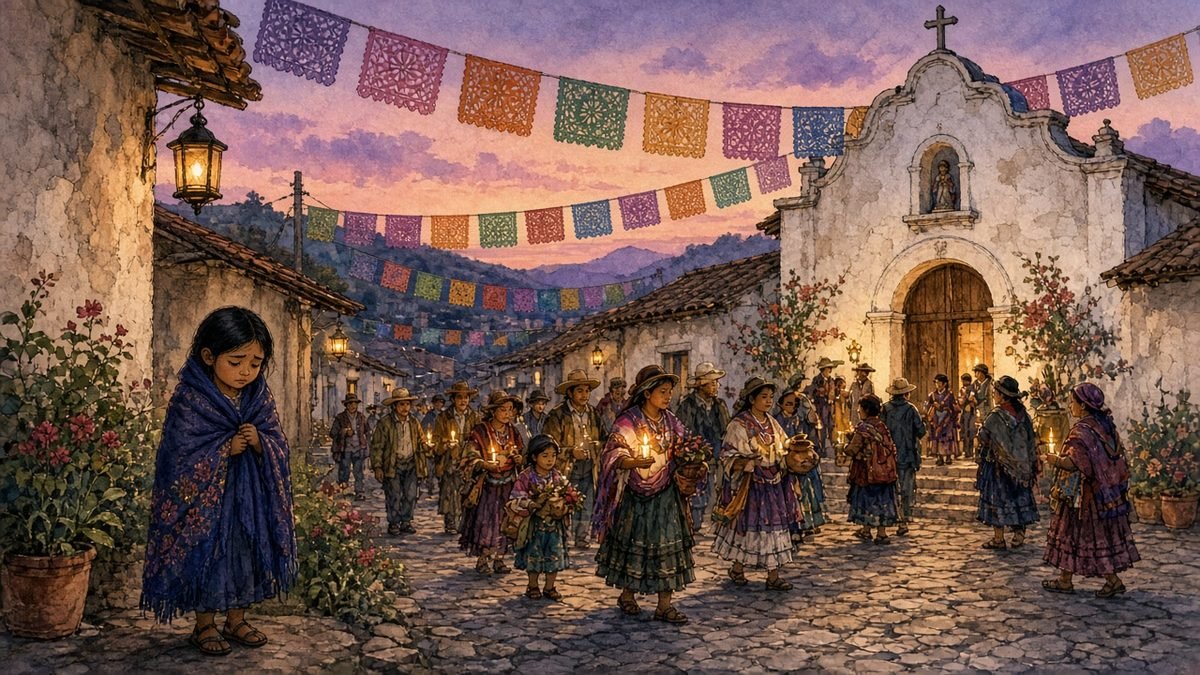
Colorful paper banners called papel picado fluttered between the rooftops. Families lit candles in their windows. The smell of tamales and sweet cinnamon drinks drifted through the streets. For nine nights, the villagers had walked from house to house in a candlelit procession called Las Posadas, singing songs about Mary and Joseph looking for a place to stay.
And tonight was the most special night of all. At midnight, everyone would go to the little church on the hill. The church had a beautiful manger scene with a small figure of the Baby Jesus lying in the straw, and each person would bring a gift to lay beside it.
A little girl named Pepita stood at the edge of the square and watched everyone hurry by with their presents. One woman carried a basket of oranges. A man had a beautiful carved candlestick. Some children had made paper flowers in every color of the rainbow.
Pepita looked down at her empty hands, and her eyes filled with tears.
Her family was very poor. Her mother had worked hard all year just to make sure they had enough to eat. There was no money for presents, not even a small one.
Part 2: Pepita has nothing to give
Pepita’s little cousin, Pedro, came and stood beside her.
“Why are you crying, Pepita?” he asked.
“Everyone has a gift for the Baby Jesus except me,” she said. “I wanted to give something beautiful. But I have nothing at all.”
Pedro thought for a moment. Then he took her hand.
“Pepita,” he said, “I’ve heard the grown-ups say that even the smallest gift is special if you give it with love. The Baby Jesus will know your heart.”
Pepita wiped her eyes. “But I can’t go to the church with empty hands.”
“Then let’s find something,” said Pedro.
Part 3: A handful of weeds
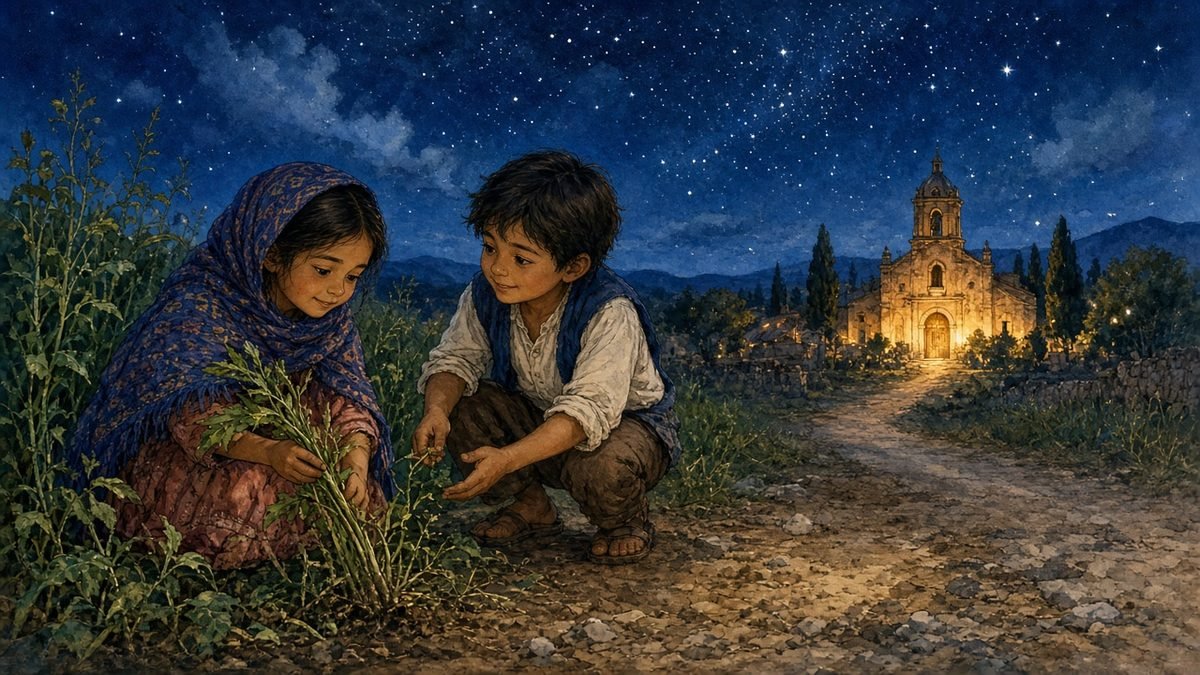
The two children walked down the dusty road toward the church. It was dark now, and stars were shining over the hills. The church glowed warmly ahead of them, its windows golden with candlelight.
Along the side of the road grew a patch of plain green weeds. Nobody ever noticed them. They had no flowers, and their leaves were ordinary and a little scraggly.
Pepita knelt down beside them.
“These are all I can find,” she said softly. “They’re not pretty. But they’re green and alive, and I’ll give them with all my love.”
She gathered a big armful of the weeds. Pedro helped her. Pepita tied them together with a piece of string from her pocket to make a little bouquet.
Then the two children walked up the hill to the church.
Part 4: The Christmas Eve miracle
Inside, the church was full of people and candlelight. The beautiful gifts were piled around the manger scene. Pepita held her bouquet tightly as she walked down the aisle.
Some of the other children saw what she was carrying and began to whisper.
“Those are just weeds!”
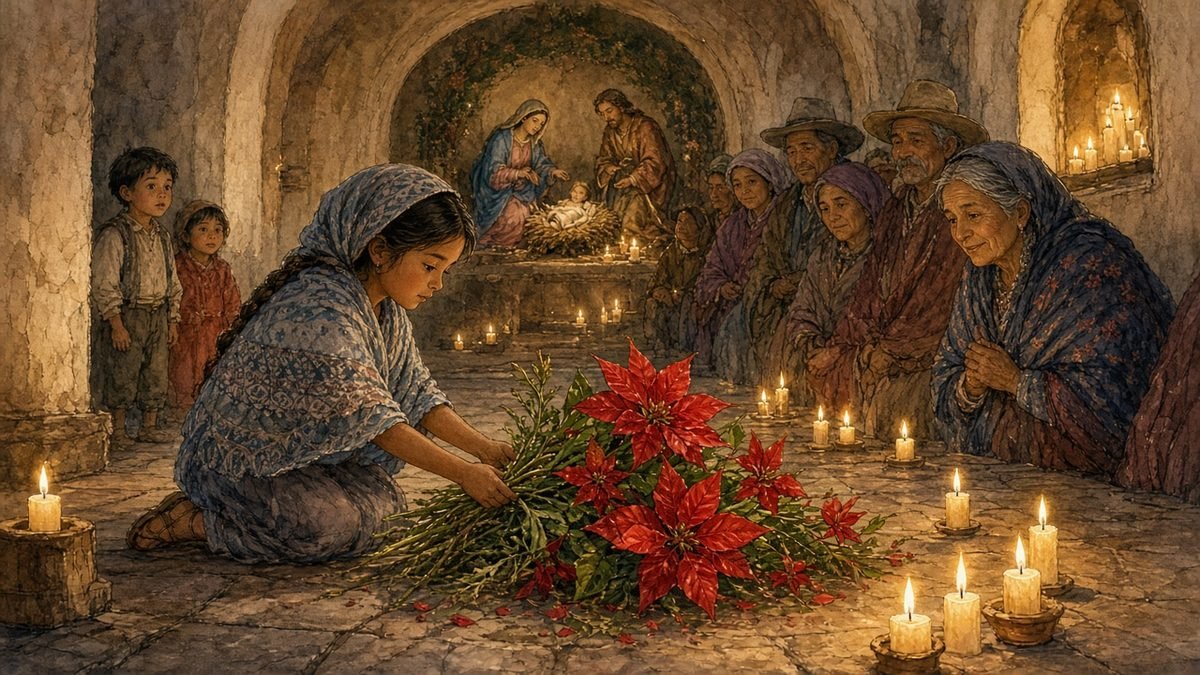
Pepita’s cheeks turned hot, and she almost turned around. But she remembered what Pedro had said. She kept walking until she reached the manger. Then she knelt down and gently laid her weeds beside the Baby Jesus.
“This is all I have,” she whispered. “I’m giving it to you with all my heart.”
And then, as everyone watched, something wonderful happened.
At the top of each green stem, the leaves began to change. First they turned pink. Then they turned a deep, glowing red. They spread out into the shape of a bright star, with a cluster of tiny golden flowers in the middle.
The whole church went silent. Then people began to gasp and whisper.
“A miracle!”
The plain weeds had become the most beautiful flowers anyone had ever seen. They glowed in the candlelight like little red stars, brighter than any other gift around the manger.
Pepita looked up, her face shining. Pedro squeezed her hand.
The children who had whispered came over and knelt beside her. “We’re sorry, Pepita,” one of them said. “Your gift is the most beautiful of all.”
Part 5: The flower of the holy night
From that night on, the plants bloomed red every year at Christmastime. The villagers named them Flores de Nochebuena, the Flowers of the Holy Night. They said the red star at the top of each plant reminded them of the Star of Bethlehem, which led the Wise Men to the Baby Jesus.
And whenever anyone in the village worried that their gift wasn’t good enough, someone would remind them of Pepita and her armful of weeds.
“What matters is the love you give it with,” they’d say.
The End
Moral of the story: The best gifts are given with love
Pepita’s gift didn’t cost anything, but it came from her heart. The story reminds us that a gift becomes special because of the love and kindness behind it, whatever it costs.
What kids can learn from the Legend of the Poinsettia
- Every gift given with love is special.
- Don’t judge a gift by its price. Simple things can mean a lot.
- Be brave. Pepita kept walking even when others whispered.
- Be a good friend. Pedro encouraged Pepita when she felt sad.
- Be kind instead of teasing. The other children learned to say sorry.
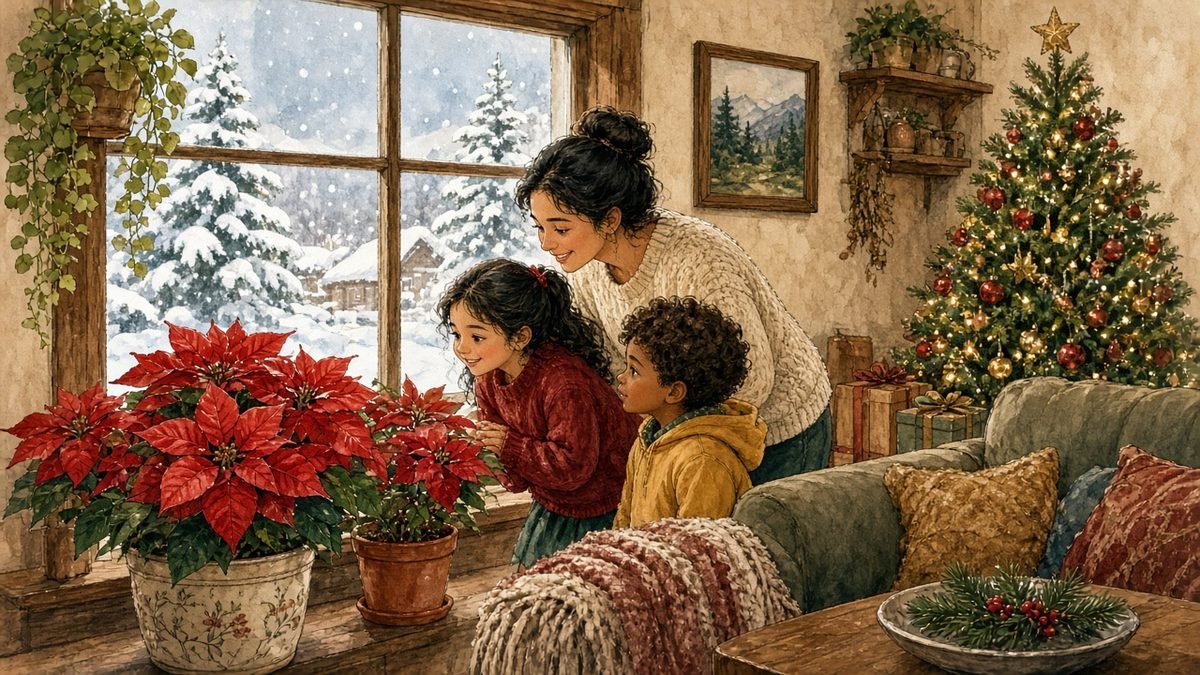
Poinsettia facts for kids
- Poinsettias are native to Mexico and parts of Central America, where they can grow as big as small trees.
- The Aztecs used them long before Christmas. They called the plant cuetlaxochitl and used it to make red dye.
- The red parts aren’t petals. They’re special leaves called bracts. The real flowers are the tiny yellow buds in the center.
- The name comes from a person. Joel Roberts Poinsett, the first United States minister to Mexico, sent poinsettia plants home to South Carolina in the 1820s.
- December 12 is National Poinsettia Day in the United States. It marks the day Poinsett died in 1851.
- They come in many colors today, including white, pink, cream, speckled and even orange.
- Keep them out of reach of pets and little ones. Poinsettias aren’t as dangerous as many people think, but chewing the leaves can upset a tummy.
Questions to talk about with your child
- Why was Pepita sad on Christmas Eve?
- What did Pedro tell her that made her feel braver?
- What happened to the weeds at the manger?
- What’s a gift you could give that doesn’t cost any money?
- Have you ever been given a homemade gift that meant a lot to you?
Summary: The Legend of the Poinsettia
On Christmas Eve in a Mexican village, a poor girl named Pepita has no gift to bring to the Baby Jesus at church. Her cousin Pedro tells her that any gift given with love is special. She gathers a bouquet of plain roadside weeds and lays them at the manger. As everyone watches, the weeds turn into bright red star-shaped flowers. They become known as Flores de Nochebuena, the Flowers of the Holy Night, which we call poinsettias.
Read the Christmas story itself in The Nativity Story, and say one of our Christmas prayers for kids together after story time.
Read More: The Best Gift
Frequently asked questions
What is the Legend of the Poinsettia?
It’s a Mexican Christmas legend about a poor child who brings a humble bouquet of weeds to church on Christmas Eve. The weeds miraculously turn into red flowers, which became known as poinsettias.
What is the girl’s name in the Legend of the Poinsettia?
It changes from telling to telling. Pepita is one of the most common names. Some versions have a boy named Pablo, and Tomie dePaola’s picture book calls the girl Lucida.
Why is the poinsettia a Christmas flower?
It turns red in December, around Christmas. Its star shape reminds many people of the Star of Bethlehem, and the legend of Pepita connects it to Christmas Eve.
Who brought poinsettias to the United States?
Joel Roberts Poinsett, the first US minister to Mexico, sent plants back to South Carolina in the 1820s. The plant was later named after him.
When is National Poinsettia Day?
December 12. It honors Joel Roberts Poinsett, who died on December 12, 1851.