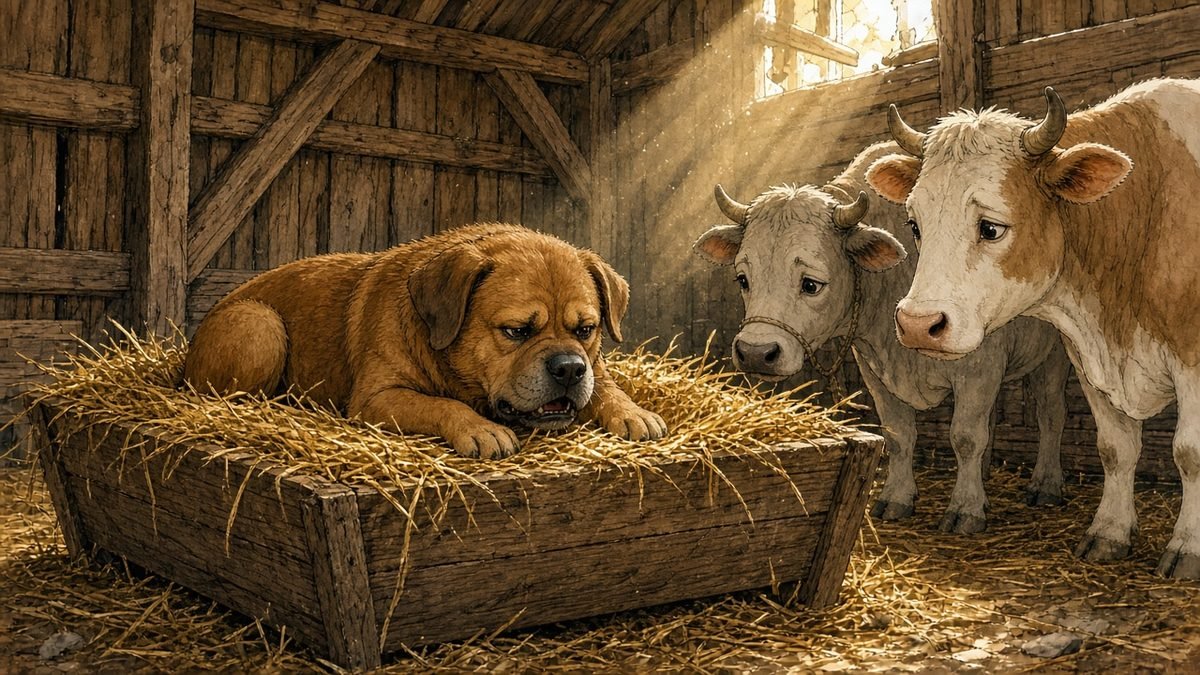
The Dog in the Manger story is a very short fable, usually credited to Aesop, about a dog who won’t let a hungry ox eat hay, even though the dog can’t eat hay himself. The story is so well known that “dog in the manger” became an English saying. People use it to describe someone who keeps something they don’t need just so nobody else can have it.
This retelling is for children ages 4 to 10 and takes about 7 minutes to read aloud. It’s longer than the old two-sentence version, and it ends with a little more kindness.
Part 1: A cozy spot in the barn
On a farm at the bottom of a green hill, there was a big red barn. Inside the barn lived a cow named Clover, an ox named Barley, and a large brown dog named Rufus.
Rufus had his own bed by the farmhouse door, a soft old blanket in a wooden box. But one warm afternoon, he wandered into the barn and saw something even better.
It was the manger.
A manger is a long wooden box where farm animals eat. This one was piled high with fresh golden hay that the farmer had brought in that very morning. The sun was shining through the barn door, right onto the hay. It looked like the softest, warmest bed in the world.
“Now that,” said Rufus, “is the perfect place for a nap.”
He climbed up and over the edge of the manger, turned around three times, and flopped down in the middle of the hay. It was even softer than it looked. In no time at all, he was fast asleep and snoring.
Clover the cow looked at him and sighed. “That’s our dinner he’s lying on.”
Part 2: A tired, hungry ox
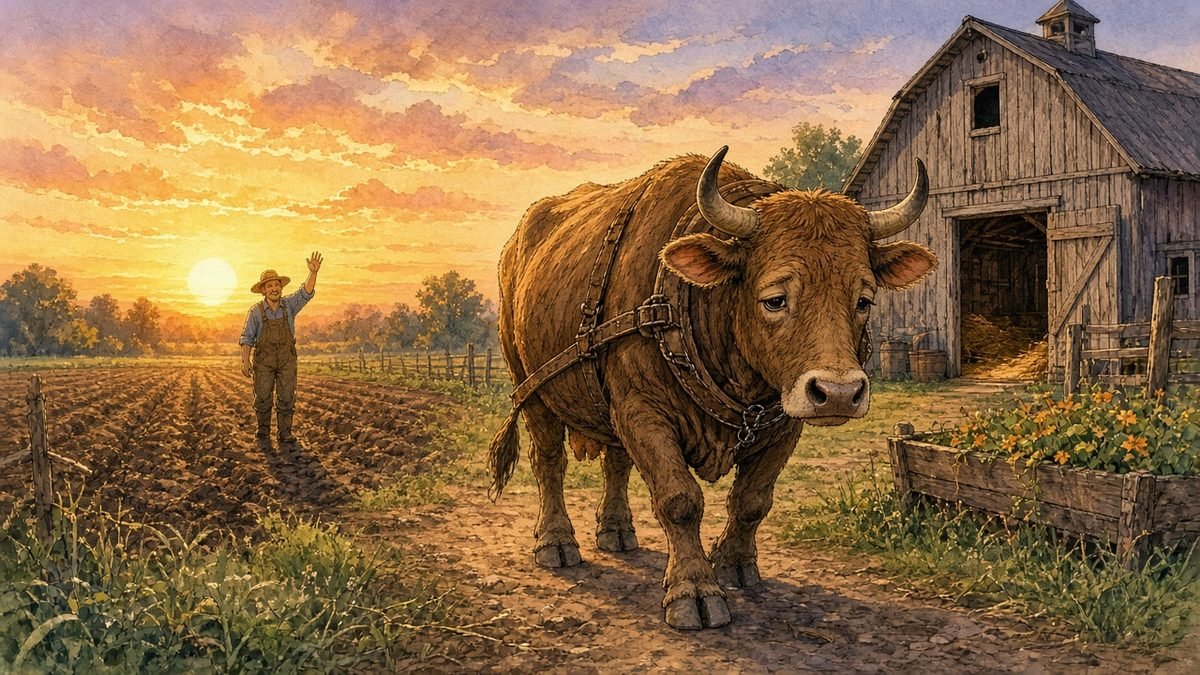
All day long, Barley the ox had been out in the field with the farmer, pulling the heavy plow. Up and down, up and down, he had dragged it through the hard soil, row after row. By sunset, his legs ached and his tummy rumbled.
“Good work today, Barley,” said the farmer, patting his neck as he unhooked the plow. “Go and have your supper.”
Barley plodded slowly back to the barn, dreaming about a big mouthful of fresh hay.
He walked up to the manger and lowered his head to eat.
“GRRRRR!”
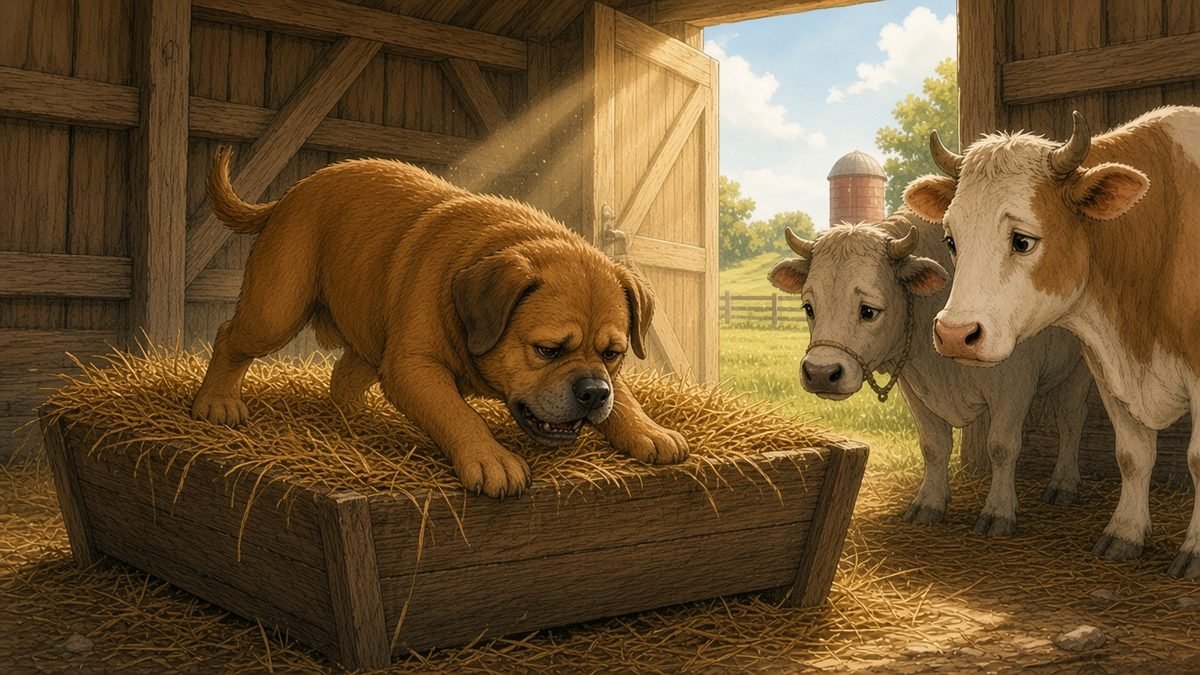
Rufus woke up, jumped to his feet and showed all of his teeth.
“Get away! This is my spot!”
Barley stepped back, surprised. “I’m sorry, Rufus. I didn’t mean to wake you. But I’ve been working all day, and I’m very hungry. I only want to eat a little of that hay.”
“No!” barked Rufus. “I was here first.”
Clover came over too. “Rufus, be fair. You don’t even eat hay. Dogs eat meat and bones. That hay is our food.”
“I don’t care,” said Rufus, lying down again with his paws over the edge. “It’s mine now. Nobody else gets any.”
Every time Barley or Clover came close, Rufus snapped and growled. The poor ox and cow stood in the corner of the barn, their tummies rumbling, while Rufus lay on top of their dinner.
Part 3: The ox says what everyone is thinking
Barley was a gentle ox and didn’t like to argue. But he was so tired and so hungry that at last he spoke up.
“Rufus,” he said quietly, “what a selfish thing to do. You can’t eat this hay yourself, and you won’t let anyone else eat it either. It does you no good at all, and it makes the rest of us go hungry.”
Rufus didn’t answer. He just pretended not to hear.
But Barley’s words stuck in his ears. As he lay there in the hay, he could hear Barley’s stomach rumbling across the barn. He could see Clover lying down sadly in the straw. The hay didn’t feel quite as cozy anymore.
Part 4: Lily finds a better way
Just then, the farmer’s daughter, Lily, came into the barn with a lantern and a bucket of water. She saw Barley and Clover standing hungry in the corner, and Rufus curled up in the manger.
“Rufus!” she said. “What are you doing in there?”
Rufus put his ears back and looked a bit guilty.
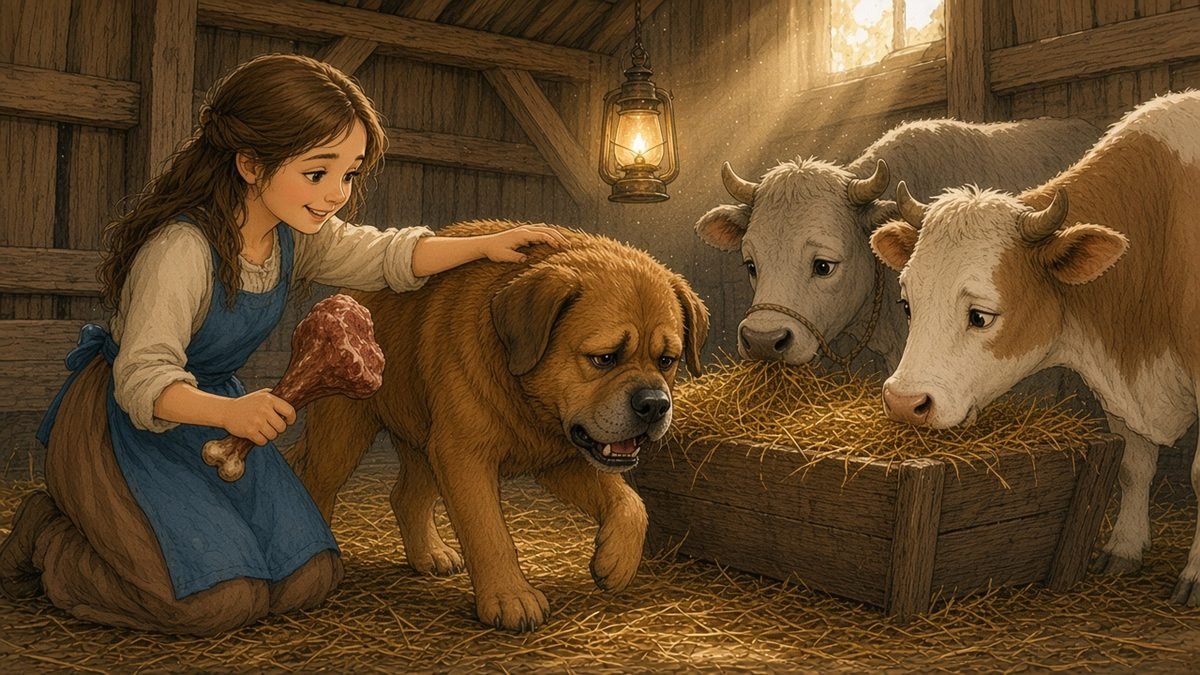
Lily knelt down by the manger and scratched him behind the ears. “I know the hay is soft,” she said. “But it’s Barley and Clover’s supper. You wouldn’t like it if Barley lay on top of your food bowl, would you?”
Rufus thought about that. He imagined a big ox sitting right on his dinner. He wouldn’t like that at all.
“Come on,” said Lily. “I’ve got something for you.”
She pulled a big meaty bone out of her apron pocket. Rufus’s tail began to wag. Then she showed him his own bed by the farmhouse door, which she had just filled with a fresh, clean blanket.
Rufus jumped out of the manger.
Right away, Barley and Clover walked over and began munching the hay. Crunch, crunch, crunch. Barley closed his eyes. It was the best supper he had ever tasted.
Part 5: Rufus says sorry
Later that evening, Rufus trotted back into the barn with his bone in his mouth. He set it down in front of Barley.
“I’m sorry,” he mumbled. “I was being a dog in the manger. I kept something I didn’t even need, just so you couldn’t have it.”
Barley smiled. “Thank you, Rufus. And I’m sorry I woke you.”
“You can keep your bone,” said Clover, laughing. “We don’t eat bones.”
Rufus laughed too. “Fair enough.”
From that day on, Rufus napped in his own bed by the farmhouse door. And sometimes, in the evenings, he came into the barn just to keep Barley and Clover company while they ate.
The End
Moral of the story: Don’t keep from others what you can’t use yourself
Rufus couldn’t eat the hay, so keeping it from the hungry ox was simply mean. When we have something we don’t need, sharing it costs us nothing and helps someone else a lot.
What kids can learn from The Dog in the Manger
- Selfishness hurts others. Barley and Clover went hungry because of Rufus.
- Think about what others need. The ox had worked hard all day.
- Imagine being in someone else’s place. Lily helped Rufus think about how he’d feel.
- Sharing what we don’t need is easy, and it can make a big difference.
- It’s never too late to say sorry.
What does “dog in the manger” mean?
A “dog in the manger” is someone who won’t let others have or use something, even though they don’t want or need it themselves. For example, a child who won’t let a sibling play with a toy they never play with is being a bit of a dog in the manger. You’ll find the phrase in English books and plays from hundreds of years ago, and people still use it today.
Questions to talk about with your child
- Why did Rufus want to sleep in the manger?
- Why was it unfair for Rufus to keep the hay?
- How do you think Barley felt after working all day?
- What did Lily do to help? Was it a good idea?
- Can you think of a time when you or someone you know acted like a dog in the manger?
Summary: The Dog in the Manger
A dog named Rufus naps in a manger full of hay. When Barley the hungry ox comes home after plowing all day, Rufus growls and won’t let him eat, even though dogs don’t eat hay. Barley tells him how selfish that is. The farmer’s daughter, Lily, helps Rufus imagine how he’d feel and gives him a bone and his own bed. Rufus leaves the manger, the ox and cow eat their supper, and Rufus says sorry.
Rufus isn’t the only selfish dog in Aesop’s fables. Read The Dog and His Reflection, and for another fable about treating others fairly, try The Fox and the Stork.
Read More: The Ant and the Grasshopper
Frequently asked questions
What is the moral of the Dog in the Manger story?
Don’t keep from others what you can’t use yourself. Many old books put it as “People often grudge others what they cannot enjoy themselves.”
Is The Dog in the Manger an Aesop fable?
Yes, it’s traditionally included among Aesop’s fables, and it has been retold in many fable collections over the centuries. Today it’s one of the best-known fables in English, partly because of the famous saying.
What is a manger?
A manger is a long open box or trough that holds hay or other food for animals like cows, oxen and horses.
What does it mean to call someone a “dog in the manger”?
It means they’re being selfish in a pointless way, keeping something from others even though they have no use for it themselves.
What age is this fable for?
This retelling works for ages 4 to 10. Older kids can have fun finding real-life examples of the idiom.