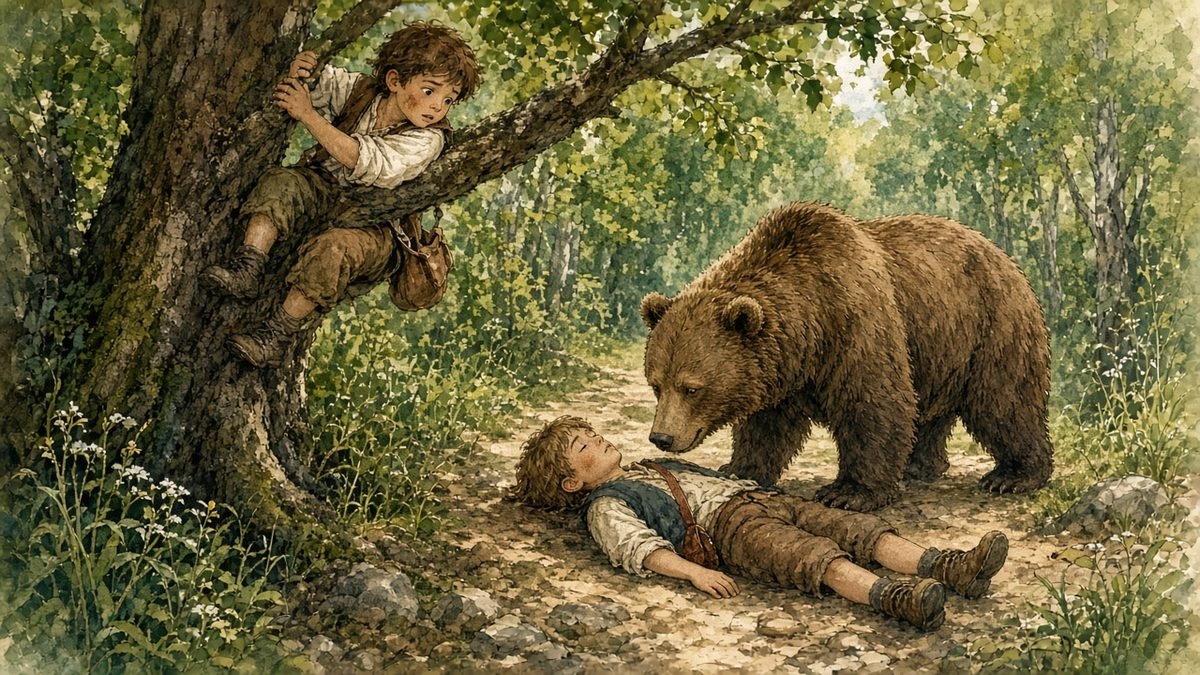
The Two Friends and the Bear story is one of Aesop’s fables, the short stories said to come from ancient Greece more than 2,500 years ago. In some books it’s called “The Bear and the Two Travelers.” It’s a quick, funny story with a serious question inside it: what makes someone a true friend?
This retelling is for children ages 5 to 12 and takes about 8 minutes to read aloud. It’s a great pick for kids who are learning how to be a good friend, and for anyone who has ever been let down by one.
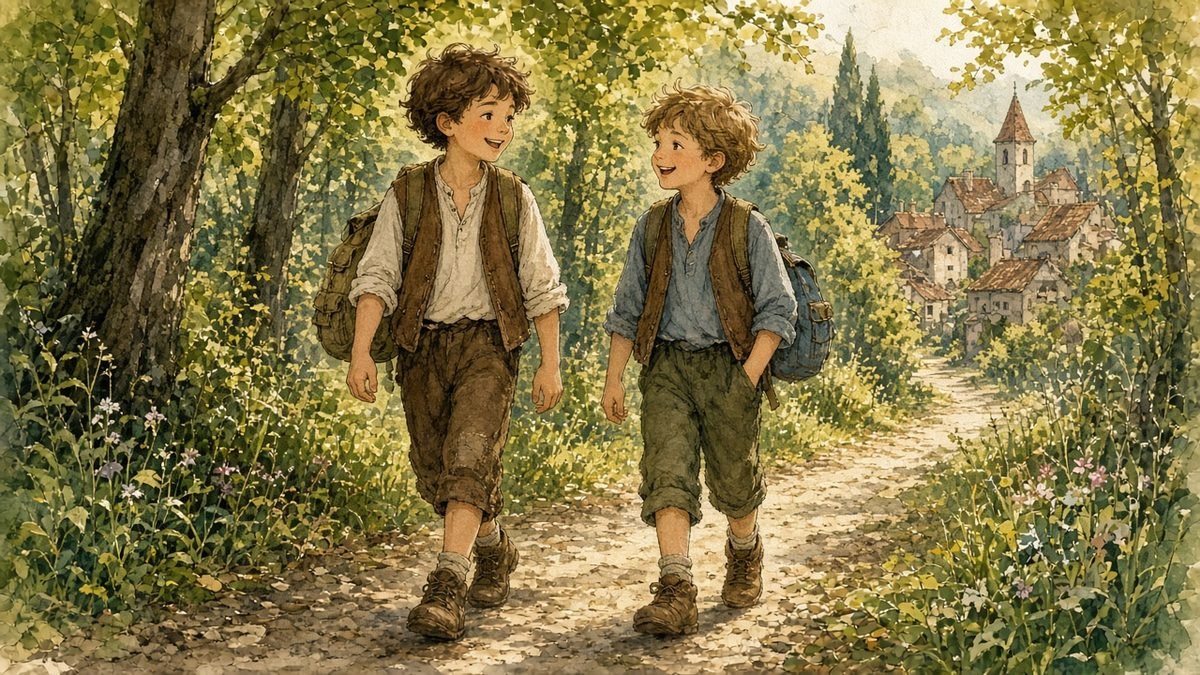
Part 1: Two friends set off on a trip
Once upon a time, there were two friends named Max and Theo. They lived in the same village, went to the same market and liked the same games. People hardly ever saw one of them without the other.
Max loved to talk. He talked about how brave he was, how fast he could run and how he’d always look out for his friends.
“If anything ever goes wrong,” Max liked to say, “you can count on me, Theo. We’ll always stick together.”
Theo was quieter. He didn’t make big promises, but he was always there when someone needed a hand.
One summer morning, the two friends decided to walk to a town on the far side of the forest. Theo’s aunt lived there, and she had invited them for a big dinner. They packed bread, cheese and apples, filled their water bottles and set off down the road.
The forest path was long and shady. Birds sang in the trees. Squirrels chased each other up and down the trunks.
“This is going to be the best trip ever,” Max said. “And don’t worry about wild animals. If we meet a wolf, I’ll scare it away. If we meet a bear, I’ll protect you.”
Theo laughed. “I hope we don’t meet either one.”
Part 2: Something big in the bushes
Around noon, the friends sat down on a fallen log to eat their lunch. Max was in the middle of a story about how he once chased a fox out of a henhouse when the bushes behind them rustled.
Then they heard a deep, low huff.
Both boys turned around slowly. A huge brown bear was pushing its way through the leaves, sniffing the air. It had smelled their cheese.
Max didn’t say a word. He dropped his apple, jumped up and ran straight for the nearest tree. He grabbed the lowest branch and scrambled up as fast as a squirrel. In a few seconds he was safe, high in the leaves.
He didn’t look back. He didn’t call out. He didn’t reach down a hand for his friend.
Theo was not a good climber. He tried to follow, but his fingers slipped on the smooth bark, and he slid back down to the ground. The bear was getting closer.
“Max!” Theo whispered. “Help me up!”
But Max only clung tighter to his branch and pretended not to hear.
Part 3: Theo thinks fast
Theo’s heart was pounding. There was no time to run, and nowhere to hide. Then he remembered something his grandfather once told him in an old story: some bears lose interest in anything that lies perfectly still.
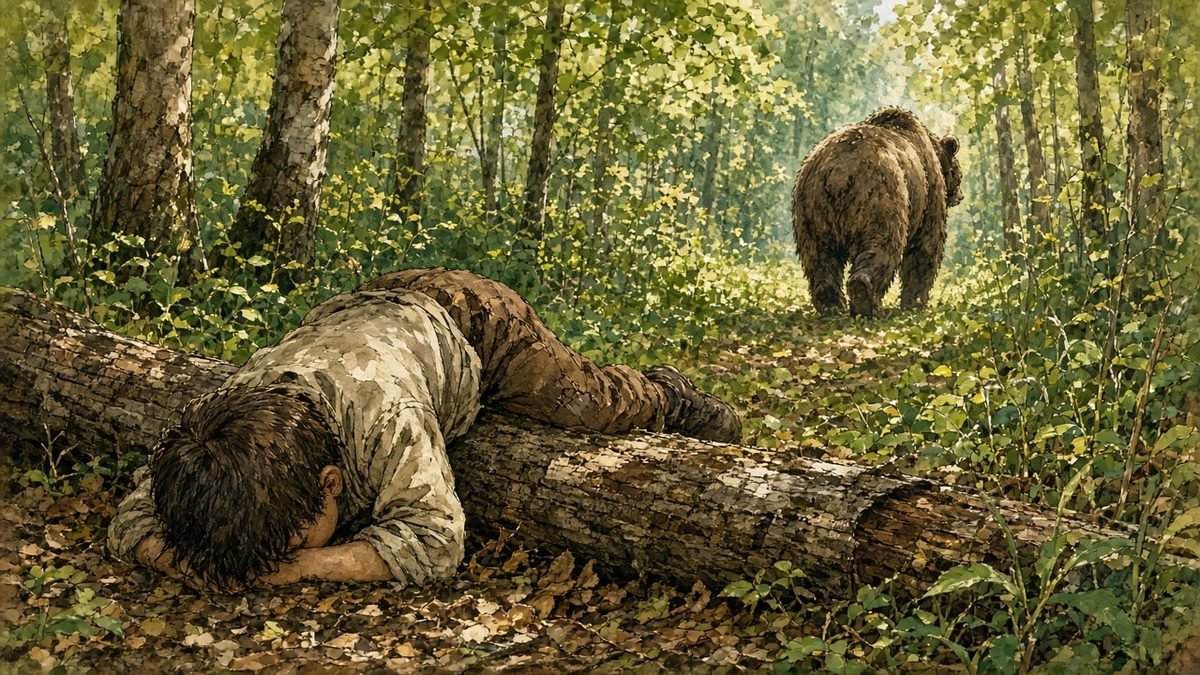
It was the only idea he had. Theo lay down flat on the ground, face down in the leaves. He held his breath and didn’t move a muscle.
The bear lumbered over. It sniffed Theo’s boots. It sniffed his back. Then it put its big wet nose right next to his ear and sniffed there for what felt like a very long time.
Theo stayed as still as a stone.
At last the bear snorted, lost interest and wandered over to the log. It gobbled up the cheese and bread, licked the crumbs off the bark and shuffled away into the forest.
Theo waited until he couldn’t hear the bear anymore. Then he slowly sat up and brushed the leaves out of his hair. His hands were shaking.
Part 4: What did the bear whisper?
A minute later, Max climbed down from the tree. He was grinning, as if the whole thing had been a big adventure.
“Wow, that was close!” he said. “Good thinking, lying down like that. Hey, I saw the bear put its mouth right by your ear. What did it whisper to you?”
Theo stood up and looked at his friend for a long moment.
“The bear gave me some very good advice,” he said. “It told me never to travel with a friend who runs off and leaves me when there’s trouble.”
Max’s grin disappeared. His cheeks turned red. He looked down at his boots.
“I got scared,” he mumbled. “I just ran. I didn’t even think about you.”
“I know,” said Theo. “Everybody gets scared. But you always said we’d stick together. When it really mattered, you didn’t.”
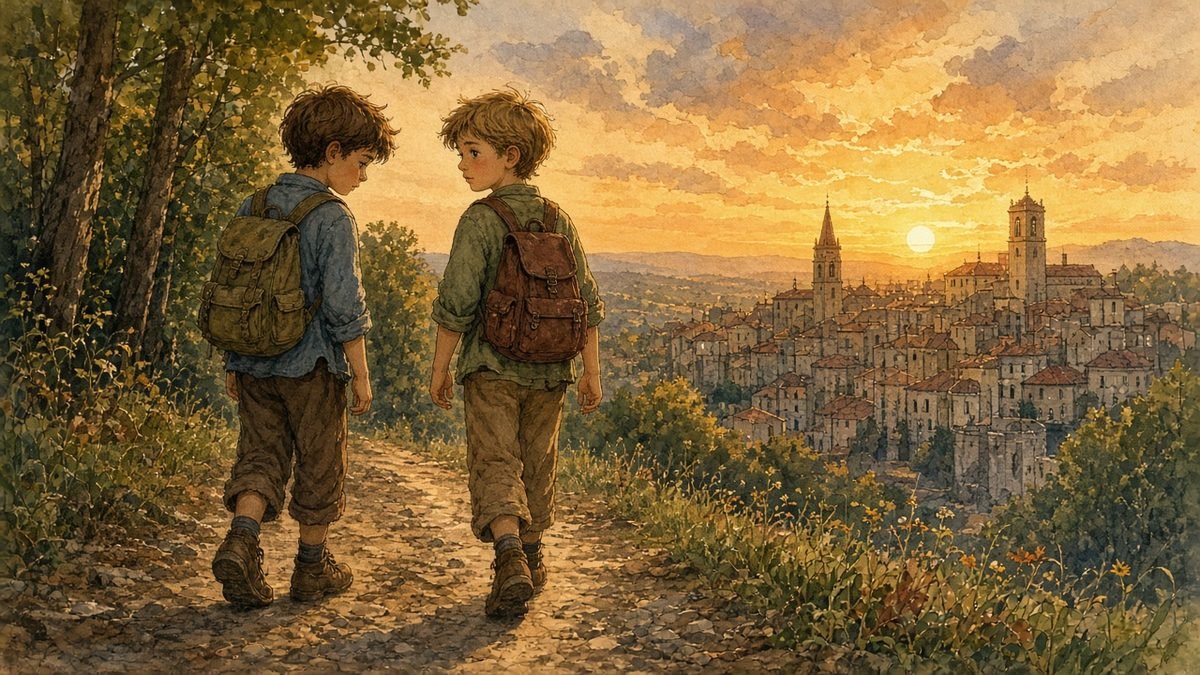
The two of them walked the rest of the way to town without saying much. Max felt worse with every step. He thought about all the big promises he had made and how fast he had forgotten them.
When they reached the edge of the forest, Max stopped.
“I’m sorry, Theo,” he said, and this time he meant it. “I don’t want to be the kind of friend who only talks. Next time, I’ll try to really be there for you.”
Theo nodded. “Then show me,” he said. “That’s what counts.”
It took a while for Theo to trust Max again. But Max worked hard at it. He helped Theo with his chores, kept small promises and stopped bragging so much. Slowly, they became real friends again, the kind who stand side by side when things get hard.
The End
Moral of the story: A true friend stands by you in trouble
Old books end this fable with the line “Never trust a friend who deserts you at the approach of danger.” Anyone can say they’re a good friend. A true friend shows it when things go wrong. Max made big promises, but Theo kept his head and his honesty, and that’s what made him the wiser of the two.
What kids can learn from Two Friends and the Bear
- Actions speak louder than words. Max’s promises meant nothing when he ran away.
- Real friends help each other. A good friend reaches down a hand instead of climbing away.
- Stay calm and think. Theo was frightened, but he used his head.
- Be honest about feelings. Theo told Max how he felt without yelling.
- Saying sorry is a start. Max had to show he’d changed, and that took time.
Questions to talk about with your child
- What did Max promise at the start of the trip?
- Why do you think Max ran up the tree without helping Theo?
- What did Theo mean when he said the bear gave him advice?
- How can you tell if someone is a true friend?
- Have you ever helped a friend who was in trouble? What did you do?
A quick note about real bears
This is a fable, so the bear trick belongs to the story and isn’t a safety plan. If your family ever hikes or camps in bear country, stay close to your grown-ups and follow the posted rules and the park rangers’ advice. Rangers explain what to do near bears where you live.
Summary: Two Friends and the Bear
In the two friends and the bear story, two travelers are walking through a forest when a bear appears. One friend climbs a tree to save himself and leaves the other behind. The second friend lies down and stays perfectly still, and the bear sniffs him and walks away. When the first friend asks what the bear whispered, the second says it told him never to travel with a friend who leaves you in danger. The first friend feels ashamed and learns what friendship really means.
For another fable about friends who help each other, read The Lion and the Mouse or The Ant and the Dove.
Read More: The Four Harmonious Friends
Frequently asked questions
What is the moral of the Two Friends and the Bear story?
A true friend stands by you when there’s trouble. It also teaches that what people do matters more than what they say.
Who wrote The Bear and the Two Travelers?
It’s one of Aesop’s fables. Aesop is traditionally described as a storyteller from ancient Greece, though historians aren’t sure about the details of his life. His fables were retold and written down by many people over the centuries.
How does the original fable end?
In Aesop’s version, the story stops right after the friend on the ground says the bear warned him about friends who desert you. The two travelers have no names, and we never learn whether they make up. This retelling adds names, an apology and a happier ending so younger kids can talk about how to fix a friendship.
Should you play dead if you meet a bear?
Not as a general rule. The trick works in the fable, but real safety advice depends on the situation and the kind of bear. Families heading into bear country should follow the guidance from park rangers and posted signs.
What age is this story good for?
It works for ages 5 to 12. Younger kids enjoy the suspense of the sniffing bear, and older kids can talk about loyalty and what makes a good friend.