Reading time: about 5 minutes · Best for ages 2 to 7
Dino’s Big Egg is a dinosaur story for kids that is lovely for children who are about to become big brothers or big sisters. It’s about waiting, helping and the very first moment two siblings meet.
Dino’s Big Egg: Read the Story
An egg as big as a watermelon
Mama Dino had laid an egg.
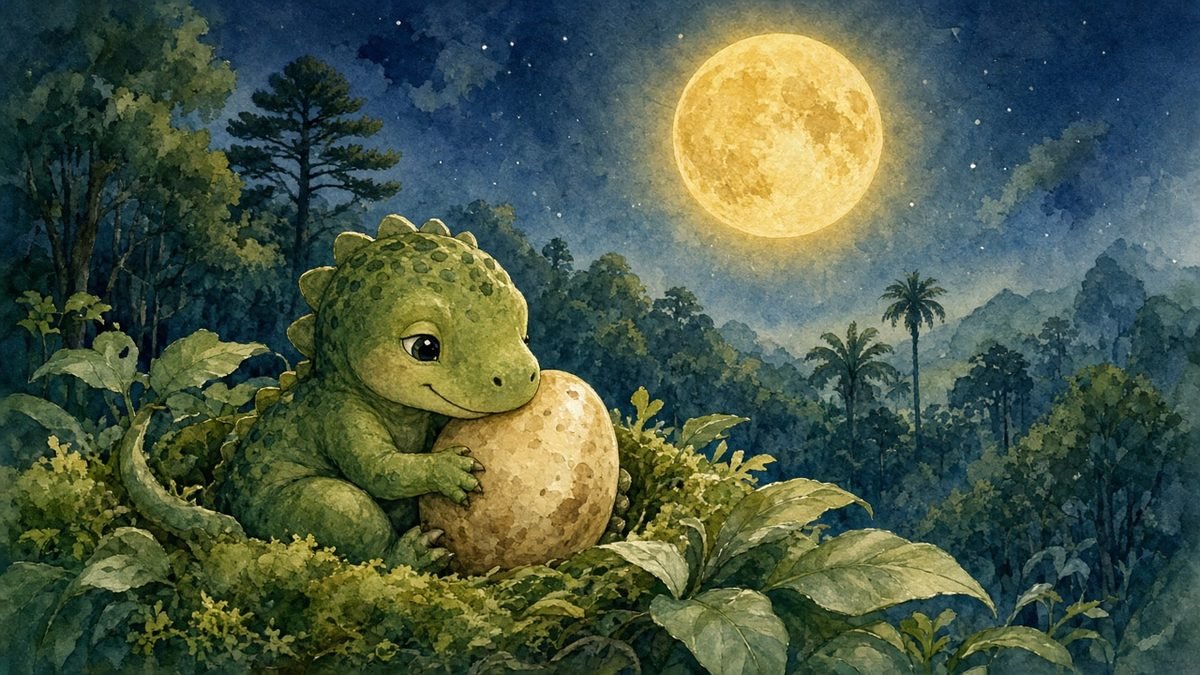
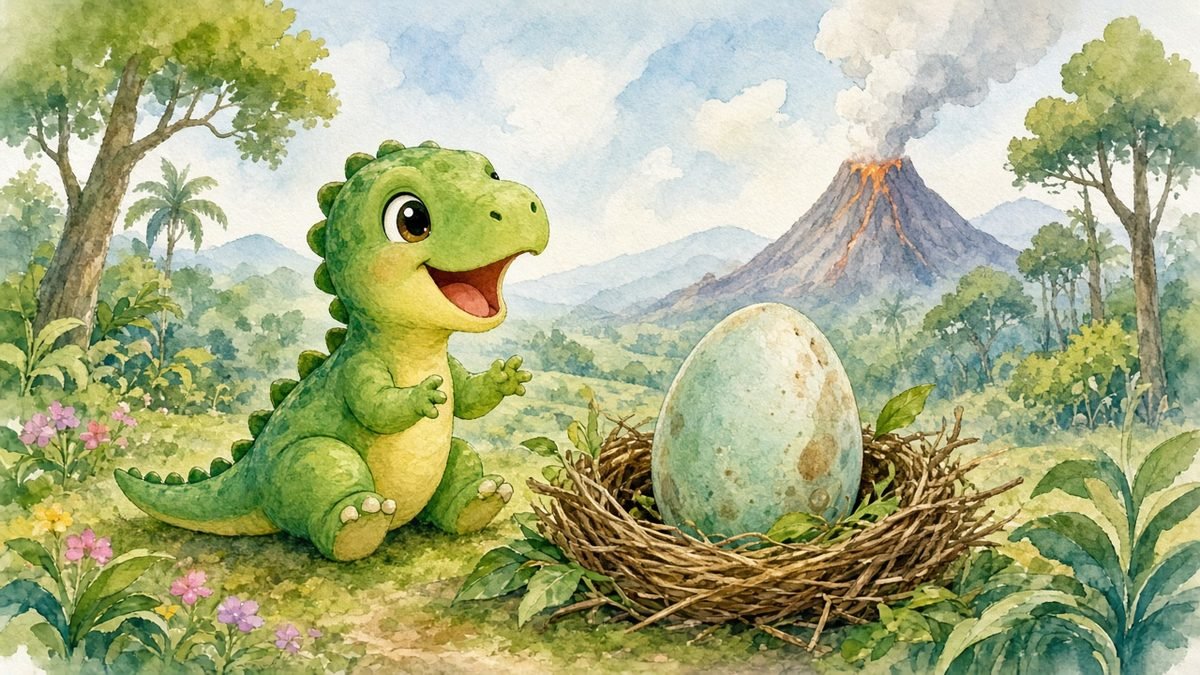
It was round and speckled, with little brown spots all over, and it was as big as a watermelon. Mama put it in a soft nest of leaves and moss at the edge of the forest, where the sun could keep it warm.
Dino, her son, was very excited.
He walked all the way around the egg. He looked at it from the front. He looked at it from the back. He even lay down on his tummy and looked at it from underneath, which wasn’t easy.
“What’s inside?” he asked.
“Your new brother or sister,” said Mama.
Dino’s eyes went wide. “When will it hatch?”
“When it’s ready,” said Mama.
Waiting and waiting
The next morning, Dino ran to the nest. “Is it ready yet?”
“Not yet,” said Mama.
The morning after that, he asked again. “Is it ready now?”
“Not yet,” said Mama, smiling. “Eggs take their time.”
Waiting was hard. Dino wanted to play with his new brother or sister right now. He wanted to show them the river and teach them how to stomp in puddles. He wanted to share his favorite leaves.
“Is there anything I can do?” he asked.
Mama thought about it. “Well,” she said, “eggs like to be warm. And they like to hear voices. Babies can hear you, even before they hatch.”
Dino’s face lit up. “I can do that!”
Dino helps
So Dino helped.
Every day, he sat next to the egg to keep it warm. He tucked extra leaves around the bottom of the nest so that the wind couldn’t get in.
And he talked to the egg.
He told it stories about the big volcano that puffed smoke on the hill. He told it about the river where the fish jumped, and the tall trees with the tastiest leaves at the very top. He told it about the time he got his tail stuck in a log, which was very funny now, even if it hadn’t been funny then.
He sang to the egg too. He sang the song about the bumpy mountain and the song about the rain. He even sang the one about the three hungry pterodactyls, which was his favorite, and he did all the flapping parts.
“You’re going to love it out here,” Dino told the egg. “I’ll show you everything.”
Tap, tap, crack
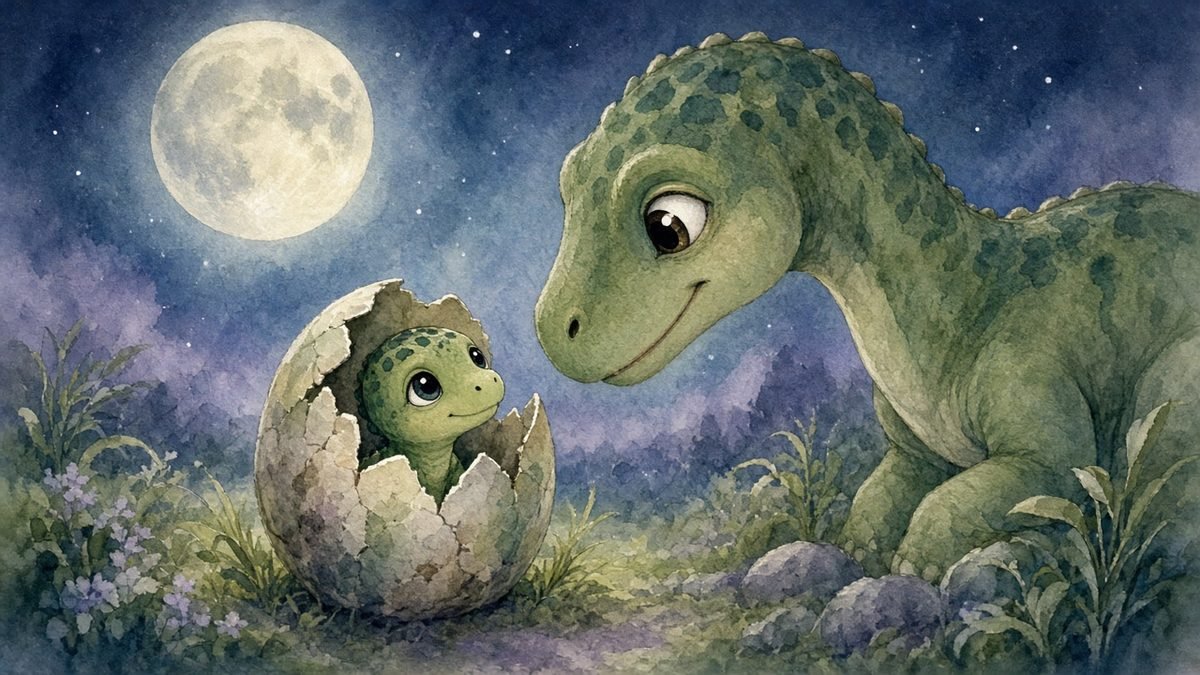
One night, under a big yellow moon, Dino was almost asleep beside the nest when he heard a sound.
Tap.
Dino opened one eye.
Tap, tap.
He sat up and pressed his ear against the egg. Something was moving inside.
Crack!
A tiny crack appeared on the side of the egg. Then another crack. Then another. A little piece of shell fell off, and a little green nose poked out.
“Mama!” Dino whispered. “Mama, come quick! It’s hatching!”
Mama came and sat beside him. Together, they watched.
The crack grew bigger. Out popped two big blinking eyes. Then a wobbly head. Then, with one last wiggle, out tumbled a baby dinosaur, small and wet and wiggly, with bits of shell stuck to her back.
She knows my voice
The baby dinosaur blinked. She looked at the moon. She looked at the trees. She looked at Mama.
Then she looked straight at Dino.
“Peep,” she said.
Dino held his breath. “Hello,” he said softly. “I’m Dino. I’m your big brother.”
The baby dinosaur wobbled toward him on her little legs. She sniffed his nose. Then she gave a happy little wiggle.
“Peep, peep!”
“She knows my voice,” said Dino in wonder. “She heard all my stories.”
Mama smiled. “She did. You’ve been taking care of her this whole time. You’re a big brother now.”
Dino stood up very tall. He felt proud and warm all over.
Goodnight, little sister
It was late, and hatching is hard work. The baby dinosaur gave a tiny yawn.
She curled up next to Dino and closed her eyes.
Dino curled up next to her and closed his eyes too. “Tomorrow,” he whispered, “I’ll show you the river. And the tall trees. And I’ll sing you the pterodactyl song.”
“Peep,” said his sister sleepily.
And Mama Dino watched over both of them, all night long, under the big yellow moon.
The Moral of the Story
Love starts before you even meet. Dino cared for his sister long before she hatched, and that made her feel safe the moment she arrived. Being a big brother or sister is a special job.
What kids can learn from Dino
- Waiting can be hard, but good things are worth it.
- New babies can hear voices and love being talked to.
- Big brothers and sisters can help in lots of little ways.
- Being gentle and patient makes a baby feel safe.
Questions to Ask After the Story
- How big was Mama Dino’s egg?
- How did Dino help the egg?
- What stories and songs did Dino share?
- What sound did the baby dinosaur make?
- Why did the baby know Dino’s voice?
- What would you tell a new baby?
Getting Ready for a New Baby
If your family is expecting a baby, this story is a gentle way to talk about it. You can ask your child what they would tell the baby, which songs they’d sing and what they’d like to show them first. Some kids enjoy “reading” to the baby bump, just like Dino talked to the egg. It helps them feel part of the big change instead of left out.
Frequently Asked Questions
What is Dino’s Big Egg about?
It’s a dinosaur story for kids about Dino, who waits for Mama’s big speckled egg to hatch. He keeps it warm and tells it stories and songs, and when his baby sister hatches, she already knows his voice.
Is this a good book for a child getting a new sibling?
Yes. It shows a big brother being excited, waiting patiently and helping, and it ends with a sweet first meeting. It’s a great conversation starter for kids aged 2 to 7.
Did dinosaurs really lay eggs?
Yes. Scientists have found fossil dinosaur eggs and nests all over the world. Some dinosaurs even sat on their nests to keep the eggs warm, a bit like birds do today.
What age is this story for?
Ages 2 to 7. The sounds (“tap, tap, crack” and “peep”) are fun for little ones to join in with.
More Bedtime Stories to Read Tonight
For another dinosaur story, read The Dinosaur Who Couldn’t Roar. You might also like The Princess Who Lost Her Shoe or The Little Star’s Night Light.
See all our dinosaur bedtime stories.