Pumpkins show up everywhere in the fall: on porches, in pies, in lattes, and in every kindergarten art project. There’s more going on than carving, though. These fun facts about pumpkins for kids cover how pumpkins grow, why they’re technically fruit, how giant pumpkins get so huge, and where the jack-o’-lantern came from. Read a few at breakfast, quiz each other in the car on the way to the pumpkin patch, or use them for a school report.
The facts are grouped by topic, and there’s a simple pumpkin science experiment at the end.
Fun Facts About Pumpkins for Kids: The Basics
- A pumpkin is a fruit. Scientists call any part of a plant that grows from a flower and holds seeds a fruit. That makes pumpkins fruits, along with cucumbers and tomatoes.
- Pumpkins are a kind of squash. They belong to the gourd family, which also includes zucchini, cucumbers, and watermelons.
- They’re mostly water. About 90 percent of a pumpkin is water. That’s one reason they rot fast once you carve them.
- The orange comes from beta-carotene. It’s the same natural pigment that makes carrots orange. Your body turns it into vitamin A, which helps your eyes see in dim light.
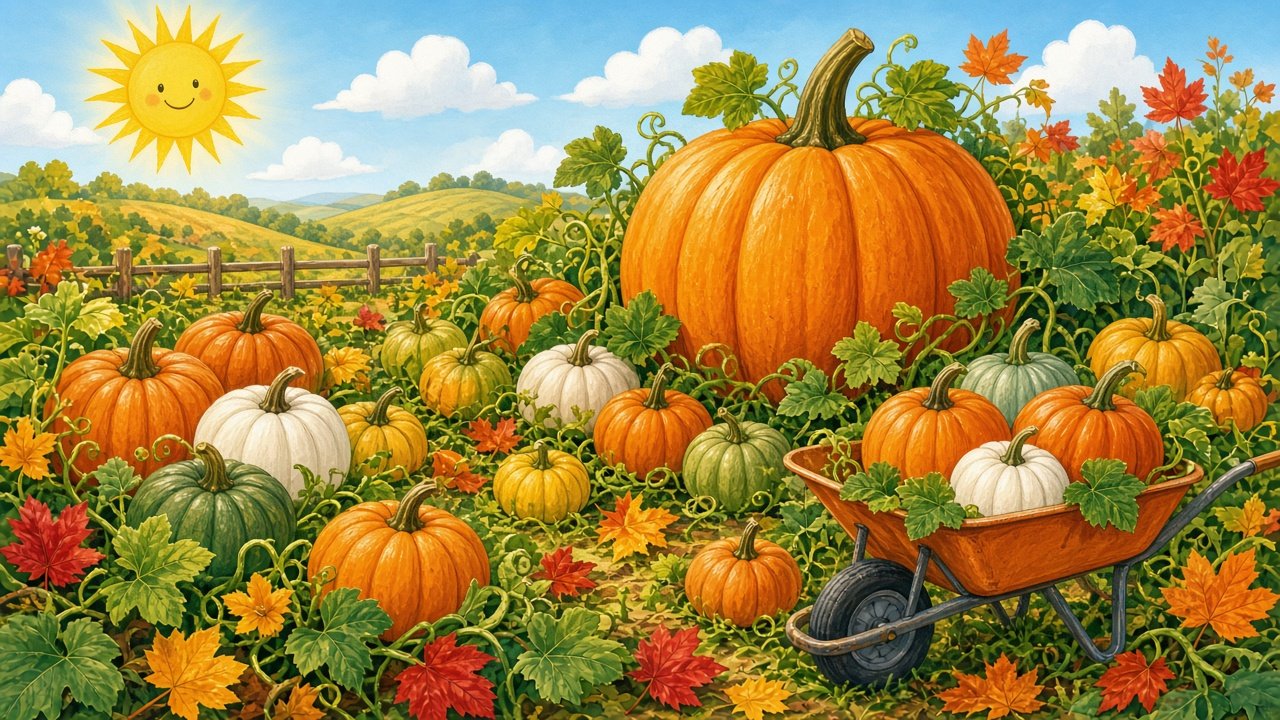
- Not all pumpkins are orange. There are white pumpkins, green ones, striped ones, bumpy ones, and even blue-gray pumpkins like the Jarrahdale variety from Australia.
- The name is very old. “Pumpkin” comes from the Greek word pepon, meaning “large melon.” The French turned it into pompon, the English into pumpion, and Americans eventually said pumpkin.
- Pumpkins grow on every continent except Antarctica. It’s simply too cold there.
How Pumpkins Grow
- It starts with a flat seed. Plant it in warm soil in late spring, and a sprout pokes up in about a week.
- Pumpkins grow on long vines. The vines can stretch 20 feet or more and wander across a whole garden.
- They need a long time. Most varieties take 90 to 120 days from seed to harvest. That’s three to four months, about the length of summer vacation.
- Pumpkin plants have boy and girl flowers. Male flowers appear first and carry pollen. Female flowers have a tiny round baby pumpkin at the bottom.
- Bees are pumpkin helpers. Bees carry pollen from male flowers to female flowers. Without them, the baby pumpkin shrivels up. A special kind of bee called the squash bee wakes up early just to visit squash and pumpkin flowers.
- The flowers only open for a morning. Each pumpkin blossom usually opens at dawn and closes by midday, so pollinators have to hurry.
- Tendrils help vines hold on. Those curly green corkscrews wrap around fences and plants to keep the vine steady in the wind.
- Pumpkins change color as they ripen. Most start green and turn orange as they get ready to pick. The stem gets hard and woody too.
Kids who like nature facts might also enjoy our fun facts about dolphins.
Fun Facts About Giant Pumpkins
- Giant pumpkins are a special variety. Most contest pumpkins come from a type called Atlantic Giant.
- Some weigh about as much as a small car. Record pumpkins have topped 2,700 pounds. That’s heavier than a grand piano.
- They can grow very fast. At peak growing time, a giant pumpkin can gain more than 40 pounds in a single day.
- Growers pamper them. They shade the pumpkins from too much sun, put sand or pads underneath, and water them a lot.
- People use them as boats. In some towns, giant pumpkins are hollowed out and paddled across lakes in pumpkin regattas.
- They’re weighed at big contests. Every October, growers bring their giants to weigh-offs. Half Moon Bay, California, holds one of the best-known in the United States.
Pumpkin History Facts
- Scientists have found squash seeds in Mexico that are thousands of years old, some more than 7,000 years.
- Native Americans grew them long before Europeans arrived. Pumpkins and squash were one of the “Three Sisters,” along with corn and beans. The three plants help each other grow.
- Nothing went to waste. Native peoples roasted pumpkin, dried strips of it for winter, and used the seeds. Some even wove dried strips into mats.
- Early colonists made a pumpkin “pie” without crust. They cut off the top, scooped out the seeds, filled the pumpkin with milk, spices, and honey, and baked it in hot ashes.
- Jack-o’-lanterns started with turnips. In Ireland and Scotland, people carved scary faces into turnips and other root vegetables for autumn festivals. Irish immigrants in America found that pumpkins were much easier to carve.
- The name comes from a folk tale. An old Irish story tells of “Stingy Jack,” a trickster who wandered with a coal glowing inside a carved turnip. People started calling the lanterns “Jack of the lantern,” then jack-o’-lanterns.
If your kids like old legends, read our gentle retelling of The Legend of Sleepy Hollow for kids. A pumpkin plays a big part in the ending.
Pumpkins in America Today
- Illinois grows the most pumpkins. It harvests more pumpkins than any other state, and most of the canned pumpkin in the U.S. comes from there.
- Most pumpkins aren’t for pie. The majority of pumpkins sold in the U.S. are bought for decorating and carving.
- Pie pumpkins are different. Small, sweet “sugar pumpkins” are best for baking. Big carving pumpkins are watery and stringy.
- Canned pumpkin is often a squash blend. Many brands use a pumpkin variety that looks a lot like a tan butternut squash because it bakes smoother and sweeter.
Pumpkin Food Facts
- You can eat almost all of it. The flesh, seeds, flowers, and young leaves can all be cooked and eaten.
- Roasted seeds have a name. Hulled pumpkin seeds are called pepitas, the Spanish word for “little seeds.”
- Pumpkin is healthy. It’s full of fiber, vitamin A, and potassium, and it’s low in calories (the pie with whipped cream is another story).
- Pumpkin flowers are a treat in many countries. In Mexico, squash blossoms are stuffed into quesadillas and soups.
Pumpkin Science You Can Try at Home
Turn your pumpkin into a mini science lab before you carve it.
Sink or Float?
Ask your child to guess whether a whole pumpkin will sink or float. Then try it in the bathtub or a big tub of water. (It floats, because the hollow middle is full of air.) Next, try a small chunk of pumpkin and a single seed.
Count the Seeds
Before scooping, have everyone guess how many seeds are inside. Write the guesses down. Then scoop, rinse, and count them in groups of ten. Most carving pumpkins hold several hundred, so this is great practice for counting by tens.
Measure and Compare
Use a piece of string to measure around the middle of the pumpkin, then lay the string next to a ruler. Compare that number with a friend’s or sibling’s pumpkin. Weigh it on a bathroom scale while holding it, then subtract your own weight.
Watch It Rot (Really!)
Put a small carved piece in a clear, closed container on a windowsill and check it every day for two weeks. Kids can draw what they see as mold and decomposers break it down. When you’re done, add it to the compost or garden.
Pumpkin Patch Questions to Ask Your Kids
Next time you visit a pumpkin patch, try these:
- Can you find a pumpkin with a curly tendril still attached?
- Which is the biggest pumpkin you can lift? The smallest?
- Can you find one that isn’t orange?
- Where do you think the bees were when these pumpkins were flowers?
For more seasonal ideas, see our fall activities for kids and our list of outdoor activities for kids. On a rainy day, switch to our rainy day indoor activities for kids.
Frequently Asked Questions
Is a pumpkin a fruit or a vegetable?
Botanically, a pumpkin is a fruit, because it grows from a flower and holds the plant’s seeds. In the kitchen people often treat it like a vegetable, so both answers come up in conversation.
How long does it take a pumpkin to grow?
Most pumpkin varieties need about 90 to 120 days from planting the seed to harvest. That’s why farmers in the U.S. usually plant them in late May or June for an October harvest.
How many seeds are in a pumpkin?
It depends on the size and variety, but a typical carving pumpkin holds several hundred seeds, often around 400 to 600. Counting them is a great math activity.
Why are pumpkins orange?
Pumpkins get their orange color from beta-carotene, the same natural pigment that colors carrots. Your body turns beta-carotene into vitamin A, which helps your eyes.
Where did jack-o’-lanterns come from?
People in Ireland and Scotland carved faces into turnips and other root vegetables for autumn festivals. When Irish immigrants came to America, they found pumpkins were bigger and easier to carve, and the tradition grew from there.
Can you eat the whole pumpkin?
Most of it! The flesh, the seeds, the flowers, and even young leaves are edible when cooked. Big carving pumpkins are stringy, so smaller ‘sugar’ or ‘pie’ pumpkins are best for cooking.