The Fir Tree story is a Christmas-season fairy tale by Hans Christian Andersen, first published in 1844. A little fir tree in a forest wants so badly to be big, and then to be a Christmas tree, that he forgets to enjoy the sunshine, the birds and the wind around him. This retelling for kids ages 5 to 12 takes about 7 minutes to read aloud.
Andersen’s original ends sadly, so this version gives the tree a gentler last chapter. The FAQ explains how the original goes.
Part 1: A tree who wanted more
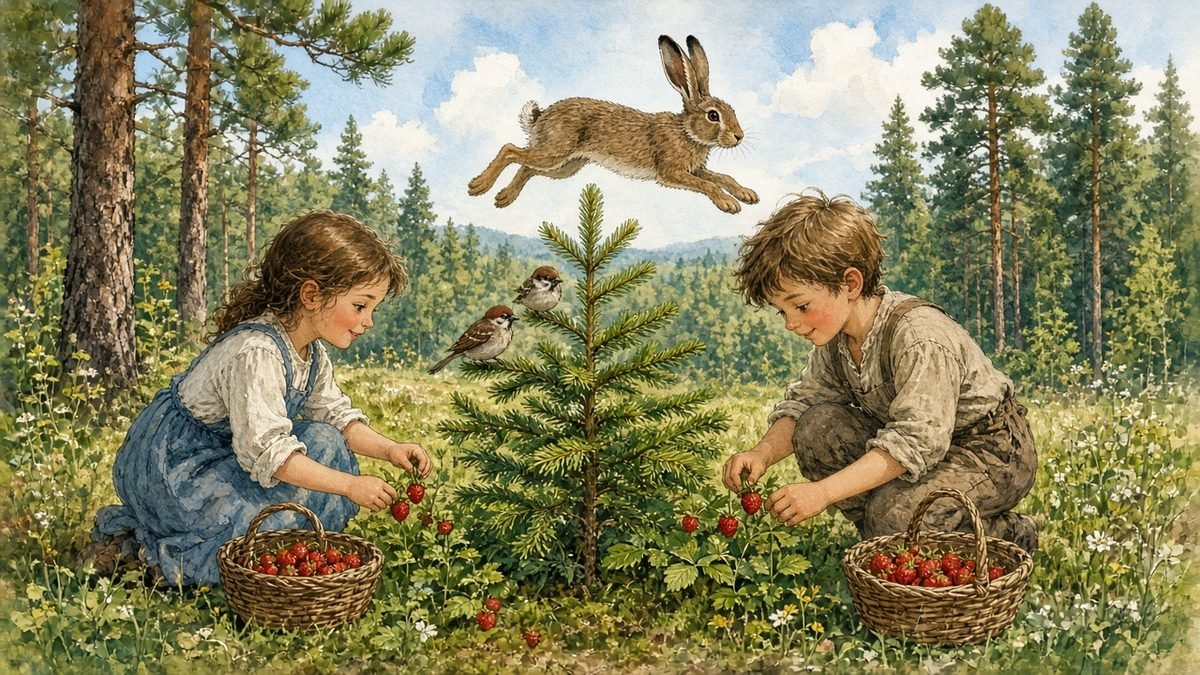
Once upon a time, deep in a forest, there stood a little fir tree. He had a good spot with plenty of sunlight, fresh air and soft, mossy ground. Taller trees grew all around him, and bushes grew at his feet.
But the little fir tree wasn’t happy. He wanted to be big, as big as the pines and the firs around him.
“Oh, if only I were tall!” he sighed. “Then I could spread my branches and look out over the whole world.”
He didn’t care about the warm sunshine. He didn’t listen when the birds sang in his branches. When children came through the woods with baskets, picking strawberries, they often sat down beside him and said, “What a pretty little tree!” But the fir tree frowned. He didn’t want to be a pretty little tree. He wanted to be tall.
Every year, he grew a little, and every year he was impatient. And a hare sometimes jumped right over his top, which made him angry. It reminded him of how small he still was.
“Enjoy the sunshine,” said the sunbeams. “Enjoy the fresh air,” said the wind. But the fir tree wouldn’t listen.
Part 2: What the birds saw
Winter came, and snow lay thick on the ground. Then the little fir tree really felt small, because the hare jumped over him, again and again.
Another few years passed, and at last, the fir tree was tall enough that the hare had to run around him. “Ah,” thought the tree. “To grow and grow and become old, that’s the best thing in the world!”
Every winter, woodcutters came into the forest and cut down some of the biggest trees. The fir tree watched them go.
“Where are they taking them?” he asked one day.
A flock of sparrows sat in his branches. “We know,” they said. “We looked in the windows of a house in town. We saw those trees standing in a warm room, dressed up in the most beautiful way. They had golden apples and gingerbread, and toys and hundreds of shining candles.”
“And then?” asked the tree, trembling with excitement.
“We didn’t see any more,” said the sparrows. “But it was lovely.”
The fir tree thought about that all winter. “Something even better must happen next,” he told himself. “I wish I were already in that warm room, with all the lights.”
“Be happy with us,” said the sunshine. But the fir tree wouldn’t hear it.
Part 3: Christmas Eve
One December, woodcutters came again. This time, they chose the fir tree. He was one of the tallest and slimmest trees in the forest.
The axe swung. The tree groaned and fell to the ground. It didn’t hurt as much as he thought it would, but he felt a little sad. He had left his home behind, and he knew he’d never see the forest again.
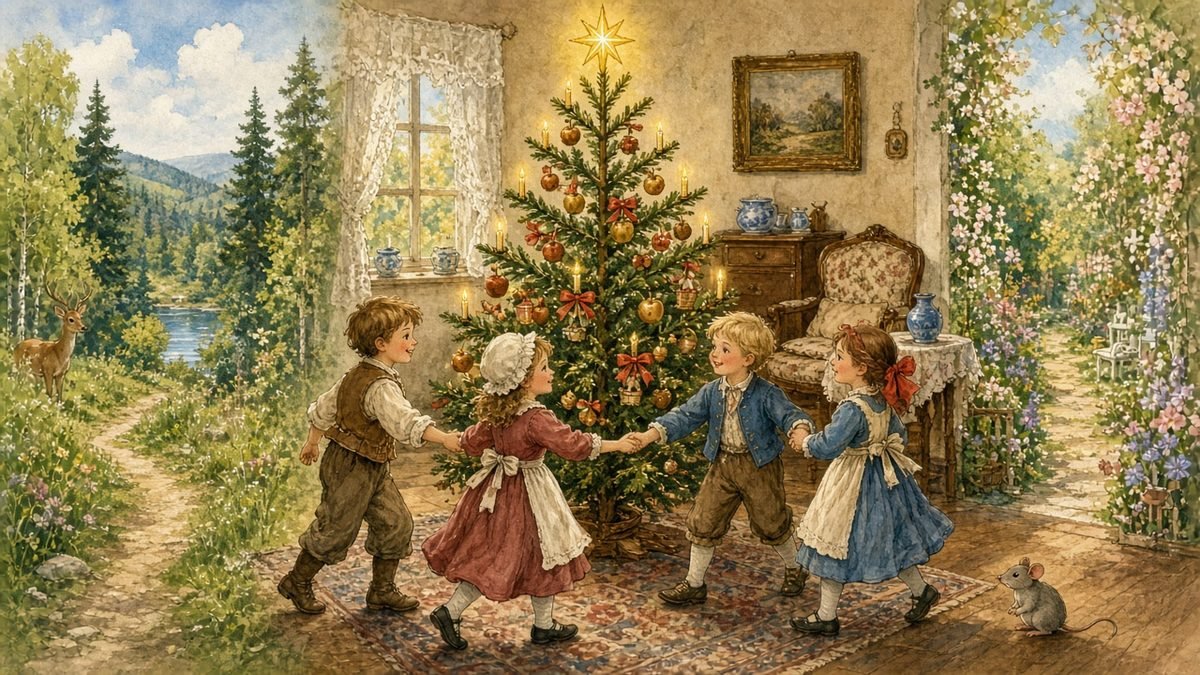
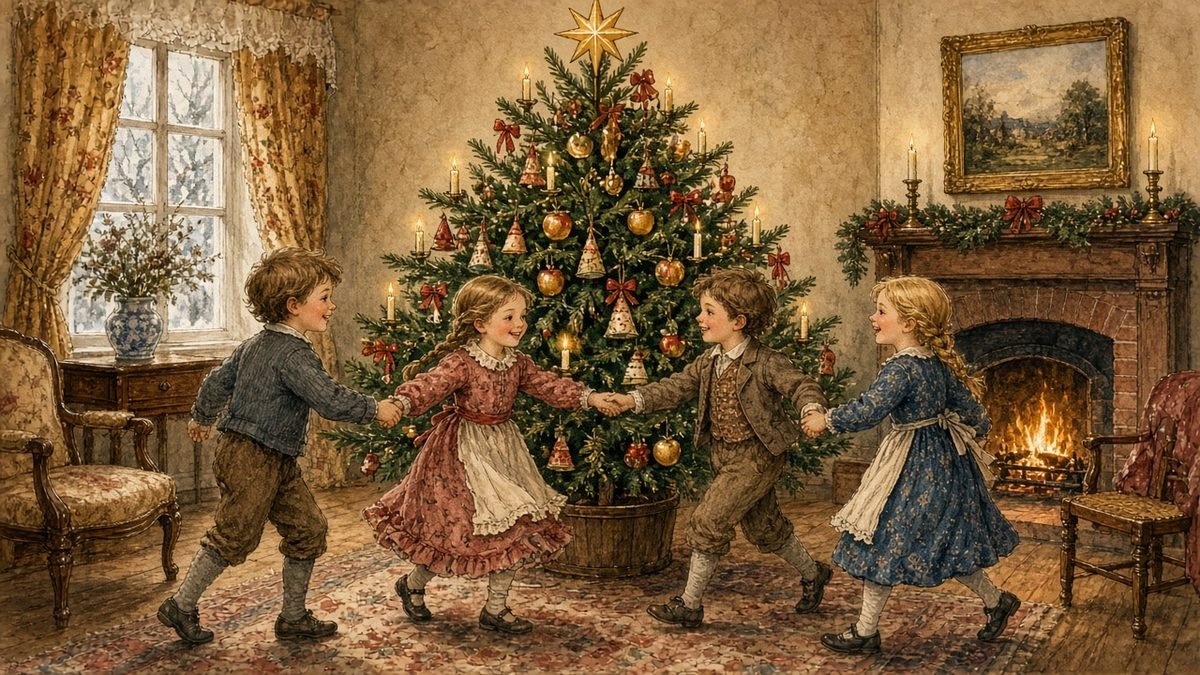
A cart carried him to a big house in the town. Servants put him in a tub of sand and dressed him in his finest clothes. They hung small paper baskets filled with sweets from his branches. They hung up gilded apples and walnuts, and red ribbons and toys. And they fastened a gold star to the very top.
When the sun set, the family lit the candles one by one. The tree stood very still and very proud, trying not to move in case a candle fell. “At last,” he thought. “At last, this is it!”
The doors opened and a crowd of children ran in. They danced around the tree, shouting and clapping. Their parents sat by the fire and told stories. One of them told a story about Klumpy Dumpy, who fell down a flight of stairs and still ended up marrying a princess.
“Maybe I’ll fall down the stairs, too,” thought the fir tree, “and marry a princess!”
Part 4: After the party
The next morning, the tree woke up feeling hopeful. “Now they’ll put on my candles again,” he thought. “Now they’ll bring back the stories and the dancing.”
But nothing happened. Two servants came and took off the ornaments. They carried him up the stairs to a dusty attic and leaned him in a corner.
It was dark in the attic, and it was very quiet. The tree stood there for days, and then for weeks. He thought about the forest and the snow, and about the sparrows who had told him all about the candles.
“It’s so lonely up here,” he whispered. “If only I’d listened to the sunshine.”
Then he heard a tiny squeak. A small gray mouse peeped out from behind a box. “Who are you?” she said. “Where do you come from?”
So the fir tree told her all about the forest and the strawberries, and about the lights and Christmas Eve. And he told her the story of Klumpy Dumpy. The mouse listened with her whiskers twitching, and she called her friends to come and hear it.
For the first time in weeks, the tree wasn’t lonely. “These were happy days,” he said. “I didn’t know it at the time. Now I’m glad I remember them.”
Part 5: Spring in the garden
One bright spring day, the attic door creaked open. Footsteps came up the stairs, and the tree felt his heart leap.
It was the children from the Christmas party, a little taller than before. “Look!” cried the youngest boy. “It’s our Christmas tree! We shouldn’t have forgotten him up here.” He pointed to the gold star, which was still shining on the top.
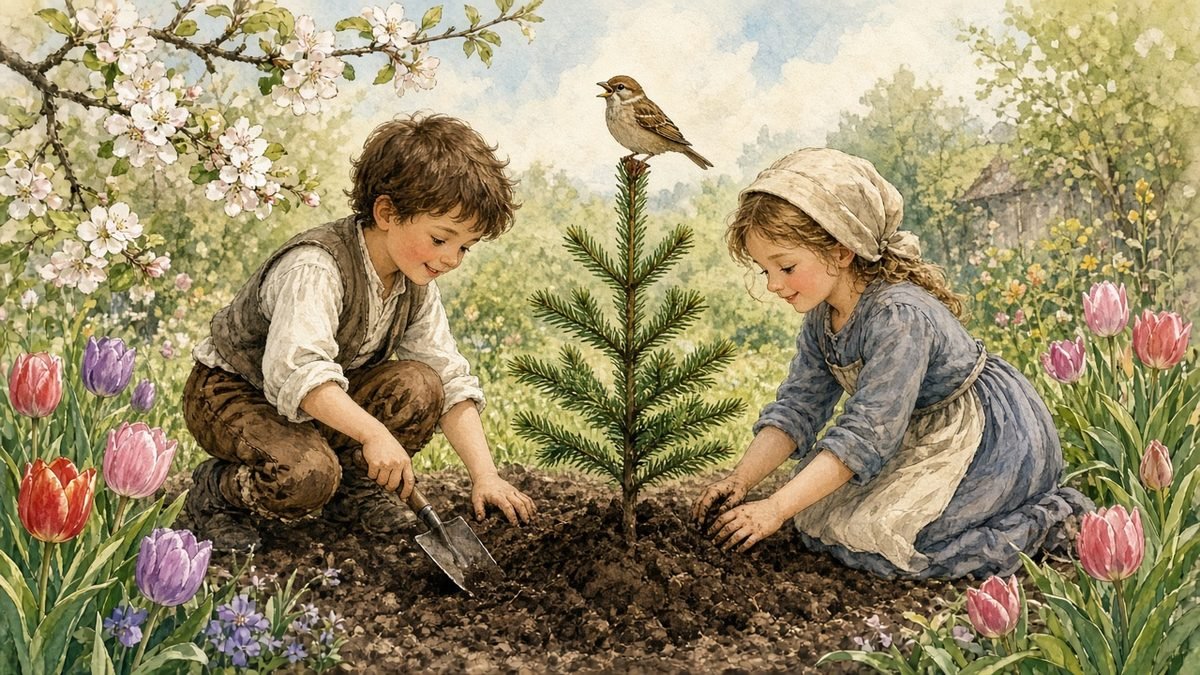
The children carried the tree down the stairs, out the door and into the garden. The air was warm, and it smelled of flowers. The tree blinked in the light. Birds were singing, and bees were buzzing around the blossoms.
“We’ll plant him here,” said the girl. She and her brother dug a deep hole in the soft earth, and they tucked the roots in carefully.
The little boy took the star off the top and tucked it in his pocket. “I’ll keep this safe,” he said. “And next Christmas, we’ll hang it on him again.”
The tree felt the sun on his needles and the earth on his roots. A sparrow landed on his top branch and began to sing.
“Thank you,” said the fir tree. “I’m happy right here, and for the first time, I know it.”
The End
Moral of the story: Enjoy where you are
The fir tree spent years wishing to be somewhere else, and he missed the sunshine, the birds and the strawberry pickers right in front of him. Andersen’s tale is a reminder that waiting for the next big thing can make us miss the good things that are already here. It’s fine to look forward to something, but make sure to enjoy today as well.
What kids can learn from the Fir Tree story
- Enjoy the good things around you while you have them.
- Wanting to grow up quickly can make you miss being a kid.
- Big events like holidays are fun, but they last a short time.
- Telling stories and sharing memories can make a lonely time feel better.
Questions to talk about with your child
- What did the little fir tree want, and why wasn’t he happy?
- What did the sunshine, the wind and the sparrows try to tell him?
- How did the tree feel on Christmas Eve, and how did he feel the next day?
- What good things were happening around you the last time you were waiting for something big?
- If you were the tree, what would you do differently?
Summary: The Fir Tree
In the Fir Tree story, a young fir tree is so eager to grow up that he ignores the sun, the wind and the birds. He’s cut down and becomes a Christmas tree, enjoys one wonderful evening, and then is stored in an attic. A group of mice listens to his stories, and he finally understands what he missed in the forest. In this retelling, the children replant him in the garden in spring.
For more winter stories by the same author, read The Little Match Girl and The Snow Queen.
Read More: The Legend of the Christmas Spider
Frequently asked questions
What is the moral of The Fir Tree?
Enjoy the present. The tree always wants to be somewhere else or someone else, and he doesn’t notice how good his life is until it’s gone.
Who wrote The Fir Tree?
Hans Christian Andersen, the Danish author who also wrote The Little Mermaid, The Ugly Duckling and The Snow Queen. The Fir Tree was published in 1844 in his collection called New Fairy Tales. In Danish, the title is “Grantræet.”
How does the original story end?
Andersen’s ending is sad. After Christmas, the tree is put in the attic, and in the spring the servants drag him out into the yard, chop him up and burn him. As he burns, he remembers his life and sighs, and a boy pulls the gold star off his branches. This retelling lets the children replant the tree in the garden, so he gets a second chance to enjoy the sunshine. The mice and the Klumpy Dumpy story are part of Andersen’s version, but the rescue and the planting are our changes.
Is The Fir Tree a Christmas story?
Yes, it’s one of the best-known Christmas tree stories. It’s set around Christmas, but it isn’t a story about the religious side of the holiday. Instead, it’s about the tree’s feelings and the decorations.
What age is this story good for?
Ages 5 to 12. Younger kids will enjoy the decorations and the mice, and older kids can talk about patience and being happy where you are.