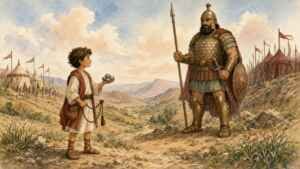
Long before there were grocery stores, many Native American families grew three crops side by side in the same small hill of soil: corn, beans and squash. They called these plants the Three Sisters. The Haudenosaunee (Iroquois) people of what is now New York and southern Canada tell the Legend of the Three Sisters to explain why, and other nations have their own versions too.
This retelling is for children ages 5 to 12 and takes about 10 minutes to read aloud. It’s a lovely story for the Thanksgiving season, when families think about harvest, food and the people who share it. Storytellers tell it in many ways, so the version below is one gentle telling, not the only one.
Part 1: Three sisters who could not agree
Once, in a wide green valley, there lived three sisters. They were very different from one another.
The oldest sister was tall and straight. She wore a long green shawl and had pale yellow hair that tossed in the wind. She liked to stand in the sun and look far across the fields. Her name was Corn.
The middle sister was thin and wiggly. She could never sit still. She wore a green dress and liked to wrap her arms around anything she could reach. Her name was Bean.
The youngest sister was round and quiet. She wore a yellow dress and liked to lie low on the ground, spreading her big leafy skirts wide. Her name was Squash.
The sisters loved each other, but they argued all the time.
“Stop leaning on me,” Corn would say when Bean curled around her. “You make me wobble.”
“But I can’t reach the sun by myself,” Bean would answer. “I just flop over in the dirt.”
“Move your big leaves,” Corn would tell Squash. “They’re in my way.”
Squash didn’t say much. She only sighed and pulled her skirts in tighter.
One spring, the sisters had such a big argument that they decided to live apart. Corn walked to the sunny middle of the field. Bean went to the shady edge near the trees. Squash rolled off to a corner by the creek.
“Now I’ll finally have room to grow,” each sister said to herself.

Part 2: A hard summer alone
At first, Corn was happy. She stretched her stalk up toward the sky. But when the summer storms came, the wind pushed her hard. There was no one to hold her steady. The soil around her roots grew dry and thin, and weeds crowded in close. Her ears of corn came out small.
Bean was not doing well either. She crept along the ground, looking for something to climb. She tried a fence post, but it was too far away. Her vines tangled in the mud. Rabbits nibbled her leaves, and her pods rotted where they touched the wet soil.
Squash had the creek nearby, but the hot sun beat down on the bare dirt around her. The soil dried out, and the weeds grew taller than she was. Without anyone to shade her flowers from the wind, few of them turned into squash.
By the end of summer, all three sisters were tired, thin and lonely.
“I miss my sisters,” Corn whispered one night.
Far away at the edge of the trees, Bean whispered the same thing. And down by the creek, Squash did too.
Part 3: The grandmother’s idea
Not far from the valley lived an old grandmother who cared for the land. Every spring she planted seeds, and every fall she gathered food for her family. She had watched the three sisters all summer, and she knew exactly what was wrong.
The next spring, the grandmother took her grandchildren out to the field. She showed them how to scoop the earth into a low, round mound, like a small hill.
“First we plant Corn in the middle,” she said, pressing kernels into the top of the mound. “She will grow tall and strong.”
When the corn was about as high as a child’s hand, the grandmother came back and planted beans around it.
“Now Bean has something to climb,” she said.
Then she planted squash seeds around the edges of the mound.
“And Squash will cover the ground and keep it cool.”
The children looked at each other. “But Grandmother,” said the smallest one, “won’t they crowd each other?”
The grandmother smiled. “Watch and see.”
Part 4: Growing together
That summer, something wonderful happened.
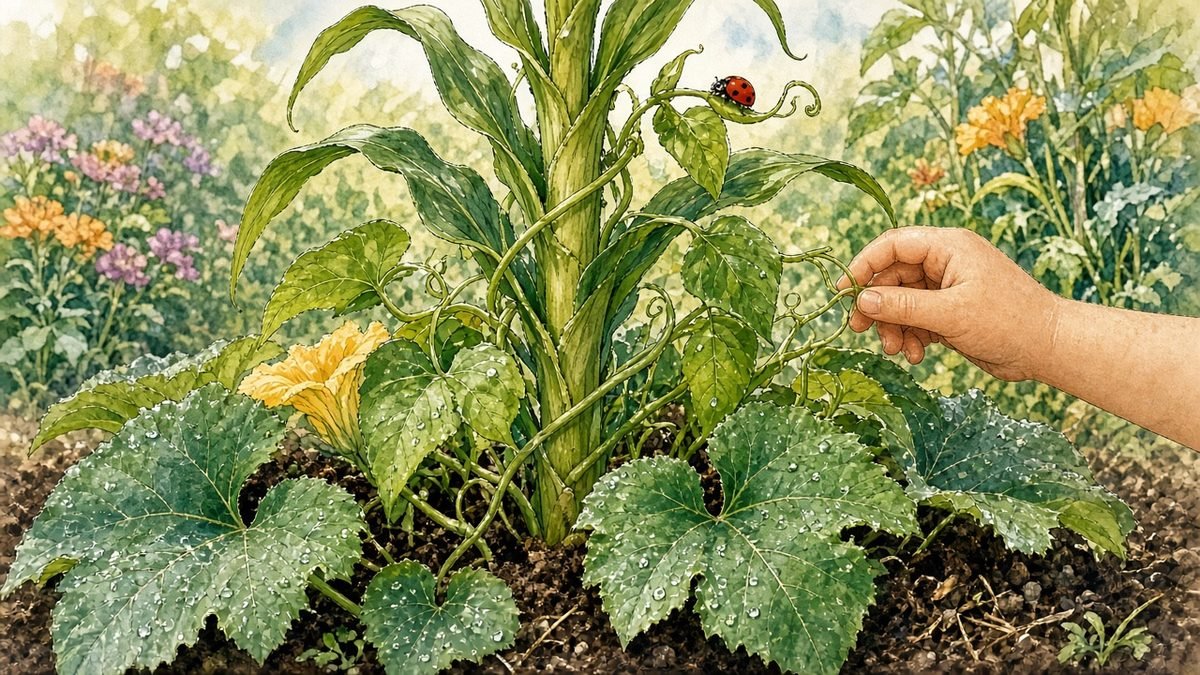
Corn grew tall and straight, and Bean wound her vines up and around Corn’s stalk, climbing toward the sun. Bean’s vines wrapped around Corn like a hug and helped hold her steady when the wind blew. Bean also did a special job under the ground. Her roots helped feed the soil, so it stayed rich for her sisters.
Squash spread her wide, prickly leaves across the ground. They shaded the soil so it stayed damp and cool. Weeds couldn’t grow in the shade, and the prickly stems kept hungry animals away.
“I’m sorry I told you to stop leaning on me,” Corn said to Bean. “I’m stronger when you hold on.”
“And I’m sorry I wiggled so much,” Bean laughed. “I needed you all along.”
Squash didn’t say much, as usual. But her yellow flowers bloomed bright, and soon round squash sat fat and happy on the ground.
The three sisters had learned that each of them had a gift. Corn gave height and strength. Bean gave support and good soil. Squash gave shade and protection. Alone, each one struggled. Together, they grew better than ever.
Part 5: The harvest
When autumn came and the leaves turned red and gold, the grandmother and her family gathered the harvest. They picked fat ears of corn, long bean pods and heavy squash.
That evening, the whole family sat together outside and shared a meal of corn, beans and roasted squash. They gave thanks for the food, for the rain and sun, and for the three sisters who had learned to grow side by side.
“Grandmother,” asked the smallest child, “will the sisters argue again next year?”
“Maybe a little,” the grandmother said with a wink. “Sisters always do. But they’ll remember that they are strongest together. And so should we.”

The End
Moral of the story: We grow best when we help each other
Each sister had something the others needed. When they stopped arguing and worked together, all three did better. Families, classrooms and teams work the same way. Everyone brings a different gift, and those differences are what make the group strong.
What kids can learn from the Legend of the Three Sisters
- Everyone has a gift. Corn was tall, Bean could climb and Squash could cover the ground. No gift was better than the others.
- Differences can help. The sisters argued because they were different, but those differences turned out to be exactly what made them a good team.
- Saying sorry matters. Corn and Bean apologized to each other before they could really work together.
- Be thankful for food and the people who grow it. The family gave thanks at the harvest, just as many families do at Thanksgiving.
- Nature has clever teamwork. The story describes a real way of planting that people still use today.
The real science behind the Three Sisters
This legend teaches a real gardening method. When corn, beans and squash are planted together:
- Corn gives the bean vines a tall pole to climb.
- Beans are legumes. Their roots work with tiny soil bacteria to add nitrogen, a nutrient plants need, to the soil.
- Squash leaves shade the ground, which helps keep moisture in the soil and keeps weeds down. Their prickly vines can also discourage some animals.
Together, the three crops also make a healthy, balanced meal. Many Native American nations grew them this way for hundreds of years, and gardeners around the world still plant Three Sisters gardens today. If your family has a sunny patch of yard, you could even try it next spring.
Questions to talk about with your child
- Why did the three sisters decide to live apart? Was that a good idea?
- What happened to each sister when she was alone?
- What special gift did Corn have? What about Bean and Squash?
- Can you think of a time when you and a brother, sister or friend did something better together?
- What are you thankful for this Thanksgiving?
Summary: The Legend of the Three Sisters
Three sisters, Corn, Bean and Squash, argue so much that they move apart. Alone, each one struggles through a hard summer. A wise grandmother plants them together in one mound of earth. Corn grows tall, Bean climbs her and enriches the soil, and Squash shades the ground. They grow better together than they ever did apart, and the family gives thanks for a rich harvest.
Want to learn more about the harvest season? Read our First Thanksgiving story for kids, then make a thankful tree together.
Read More: Stories About Gratitude for Kids
Frequently asked questions
What is the Legend of the Three Sisters?
It’s a Native American story about corn, beans and squash, three crops that grow best when they’re planted together. The Haudenosaunee (Iroquois) are well known for this story, and many other Native nations have their own versions and traditions about these plants.
Why are corn, beans and squash called the Three Sisters?
Because they support each other like family. Corn holds up the beans, beans feed the soil, and squash shades the ground. Many Native peoples think of the crops as sisters who belong together.
Is the Three Sisters story connected to Thanksgiving?
The story isn’t about Thanksgiving itself, but corn, beans and squash were important Native American foods, and the legend is about harvest and gratitude. That makes it a natural fit for November story time.
What age is this story for?
This retelling works well for kids ages 5 to 12. Younger children enjoy the sisters’ arguing and making up, while older kids can dig into the real science of companion planting.
Is this the only version of the legend?
No. The story has been passed down by many storytellers, and details change from nation to nation and teller to teller. In some versions the sisters are spirits who protect the crops. This is one simple retelling for young readers.