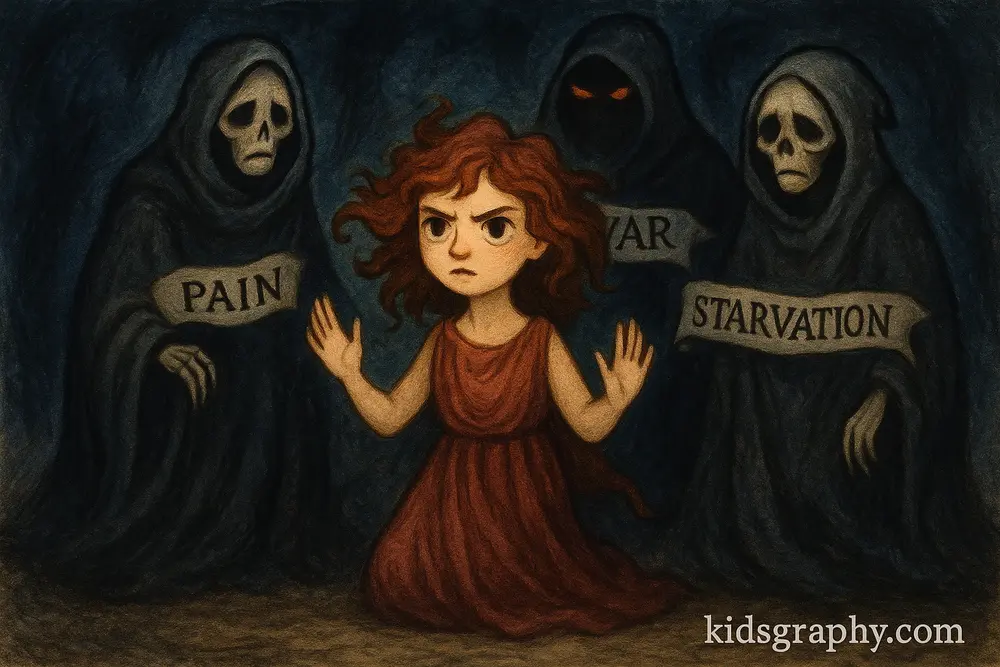
In the peaceful halls of Mount Olympus, not every goddess was loved or welcomed. One stood out for her wild energy and love for conflict—Eris, the goddess of strife. Wherever Eris went, trouble followed. She was powerful, unpredictable, and played a huge role in one of the most famous wars in mythology.
Let’s explore the fascinating story of Eris in Greek mythology—who she was, her powers, her origins, and her legendary influence.
Read More: Calypso Greek Mythology: The Lonely Nymph
Who Is Eris in Greek Mythology?
Eris is the goddess of strife, conflict, and discord. In Greek myths, she was not evil, but she did enjoy stirring things up. She didn’t live on Mount Olympus because the other gods didn’t want her around. Her presence often meant arguments, fights, or even wars were about to begin.
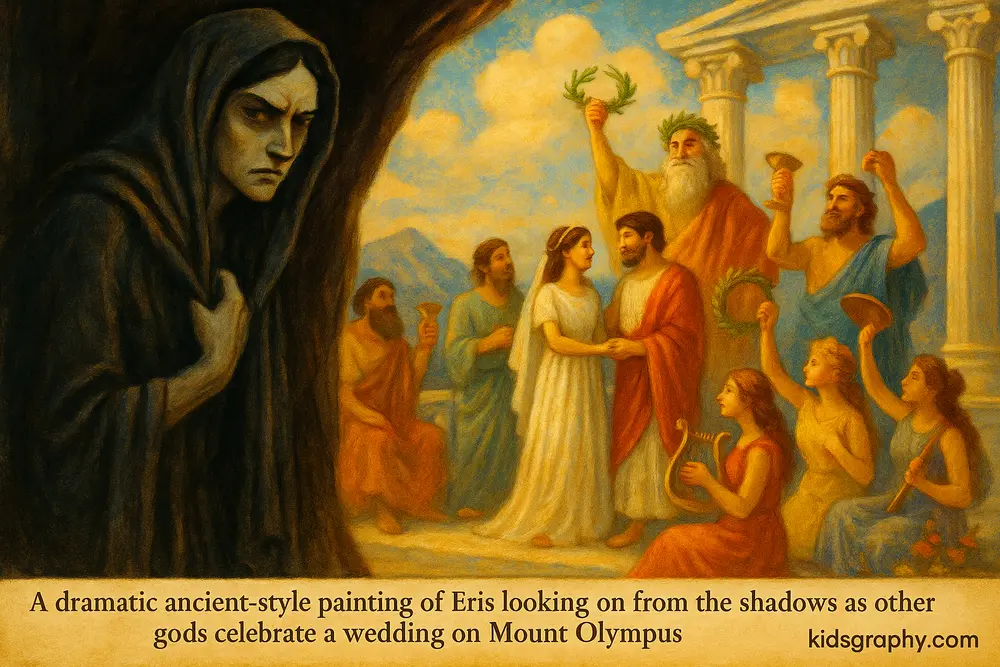
Eris was known to thrive in chaos, and she found joy in disrupting peace. She is one of the few goddesses who did not try to hide her true nature.
Eris’ Origins: The Parents of Chaos
The parents of Eris vary in different myths. In the most popular version, Eris is the daughter of Nyx, the night goddess, who gave birth to her alone. This makes Eris a child of darkness—literally and symbolically.
In other versions, Eris is the daughter of Zeus and Hera, which would make her a full Olympian. But this version is much less common.
Most ancient writers agree: Eris comes from Nyx, making her a powerful, dark force tied to night, mystery, and conflict.
Read More: Nyx in Greek Mythology: Goddess of the Night
Eris’ Powers in Greek Mythology
So, what are Eris’ powers? Unlike goddesses of love or wisdom, Eris didn’t use magic or weapons. Her power came from words, actions, and manipulation. Here’s what made her powerful:
- She could plant the seeds of argument in the minds of gods and humans.
- She had the power to turn small issues into huge fights.
- She inspired jealousy, competition, and anger.
- She could disrupt even the closest bonds—friendships, marriages, or alliances.
One of her greatest weapons was the Golden Apple of Discord, which she used to start a chain of events that led to the Trojan War.
Read More: Circe in Greek Mythology: The Witch of Aiaia
The Apple That Started a War
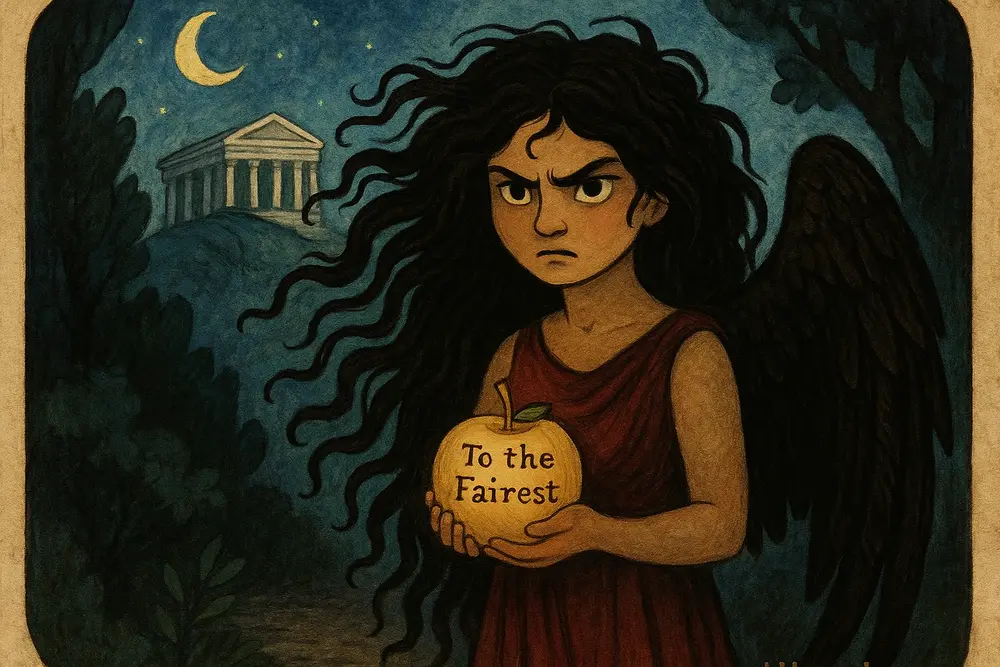
The most famous story involving goddess Eris in Greek mythology is the Judgment of Paris. It began when all the gods were invited to a wedding—except for Eris. Angry at being left out, she threw a golden apple into the crowd. On it was written: “To the fairest.”
Three goddesses—Hera, Athena, and Aphrodite—claimed the apple. They asked the mortal Paris of Troy to decide who was the most beautiful.
Each goddess offered him a gift. Aphrodite promised him the love of the most beautiful woman in the world—Helen of Sparta. Paris chose Aphrodite, which led to the abduction of Helen, and eventually, the Trojan War.
Eris in Art and Culture
In ancient art, Eris was often shown as a dark-winged woman holding a bloody dagger or a scroll of lies. She wasn’t beautiful like Aphrodite or graceful like Artemis. Instead, she looked fierce, wild, and untamed.
In modern culture:
- Eris appears in books, movies, and games as a symbol of rebellion and chaos.
- She was reimagined in the animated movie Sinbad: Legend of the Seven Seas as a powerful, shape-shifting goddess.
- She also appears in video games like Hades and God of War.
Read More: Ajax in Greek Mythology: Warrior of Honor and Tragedy
Eris’ Children: More Chaos Ahead
In some myths, Eris has many children, each one representing a different kind of conflict or pain. Her children include:
- Ponos – Hardship
- Lethe – Forgetfulness
- Limos – Starvation
- Algos – Pain
- Hysminai – Battles
- Machai – Wars
- Phonoi – Murders
- Androktasiai – Manslaughters
These spirits reflect the emotional and physical pain that follows when Eris enters a story.
Final Thoughts: The Power of Discord
Eris may not have ruled Mount Olympus, but she changed the world with just one act. Her role in Greek mythology shows how chaos can come from a small spark, and how powerful even the most feared goddesses can be.
She reminds us that not all stories are about peace and love—some are about what happens when order breaks and truth is twisted. And in those stories, Eris is queen.
Read More: Prometheus in Greek Mythology: The Fire Bringer
Eris vs. Other Goddesses: Chaos Among Harmony
Unlike most Olympian goddesses who represent positive traits like love (Aphrodite), wisdom (Athena), or harvest (Demeter), Eris stands out. She doesn’t bring peace—she brings disruption.
Here’s how she compares to others:
- Aphrodite stirs desire and attraction. Eris stirs jealousy and rage.
- Athena brings strategy to war. Eris brings emotional chaos.
- Hera defends marriage. Eris breaks relationships apart.
While others build, Eris challenges and tears down—not out of evil, but as a force of nature that exposes weaknesses.
This is what makes her unique: she’s not evil or good, but a necessary part of balance.
Read More: Hera in Greek Mythology: Queen of the Gods
The Dual Nature of Eris: Not Just Destruction
Although Eris is feared, some ancient texts speak of two forms of Eris:
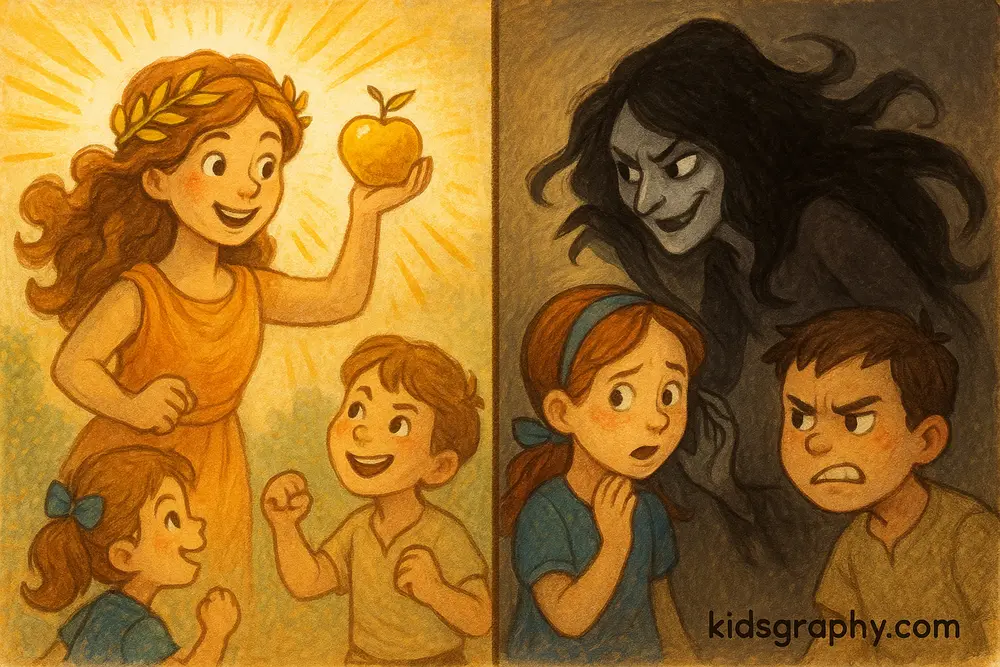
- Harmful Eris, who starts war, hatred, and betrayal.
- Healthy Eris, who sparks ambition, competition, and excellence.
This version comes from the poet Hesiod, who says in Works and Days that the second Eris pushes people to work harder and improve, because they don’t want to be left behind. This Eris inspires growth through rivalry.
So, not all strife is bad. Some of it pushes societies forward.
Eris in Literature and Symbolism
In ancient literature, Eris is a powerful metaphor. She often appears:
- At the start of a chain of events, not the end.
- As a symbol for conflict born from pride, exclusion, or injustice.
- In parables that warn against jealousy and vanity—like in the story of the golden apple.
Writers like Homer and later Greek dramatists didn’t give Eris a major personality—but her actions always changed the course of events.
Read More: Cronus in Greek Mythology: Titan of Time and Power
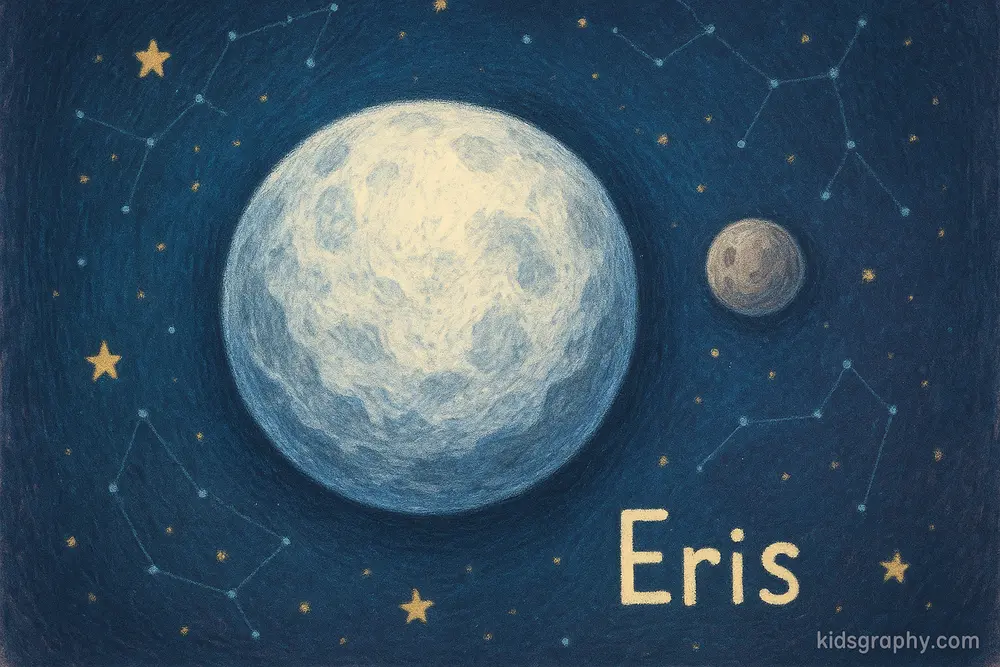
The Planet Eris: A Modern Nod to Myth
In 2005, astronomers discovered a distant dwarf planet and named it Eris. Why?
Because just like the goddess, the discovery of the planet caused conflict—it challenged Pluto’s status as the ninth planet and eventually led to Pluto being reclassified.
In this way, Eris still lives up to her name, creating division and reshaping how we view the world—even in science.
Should Eris Be Feared or Respected?
While ancient Greeks were wary of invoking Eris’ name, they also respected her power. She reminded them that:
- Even the smallest insult can lead to war.
- Peace can break easily when pride is involved.
- Chaos is always just one spark away.
Eris is a goddess who reflects human flaws—pride, jealousy, revenge—but also the truth that conflict is part of life.
More Stories: Eris in Greek Mythology
FAQ: Eris in Greek Mythology
Eris is the goddess of strife and discord. She is known for starting conflicts among gods and mortals, most famously the Trojan War.
Eris has the power to stir jealousy, rivalry, and arguments. She influences both gods and humans by spreading conflict and emotional chaos.
In most myths, Eris is the daughter of Nyx (Night), born without a father. Some versions say she is a daughter of Zeus and Hera.
It was a golden apple Eris threw into a wedding feast, labeled “To the Fairest.” This sparked a goddess rivalry that led to the Trojan War.
Eris is not purely evil. She represents both harmful strife and competitive drive, showing how conflict can destroy or motivate.
Read More: Chaos in Greek Mythology: The First Being of Creation