The Empty Pot is a Chinese folk tale about honesty. A boy named Ping receives a seed from the emperor and does everything right, yet nothing grows. When spring comes and the other children march in with lush flowers, Ping carries only an empty pot. What the emperor says next is the heart of the story.
Teachers in the United States love this tale for classroom read-alouds about integrity. It also makes a calm bedtime story for ages 5 to 12. This version takes about ten minutes. Afterward you’ll find the moral, questions, a summary and a FAQ.
Part 1: The Emperor Who Loved Flowers
Long ago in China, there lived an emperor who loved his gardens almost as much as he loved his people. Peonies blushed along the palace walls. Chrysanthemums glowed like little suns. In spring the air smelled of wet earth and open blossoms, and the emperor walked the paths each morning with his hands behind his back, nodding at every bud.
The emperor was growing old. He had no child of his own to take the throne. Advisors offered nephews, scholars and generals. The emperor wanted a successor who was clever and true. Skill could be taught. Character was harder to fake, and he had seen enough pretty speeches to last a lifetime.
One day he called the children of the land to the palace courtyard. Boys and girls arrived in their best jackets, whispering. Among them stood Ping, a quiet boy with kind eyes and dirt already under his fingernails from helping in his family’s garden.
The emperor held up a tray of seeds. “Each of you will take one seed,” he announced. “Plant it. Tend it. In one year, bring your pot back to me. The child who grows the finest plant will be the next emperor.”
A gasp moved through the crowd like wind through bamboo. Some children already imagined crowns. Ping’s heart thumped for a quieter reason. He loved growing things. He knew the smell of tomato leaves and the patience of waiting for beans. Maybe, just maybe, this was a chance he could earn with patient hands.

Part 2: Ping’s Seed
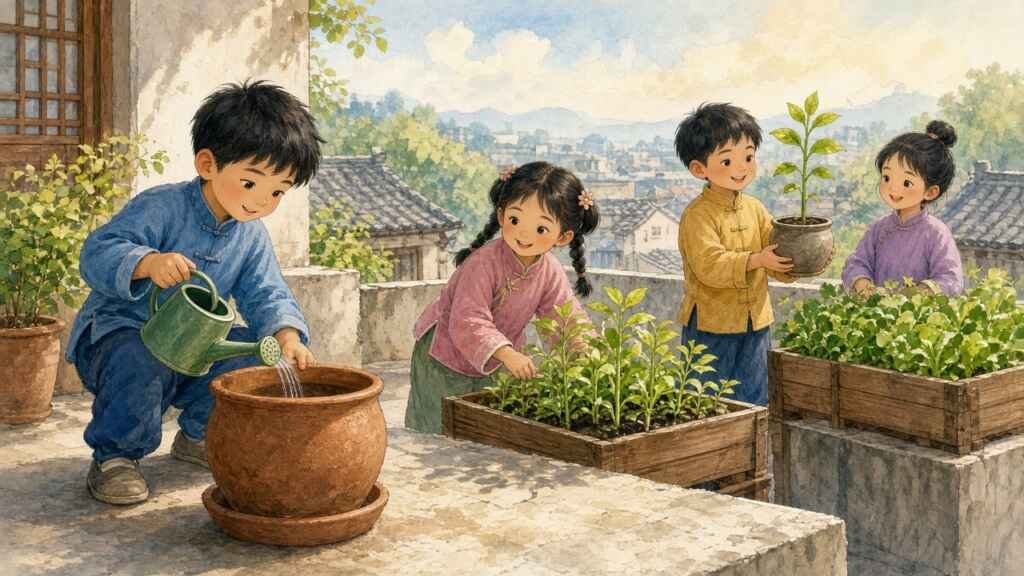
Ping chose a seed and ran home as if it might sprout mid-air. His mother laughed and cleared a spot on the sunny ledge. He found his best pot, the one without a crack, filled it with rich soil from the corner of the yard and pressed the seed in carefully, not too deep. He watered it with a small clay cup. He set it where morning sun would warm the clay and afternoon shade would keep it from baking.
Every day he checked. Every day he watered just enough. He talked to the pot the way some people talk to pets. “You can do it,” he whispered. “Take your time.”
Days became weeks. Weeks became months. In the neighbor’s yard, shoots appeared like green punctuation marks. Down the lane, a girl named Mei already had a green stem as tall as a chopstick and a habit of humming victory songs. Ping’s pot stayed bare. He checked it at dawn. He checked it before bed. He even checked it once by moonlight, feeling a little silly.
He tried new soil. He tried a sunnier ledge. He asked his father, who farmed vegetables for the market.
“Sometimes seeds are shy,” his father said, rubbing Ping’s shoulder. “Keep caring for it. Doing the right work matters even when the pot looks empty.”
Ping kept caring. Still nothing. He wondered if he had forgotten a step. He borrowed a book of garden tips from a cousin and read it twice. Winter frost painted the edges of the pot white. Spring returned with birds and soft rain. Neighbor children bragged about blossoms as bright as lanterns. Ping looked into his pot and saw only dark, honest dirt. He felt a lump in his throat and swallowed it down.
Part 3: The Day of the Plants
The year was up. Families walked toward the palace with pots held high. Flowers nodded. Leaves shone. Some pots were so full they needed two hands.
On the morning of the procession, Ping stood in the doorway with his empty pot and a face as hot as tea. Outside, laughter and chatter floated up the lane. “I can’t go,” he told his father. “Everyone will laugh. The emperor will be angry. Maybe I should stay home and pretend I am sick.”
His father knelt so their eyes met. “You did your best. You were honest with the seed and with yourself. Take the empty pot. That is the truth of your year.”
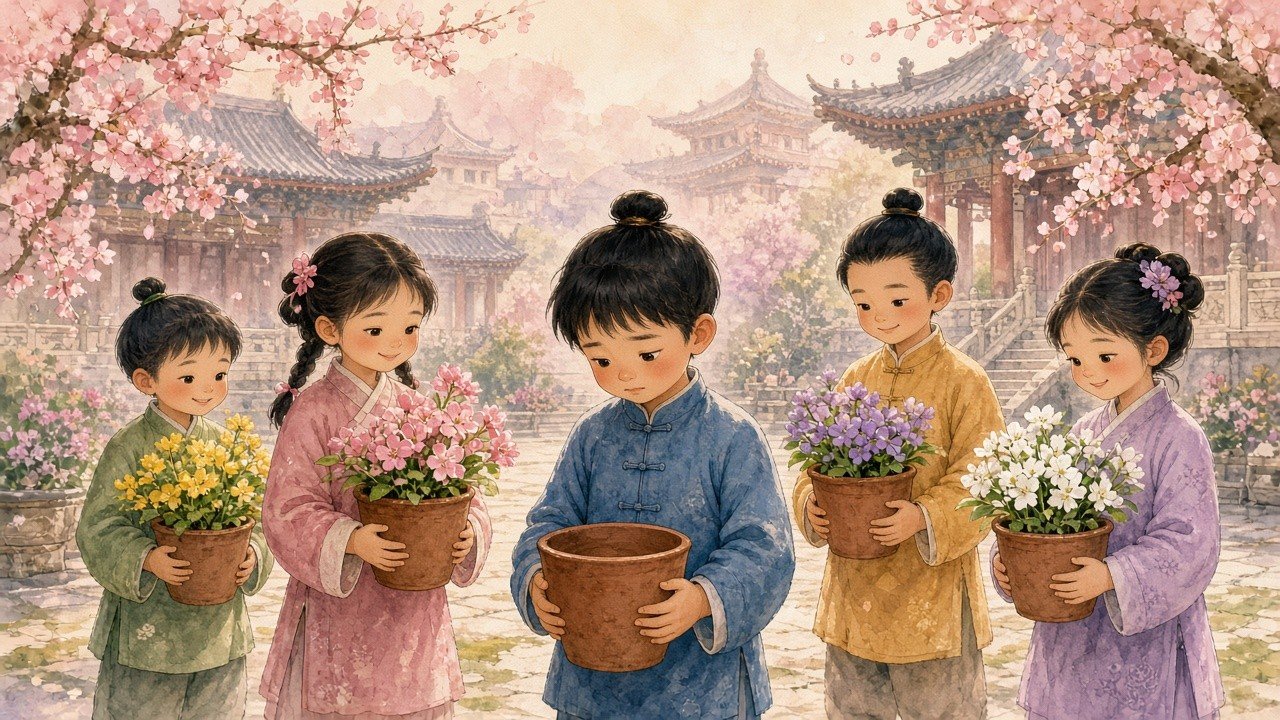
Ping swallowed hard, lifted the pot and joined the procession. The clay felt heavier than it should have. Children pointed. Someone giggled behind a sleeve. Mei’s peony was the size of a bowl and smelled like perfume. Ping stared at his soil, counted his steps and kept walking.
In the courtyard the emperor moved slowly along the line. He nodded at tall plants. He praised bright colors. He asked one boy how often he had watered. He asked a girl what kind of soil she used. His face, though, stayed strangely thoughtful, as if he were looking for something he had not found yet among all that green.
At last he stopped in front of Ping. The courtyard quieted.
“Why is your pot empty?” the emperor asked.
Ping’s voice shook, but he did not invent a story. “I planted the seed you gave me. I watered it. I gave it sun. I changed the soil. Nothing grew. I am sorry. This empty pot is all I have to bring.”

Part 4: The Emperor’s Smile
For a moment nobody breathed. Then the emperor did something that surprised the whole courtyard. He smiled, wide and bright, and set a hand on Ping’s shoulder.
“I do not know where these other plants came from,” he said in a voice that carried to the back row, “but I know this: the seeds I gave you had all been cooked. They could not grow. I boiled them myself.”
A murmur rose, then fell.
“I was looking for a child who would tell the truth even when the truth looked like failure,” the emperor continued. “Ping brought me an empty pot and an honest heart. That is rarer than any blossom. Ping will be my successor.”
Mei stared at her peony as if it had betrayed her. Other children shuffled their feet. Ping felt tears prick his eyes, not from shame this time, but from relief so big it made his knees soft.
His father, at the edge of the crowd, wiped his own eyes with a sleeve and grinned.
Part 5: A Different Kind of Garden
In the years that followed, Ping learned the work of leading the way he had learned gardening: slowly, with attention. He still kept a garden behind the palace kitchen. He still got dirt under his nails. Cooks pretended not to notice when the young ruler arrived with muddy shoes and a grin. When advisors argued, he asked for clear facts instead of louder voices. When a harvest failed in one province, he did not hide the empty baskets behind banners; he asked how to help and sent seed that could actually grow.
Visitors sometimes expected a dramatic throne room speech about honesty. Ping preferred smaller moments. He thanked a messenger who admitted a delay. He praised a student who corrected her own answer aloud. He kept a spare empty pot on a low shelf in his study, not as a threat, but as a reminder of the year nothing sprouted and everything important did.
Children in the city told the story of the empty pot at bedtime. Parents used it when a test score disappointed, or when a project flopped, or when admitting a mistake felt heavier than covering it up. Teachers asked, “What would Ping bring to the courtyard?” and waited while kids squirmed, then smiled, then told the truth about unfinished homework.
And in the palace courtyard, among the peonies and chrysanthemums, there sat one plain pot of soil with no flower at all. Rain filled it. Sun dried it. No bloom ever rose from that particular dirt, and nobody tried to force one. A small plaque beside it read: “The day honesty bloomed.” Touring families paused there longer than they paused at the fountain. Kids traced the carved letters with a finger and stood a little taller afterward.
The End
Moral of the story: The Empty Pot
Honesty matters more than looking successful. Ping could have bought a plant and pretended. Because he told the truth about his empty pot, he proved he was ready for real responsibility.
What kids can learn from this fable
- Doing your best is not the same as getting the result you wanted.
- A cover-up can look pretty and still be wrong.
- Grown-ups (and emperors) often value trust more than showy wins.
- It takes courage to show an empty pot in a crowd of flowers.
Questions to talk about with your child
- Why did the emperor cook the seeds before he handed them out?
- What would you have done if your pot stayed empty?
- How do you think Mei felt when she heard the emperor’s words?
- When is it hard to admit something didn’t work?
- What does “honesty bloomed” mean if there was no flower?
Summary: The Empty Pot
An emperor gives every child a seed and says the finest plant will choose the next ruler. Ping cares for his seed all year, but nothing grows. On the day of judging he brings an empty pot and tells the truth. The emperor reveals that the seeds were cooked and could never sprout. Ping’s honesty wins the throne, and the empty pot becomes a symbol of integrity.
Read More: Stories About Honesty for Kids
Frequently asked questions
Who wrote The Empty Pot?
It is a Chinese folk tale. Many English readers know it through Demi’s picture-book retelling, but the core story is older folk tradition about honesty and leadership.
What is the moral of The Empty Pot?
Tell the truth even when the truth looks like failure. Character outranks a perfect-looking result that was faked.
Why couldn’t Ping’s seed grow?
The emperor had cooked the seeds. Cooked seeds are dead and cannot sprout. Every lush plant in the courtyard had to have come from a different seed.
Is this a good classroom or bedtime story?
Yes. Teachers use it for lessons on integrity, and the ending is hopeful enough for bedtime. Kids often want to talk about what they would have carried into the courtyard.
Is The Empty Pot connected to Thanksgiving?
Not directly, but families looking for gratitude and character stories in November often pair it with kindness tales. Honesty and thankfulness both ask kids to look past showy surfaces.
Did Demi invent The Empty Pot?
Demi’s picture book made the tale famous for many English-speaking families. The honesty-test plot belongs to Chinese folk tradition, and other retellings exist too. This version is an original kid-friendly retelling for reading aloud.