The Farmer and His Sons story is one of Aesop’s fables, the short animal and people stories said to come from ancient Greece. An old farmer tells his lazy sons that a treasure is buried in the family vineyard, and the boys dig up every inch of it looking for gold. They never find any gold, but all that digging pays off in a way they don’t expect.
This retelling is for kids ages 5 to 12 and takes about 8 minutes to read aloud. It’s a good fit for fall and harvest time, when families sit down to think about where their food comes from and the work that goes into it.
Part 1: Three sons who didn’t like to work
Once upon a time, on a sunny hillside, there was a small farm with a big vineyard. Rows and rows of grapevines climbed up the slope, and every fall the farmer and his wife picked baskets of sweet purple grapes to sell at the market.
The farmer had three sons: Leo, the oldest, Sam, the middle one, and Benny, the youngest. They were good-hearted boys, but they had one problem. They did not like to work.
When their father asked them to pull weeds, Leo said, “Maybe tomorrow.” When he asked them to fix the fence, Sam said, “It’s too hot.” When he asked them to carry water to the vines, Benny was already asleep under a tree.
So the farmer did most of the work himself. He dug the soil around the vines, cut back the dead branches and carried the water up the hill in heavy buckets. For many years he managed fine. But the farmer was getting old.
One spring he caught a bad cold that turned into a cough, and the cough didn’t go away. The doctor told him to rest in bed for many weeks. “No digging, no lifting and no climbing up that hill,” the doctor said.
The farmer lay in bed and looked out the window at the vineyard. Weeds were already popping up between the rows. The soil was hard and dry. If nobody took care of it, there would be no grapes that fall, and no money for the winter.
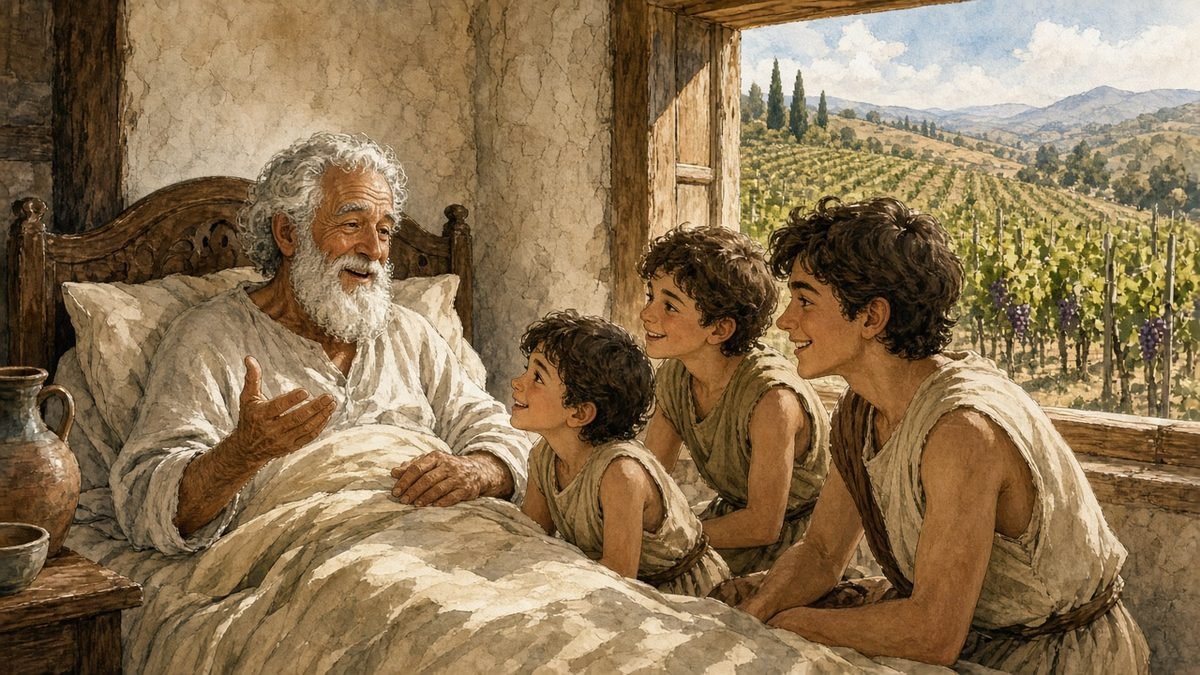
He thought for a long time. Then he called his three sons to his bedside.
Part 2: The secret in the vineyard
“Boys,” the farmer said, and coughed. “I need to tell you something important. Come close.”
The three sons leaned in.
“There is a treasure hidden in our vineyard,” he whispered. “My father told me about it when I was young. It’s buried somewhere in that ground. I’m too weak to dig for it now, so it’s up to you.”
“A treasure?” said Leo. His eyes went wide. “Where exactly?”
“That’s the trouble,” said the farmer. “I don’t know exactly. You’ll have to look everywhere. Dig deep, and dig carefully around the roots of the vines so you don’t hurt them.”
The boys looked at each other. Gold! Silver! Maybe a chest full of jewels!
They grabbed three shovels from the barn and ran up the hill.
Part 3: Digging, digging, digging
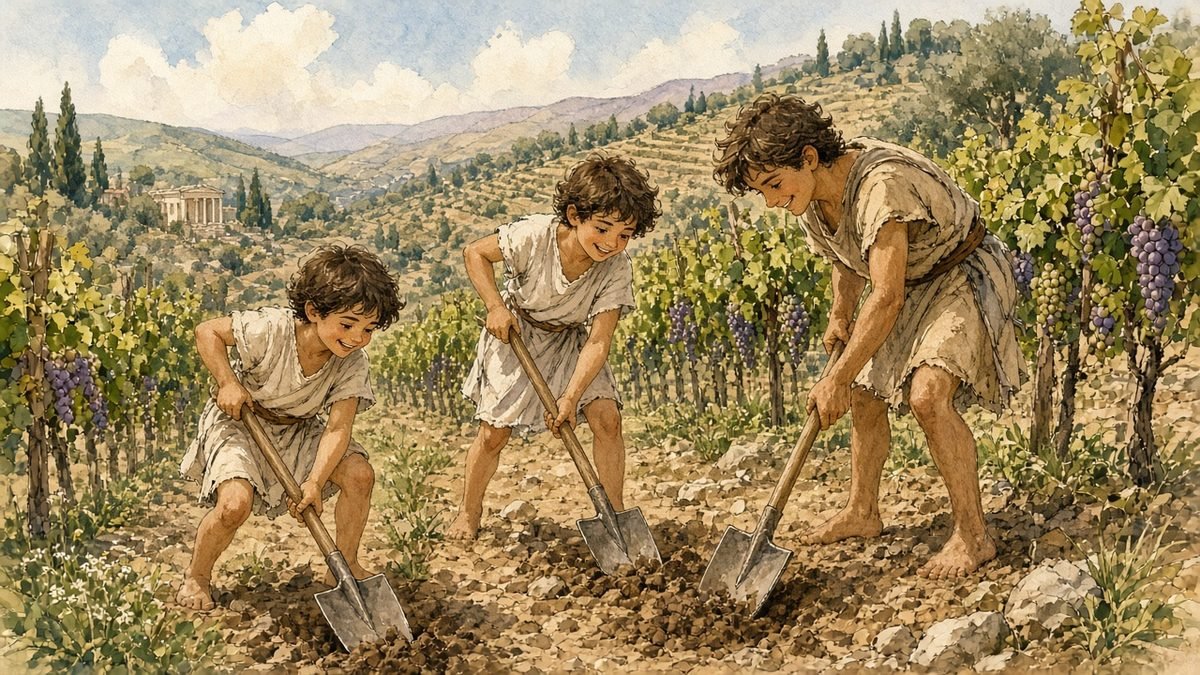
The boys started at the bottom row. They dug deep holes between the vines and turned over every shovelful of dirt. They found rocks, worms, an old horseshoe and one very surprised beetle. But no treasure.
“It must be in the next row,” said Sam.
So they dug the next row. And the next. Every morning they woke up early, ate a quick breakfast and headed up the hill. They pulled out weeds as they dug, because the weeds got in the way. They broke up the hard clumps of soil, because that made it easier to see if anything was hiding there. When the ground got too dry to dig, Benny carried buckets of water up from the stream to soften it.
Their hands got blisters, and then the blisters turned into tough calluses. Their arms got stronger. Their faces got brown from the sun.
Every evening, they stopped by their father’s room.
“Any luck?” he’d ask.
“Not yet,” they’d say. “But we’ve done eleven rows.”
“Keep going,” he’d say, and smile into his pillow.
By the middle of summer, the boys had dug up the whole vineyard, from the bottom of the hill to the very top. Every row was clean of weeds. The soil was soft and dark. The vines had plenty of water.
And they had not found a single gold coin.
Part 4: The harvest
The three brothers sat at the top of the hill, tired and disappointed.
“Maybe Father made a mistake,” said Leo. “Maybe somebody dug it up years ago.”
“All that work for nothing,” said Sam.
But Benny was looking at the vines. “Hey,” he said. “Look at the grapes.”
The vines had never looked like this before. They were thick and green and heavy with fruit. Huge bunches of purple grapes hung from every branch, so many that some of the vines bent down nearly to the ground.
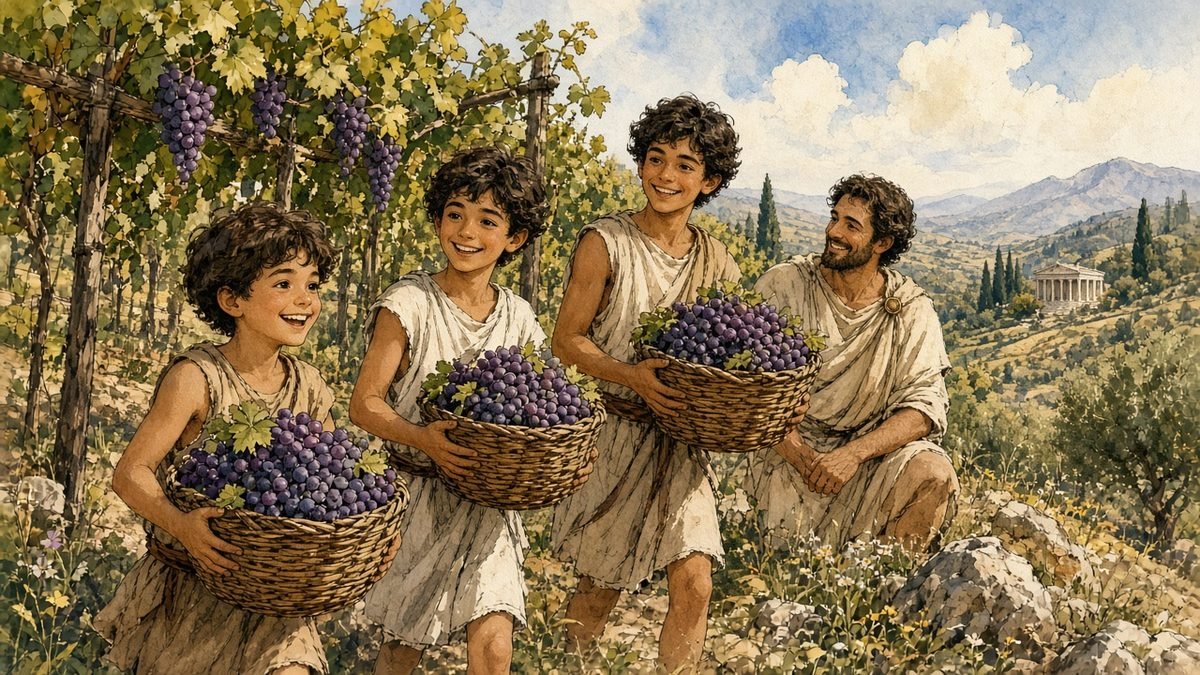
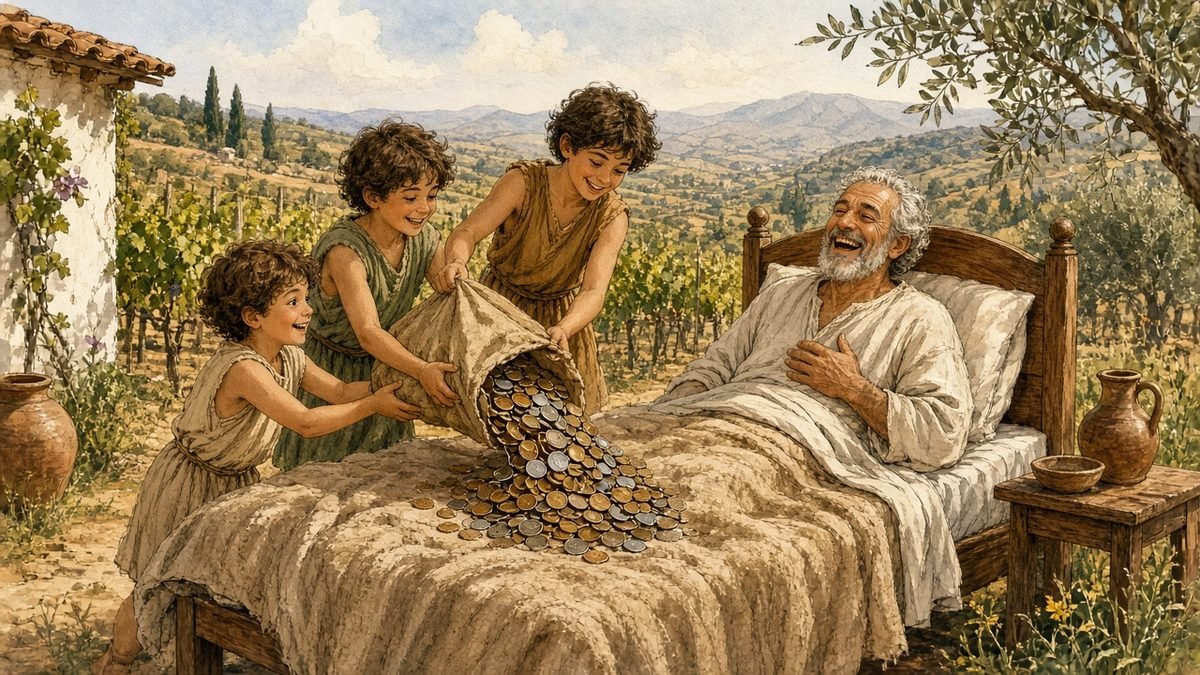
When fall came, the boys picked grapes for two whole weeks. They filled basket after basket and loaded them onto the cart. It was the biggest harvest the farm had ever had. At the market, people lined up to buy them, and the boys came home with a heavy bag of coins, more money than the family usually saw in two years.
They ran into the house and poured the coins out onto their father’s blanket. By now the farmer was feeling much better. He was sitting up in bed, and his cough was nearly gone.
“Father, we never found the treasure,” said Leo. “But look what the grapes brought in!”
The farmer laughed. “My boys,” he said, “you did find it. This is the treasure. It was in the ground all along. It just needed someone to dig for it.”
The brothers stared at him. Then they understood. There had never been a chest of gold. The treasure was the harvest, and the digging was what made it grow.
Sam started to laugh, and then Leo and Benny joined in. They weren’t even angry, just proud.
From that year on, the three brothers worked in the vineyard without being asked. When their father was strong again, he worked beside them, and the farm had good harvests for many years.
The End
Moral of the story: Hard work is its own treasure
Old collections end this fable with a line like “Industry is itself a treasure.” The sons expected a quick prize, but what made them rich was steady, everyday effort. The same goes for learning to read, getting better at a sport or growing a garden. The reward comes from digging, one row at a time.
What kids can learn from The Farmer and His Sons
- Most good things come from steady work and don’t show up all at once.
- Even boring jobs like weeding and watering help something grow.
- Working together as a family gets big jobs done faster.
- Pride in what you did yourself feels better than a reward handed to you.
Questions to talk about with your child
- Why do you think the farmer told his sons about a hidden treasure?
- Was it fair of him to trick them? Why or why not?
- What did the boys do while they were looking for gold that helped the grapes?
- What was the real treasure at the end of the story?
- What is something you got better at because you kept working on it?
Summary: The Farmer and His Sons
In The Farmer and His Sons story, an old farmer worries that his lazy sons won’t take care of the farm. He tells them a treasure is buried in the vineyard. The sons dig up the whole vineyard looking for gold and find nothing, but all their digging loosens the soil and clears the weeds. The vines grow a huge crop of grapes, and the sons earn more money than any treasure chest could hold. They learn that hard work is the real treasure.
For another Aesop fable about working ahead, read The Ant and the Grasshopper. And for one more story about a wise father and his sons, try The Bundle of Sticks.
Read More: The Goose That Laid the Golden Eggs
Frequently asked questions
What is the moral of The Farmer and His Sons?
Hard work is a treasure in itself. Steady effort usually brings better rewards than looking for a shortcut or easy money.
Is The Farmer and His Sons an Aesop fable?
Yes. It’s one of the fables credited to Aesop, who is traditionally said to have been a storyteller in ancient Greece. Some versions call it “The Farmer and His Children” or “The Husbandman and His Sons.” The French poet Jean de La Fontaine wrote his own version too.
How does the original fable end?
In Aesop’s version, the farmer is dying when he tells his sons about the treasure, and he passes away before they start digging. The sons find no gold, but the vineyard gives a rich crop and they understand what he meant. This retelling has the farmer fall ill and get better instead, so he can see the harvest and explain the lesson himself. It also gives the sons names. The idea of the fable stays the same.
Is this a good story for Thanksgiving?
It works well in the fall. It’s about a harvest and the work that goes into the food on our tables, which makes it a nice one to read before Thanksgiving dinner.
What age is this story good for?
It works for ages 5 to 12. Younger kids like the treasure hunt, and older kids can talk about whether the farmer’s trick was fair.