The Loyal Mongoose story comes from the Panchatantra, a very old collection of Indian animal fables written to teach young princes how to live wisely. In it, a pet mongoose protects a baby from a cobra, and then nearly pays a terrible price because someone jumps to the wrong conclusion. It’s one of the most famous stories about thinking before you act.
The original ends very sadly. This retelling for kids ages 5 to 12 keeps the lesson but changes the ending, and the FAQ explains how the old version goes. It takes about 8 minutes to read aloud.
Part 1: A baby and a mongoose
Long ago, in a village in India, there lived a poor Brahmin named Devasharma and his wife. They had a small mud-brick house, a little garden and one great wish: they wanted a child.
At last their wish came true, and a baby boy was born. The parents were so happy that they could hardly stop smiling.
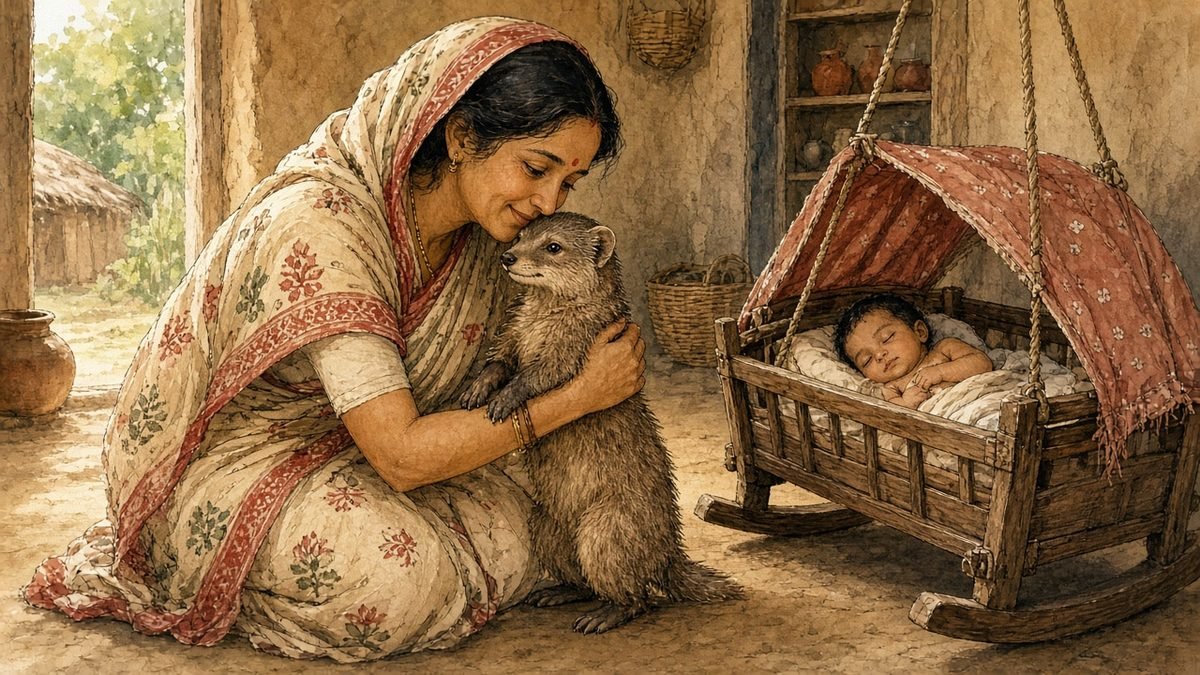
Around the same time, the mother found a baby mongoose near the well. It was tiny and alone, and it squeaked when she picked it up. “Its mother must be gone,” she said. “Poor little thing. We’ll take care of it too.”
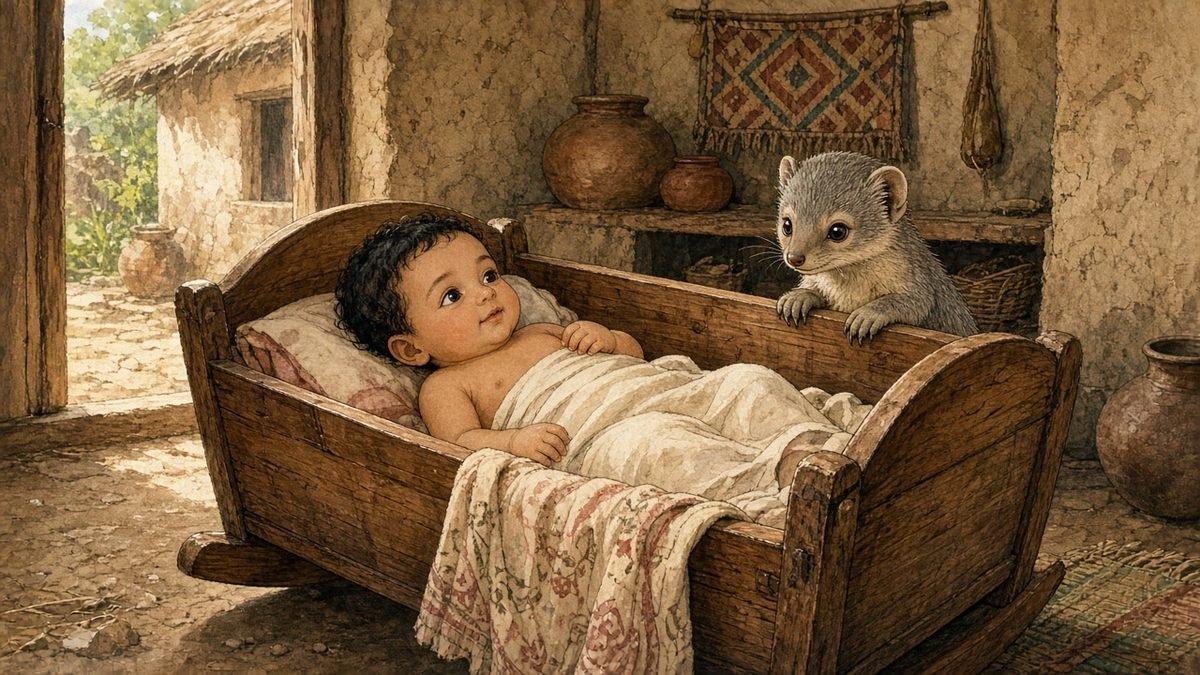
So the baby and the mongoose grew up side by side. The mother fed the mongoose milk and rice and let it sleep in a basket near the cradle. When the baby cried, the mongoose ran to the cradle and peeked over the edge. When the baby laughed, the mongoose turned in happy circles. By the time the boy could crawl, the two of them were best friends.
A mongoose is a small, quick animal with a long tail and sharp eyes. In India, people know mongooses for one thing above all: they aren’t afraid of snakes. They are fast enough to dodge a cobra and brave enough to fight one.
Still, the mother sometimes looked at the mongoose and worried. “It’s a wild animal,” she thought. “What if one day it forgets it’s our pet? What if it hurts my son?” She never said this out loud, but the worry stayed in the back of her mind.
Part 2: The mother goes to the well
One hot afternoon, the mother needed water. The clay pot in the kitchen was empty, and the well was at the edge of the village.
Devasharma was about to leave for the temple. “I’ll be back soon,” the mother told him. “Please stay with the baby until I return.”
But after a few minutes, a neighbor came to the door. Someone in the village needed a priest right away. Devasharma looked at the sleeping baby, then at the mongoose curled up beside the cradle. “He’s fast asleep,” he thought. “I’ll only be gone a little while.” And he hurried off.
So the baby slept alone in the quiet house, with only the mongoose to watch him.
Part 3: Something slides through the doorway
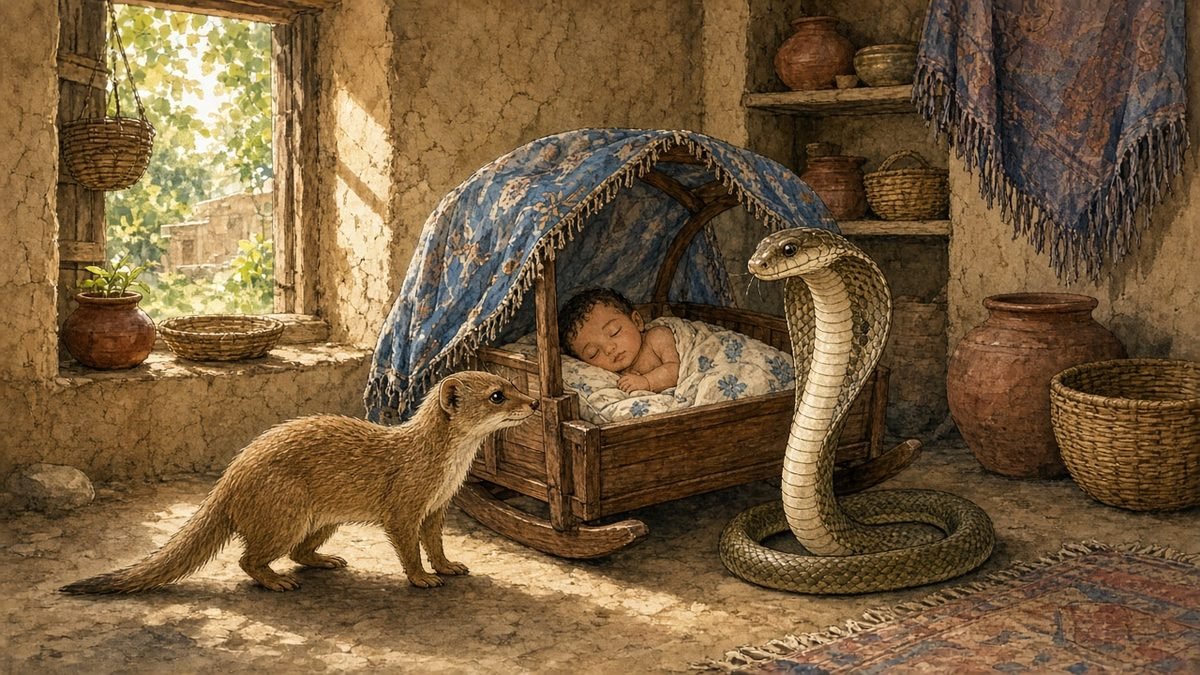
The house was still. A fly buzzed at the window. Then, very slowly, something long and dark slid in through the open doorway.
It was a cobra.
The snake moved across the floor, tasting the air with its tongue, and headed straight for the cradle.
The mongoose’s eyes snapped open. Its fur stood up all over its body. It jumped in front of the cradle and stood there, small and fierce, between the snake and the sleeping baby.
The cobra rose up and spread its hood. It hissed. The mongoose didn’t move.
Then the snake struck, and the mongoose leaped aside. The snake struck again, and the mongoose dodged again, quick as a flash. Back and forth they went, all over the floor. The mongoose was tired and scratched, but it never once let the cobra past. At last, with one brave jump, the mongoose caught the snake behind its head and held on until the cobra lay still on the floor.
The baby slept through the whole thing.
The mongoose was so proud. It had kept its friend safe. It ran outside to wait for the mother, so she would know right away.
Part 4: The mother jumps to a conclusion
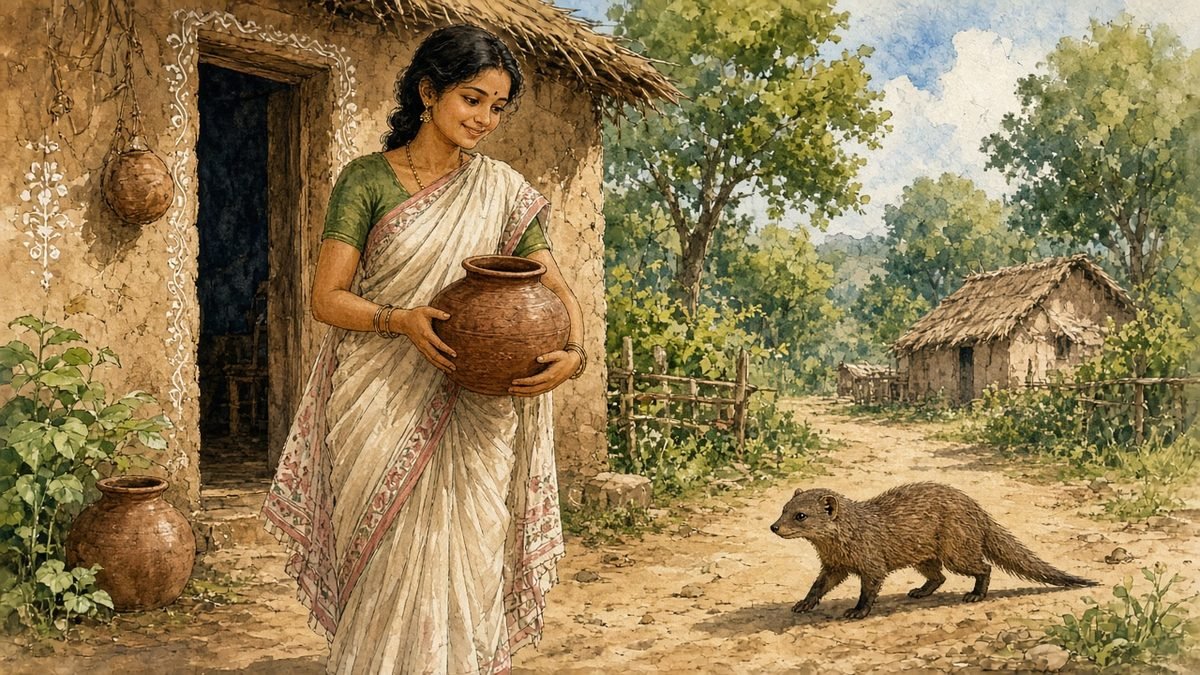
The mother came up the path with the heavy water pot on her head. When she saw the mongoose running toward her, she stopped.
Its fur was messy and standing on end. There were red scratches across its face and dirt on its paws. It was squeaking and dancing around her feet.
The old worry jumped right to the front of her mind. “My baby!” she thought. “It’s attacked my baby!”
She didn’t stop to look. She didn’t stop to think. In her fear and anger, she lifted the heavy pot high to throw it at the mongoose.
But just at that moment, a little voice came from inside the house. It was a happy gurgle, the sound the baby always made when he woke up from a nap.
The mother froze with the pot still in the air. Then she set it down and ran inside.
There was her son, safe in his cradle, rubbing his eyes and smiling. And there on the floor beside the cradle lay a huge cobra, beaten.
The mother’s knees went weak. She looked at the snake. She looked at the scratches on the mongoose’s face. And she understood everything.
“Oh, my brave little friend,” she said, and tears ran down her cheeks. “You saved him. And I almost…” She couldn’t finish.
She knelt down on the floor. The mongoose hesitated for a second. Then it crept forward, climbed into her lap and let her hold it.
Part 5: A lesson for the whole family
When Devasharma came home, his wife told him everything. He turned pale. “I should never have left the baby,” he said. “That was my mistake.”
“And mine was worse,” said his wife. “I believed the worst about our friend without even looking. If our son hadn’t woken up just then, I would have hurt the one who saved him.”
That night, the mongoose got a whole bowl of warm milk and the softest cushion in the house. And from then on, whenever the mother felt angry or afraid, she remembered the water pot and made herself stop, look and think before she did anything at all.
The boy grew up strong and happy, and the mongoose stayed by his side for many years.
The End
Moral of the story: Think before you act
The Panchatantra puts it simply: don’t act in haste. The mother saw a messy mongoose and decided she knew what had happened, without checking. When we’re angry or scared, our first guess can be completely wrong. Taking a moment to look, ask and think can keep us from hurting someone who doesn’t deserve it.
What kids can learn from The Loyal Mongoose
- Get the facts before you decide what happened.
- Strong feelings like fear and anger can trick us into making mistakes.
- Loyal friends sometimes look different from what we expect.
- When you get something wrong, say so and make it right.
Questions to talk about with your child
- Why was the mother worried about the mongoose, even though it was a good pet?
- What did the mongoose do when the cobra came in?
- Why did the mother think the mongoose had hurt the baby?
- What should she have done before lifting the water pot?
- Can you remember a time someone blamed you for something you didn’t do? How did it feel?
Summary: The Loyal Mongoose
In The Loyal Mongoose story, a Brahmin’s wife raises a pet mongoose alongside her baby son. One day she goes to fetch water and the baby is left alone. A cobra creeps into the house, and the mongoose fights it to protect the baby. When the mother returns and sees the mongoose with scratches on its face, she thinks it has hurt her son and almost throws her water pot at it. Then she finds her baby safe and the snake beaten, and she realizes the mongoose was a hero. She learns never to act without thinking first.
For more stories from the same old book, read The Brahmin and the Goat or The Blue Jackal.
Read More: The Monkey and the Crocodile
Frequently asked questions
What is the moral of The Loyal Mongoose?
Think before you act. Deciding something in a hurry, especially when you’re angry or afraid, can lead to a mistake you can’t undo.
Which book is The Loyal Mongoose from?
It comes from the Panchatantra, a collection of Indian fables in Sanskrit that is well over a thousand years old. The story is in the fifth part of the book, which is about the trouble caused by acting without thinking. You may also see it called “The Brahmin and the Mongoose” or “The Brahmin’s Wife and the Mongoose.”
How does the original story end?
In the Panchatantra, the mother doesn’t stop. She drops the heavy water pot on the mongoose, and it dies. Only then does she go inside and find the baby safe and the snake beside the cradle, and she is filled with sorrow. This retelling has the baby wake up just in time, so the mother stops herself and the mongoose lives. Older kids may want to talk about why the original ending is so sad, and why the storytellers chose it.
Are there other stories like this?
Yes. A Welsh legend tells of a faithful dog named Gelert, who guards a baby from a wolf and is wrongly blamed in much the same way. Stories like this turn up in many countries.
What age is this story good for?
This gentle version works for ages 5 to 12. The snake fight is exciting but not gory, and the ending is happy.