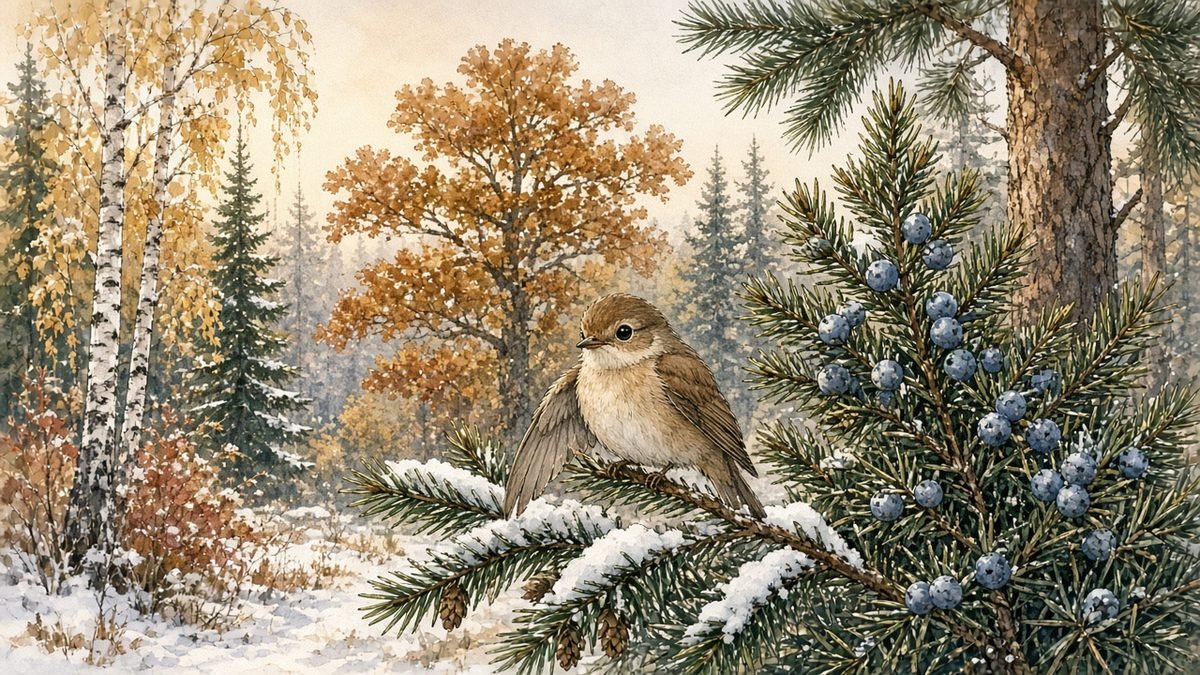
Kids notice it every winter: most trees go bare, but pines, spruces and junipers stay green. An old nature story explains why evergreen trees never lose their leaves. Florence Holbrook included it in The Book of Nature Myths, a collection of stories for young readers published in 1902. It still turns up in school reading lessons today.
It’s a short, gentle tale about a little bird with a hurt wing, three trees that turn her away and three that help. This retelling for ages 5 to 12 follows Holbrook’s plot and adds a bit more detail and dialogue. It takes about 8 minutes to read aloud, and it’s a cozy one for a cold night.
Part 1: The bird who couldn’t fly south
Long ago, at the edge of a big forest, the days were getting shorter and the nights were getting colder.
The birds knew what that meant. Winter was coming. One by one, the flocks gathered in the treetops and flew away to the warm lands in the south.
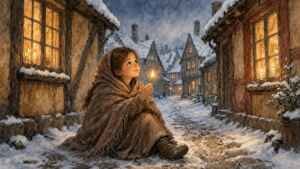
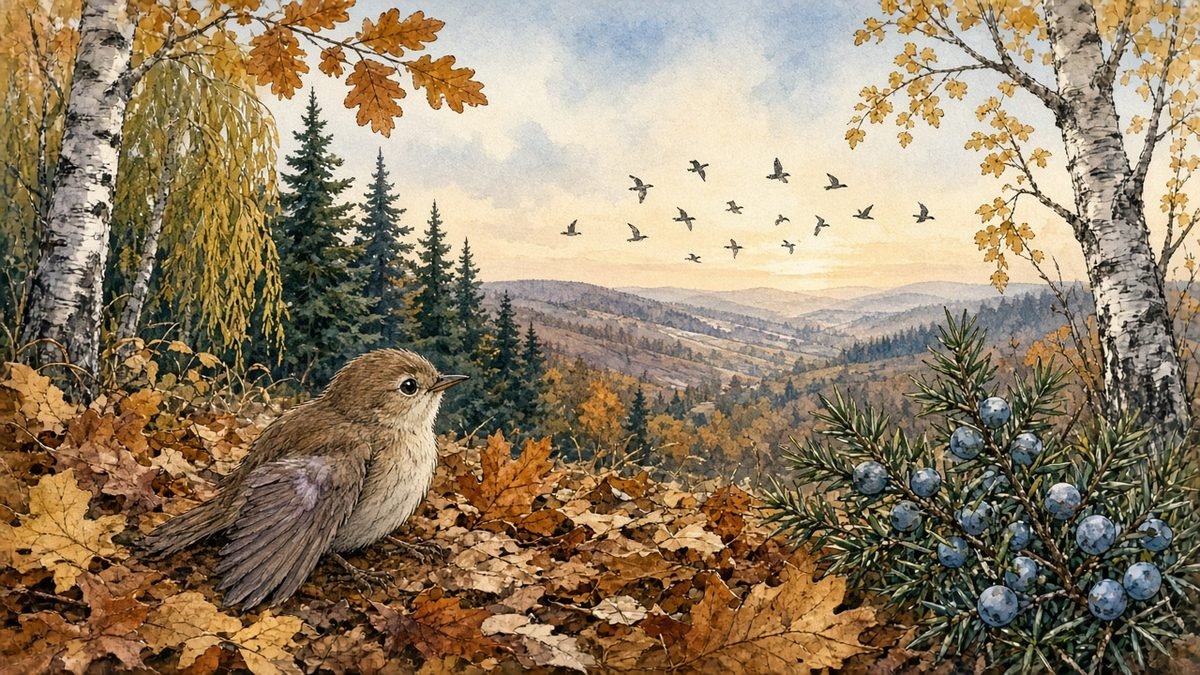
But one little bird stayed behind. A few days before, she had hurt her wing, and now it hung down at her side. She tried and tried to fly, but she could only flutter a few feet before she tumbled back down into the leaves.
Now the little bird was all alone. The wind was blowing harder every day, and soon the snow would come. “I can’t fly south,” she said to herself. “So I need to find a warm place to stay until spring. Maybe one of the trees will let me live in its branches.”
She hopped along the ground toward the forest, dragging her hurt wing behind her.
Part 2: The birch, the oak and the willow
The first tree she came to was a tall birch with white bark and shiny golden leaves.
“Beautiful birch tree,” said the little bird, “my wing is hurt and my family has flown away. May I live in your branches until the warm weather comes back?”
The birch tree shook its leaves. “Certainly not,” it said. “I have my own birds to look after. I can’t take in every stray bird that hops by. Go and ask someone else.”
The little bird’s heart sank, but she kept going. Next she came to a big, strong oak tree with wide branches that spread out in every direction.
“Great oak tree,” she said, “you are so big and strong. Will you let me live in your branches all winter? I’ll be very quiet, and I won’t take up much room.”
The oak tree frowned down at her. “All winter?” it said. “If I let you stay, you’ll probably eat my acorns. Then what will I have left? No, little bird. You can’t stay here.”
So the little bird hopped on, more slowly now, until she reached a willow tree by the side of a stream. The willow’s long, soft branches hung all the way down to the water.
“Gentle willow,” said the bird, “you look so kind. Please, may I stay with you until spring?”
But the willow turned its branches away. “I don’t know you,” it said. “I never talk to strangers. Go away.”
The little bird didn’t know what to do. She was tired and cold, her wing ached, and the sky was turning gray. She sat down at the edge of the stream and tucked her head under her good wing.
Part 3: The trees that said yes
Not far away, a spruce tree had been watching the whole time. It had heard every word.
“Little bird,” the spruce tree called. “Where are you going?”
“I don’t know,” said the bird. “The trees won’t let me stay with them, and I can’t fly far because my wing is hurt.”
“Come here, then,” said the spruce. “You can live on my branches all winter. Here, this one on the side is the warmest. It’s sheltered from the wind.”
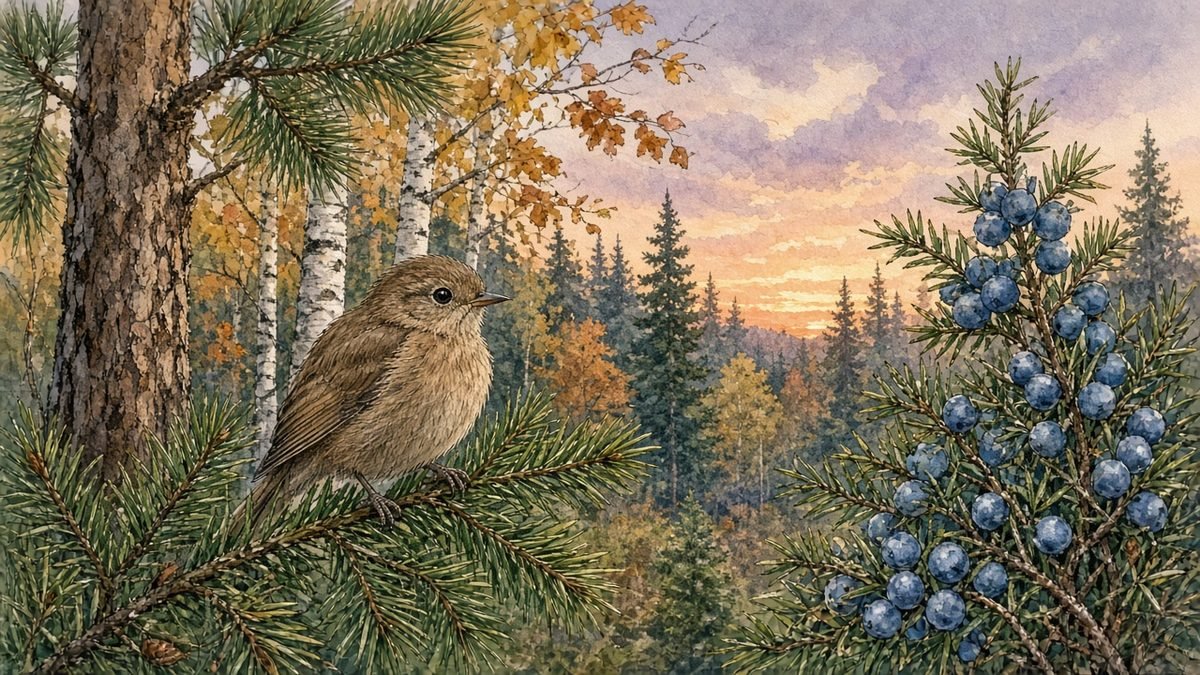
So the little bird hopped and fluttered up onto the spruce’s thick green branch.
A tall pine tree stood right next to the spruce. “My branches aren’t very warm,” said the pine, “but I am big and strong. I’ll stand between you and the North Wind, so it won’t blow so hard on you.”
Then a little juniper bush spoke up from below. “And I have berries,” it said. “Lots of them, all winter long. Whenever you get hungry, little bird, you can come and eat as many as you like.”
The bird looked at her three new friends and felt warm for the first time in days. “Thank you,” she said. “Thank you all so much.”
Part 4: The North Wind comes to the forest
That very night, the North Wind came howling down from the far, cold north, ready to blow every leaf off every tree in the forest.
“Wait,” said the Frost King, who ruled over winter. The North Wind always did what the Frost King told him.
“I want you to touch every leaf in the forest with your icy breath,” the Frost King said. “But there are three trees you must leave alone. The spruce, the pine and the juniper were kind to a little bird who needed help. Those trees may keep their leaves.”
So the North Wind blew and blew. He blew through the birch tree, and its golden leaves fluttered down to the ground. He blew through the oak tree, and its brown leaves came tumbling off. He blew through the willow, and its long, soft leaves fell into the stream and floated away.
By morning, the birch, the oak and the willow stood bare and cold, with nothing but snow on their branches.
But the spruce, the pine and the juniper were just as green as ever. Snow piled up on their branches like soft white blankets, and underneath it all, the little bird stayed warm and dry.
Part 5: Green all year long
All winter long, the little bird lived with her three friends. When storms came, she snuggled deep into the spruce’s branches. When the wind roared, the pine stood tall and kept it away. And whenever she was hungry, the juniper always had a few blue berries left for her.
Little by little, her wing grew strong again. By the time the days started to get longer, she could fly from the spruce to the pine and back without falling once.
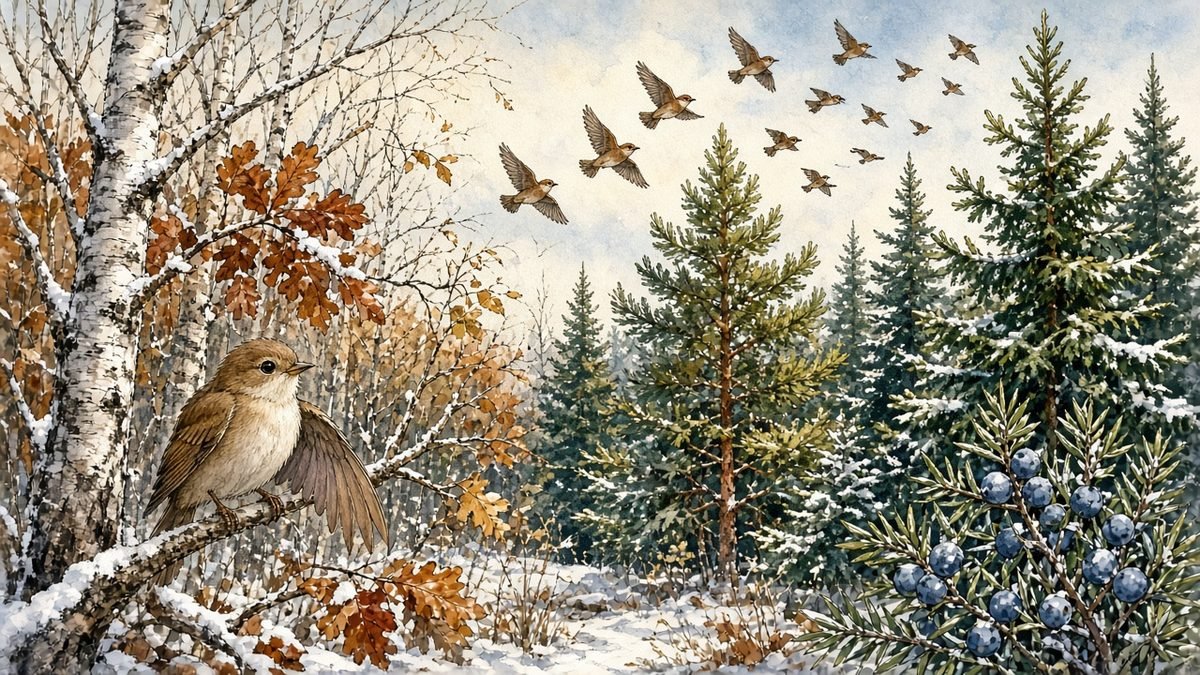
Then one morning, she heard a sound she hadn’t heard in months. It was singing. Her family and friends were coming home from the south!
The little bird flew up to meet them, high over the treetops. “Where have you been all winter?” they asked her. “We thought we’d never see you again.”
“I was right here,” she sang. “The spruce, the pine and the juniper took care of me.”
And from that day to this, the evergreen trees have kept their leaves all year round. Their leaves are thin, like needles, and they never fall off all at once the way other trees’ leaves do. So the next time you see a green pine tree standing in the snow, you’ll know the old story of how it got that way.
The End
Moral of the story: Kindness is remembered
The birch, the oak and the willow each had an excuse for saying no. The spruce, the pine and the juniper didn’t have much to give, just a branch, a windbreak and a few berries, but they gave it right away. In the story, their kindness is never forgotten. Small acts of kindness can matter a lot to someone who is having a hard time.
What kids can learn from this story
- Helping someone doesn’t have to be big. A small kindness can make a huge difference.
- Being new or different is no reason to turn someone away.
- Friends can each help in their own way, like the spruce, the pine and the juniper did.
- It feels good to say thank you, and it feels good to hear it too.
Questions to talk about with your child
- Why did the little bird stay behind when the other birds flew south?
- What excuses did the birch, the oak and the willow give? Were they good excuses?
- How did each of the three evergreen trees help the bird?
- Do you think the Frost King was fair? Why or why not?
- Can you think of a time when someone helped you when you needed it?
Summary: Why the Evergreen Trees Never Lose Their Leaves
A little bird with a hurt wing can’t fly south for the winter. She asks the birch, the oak and the willow to let her live in their branches, but each one refuses. The spruce gives her a warm branch, the pine blocks the wind, and the juniper shares its berries. The Frost King tells the North Wind to blow the leaves off every tree except the three that were kind. And that, the story says, is why evergreen trees never lose their leaves.
For another snowy story about sharing a warm spot, read The Mitten. And for a tale about a garden that stays in winter until someone opens his heart, try The Selfish Giant.
Read More: The Legend of the Poinsettia
Frequently asked questions
Who wrote Why the Evergreen Trees Never Lose Their Leaves?
The best-known version is by Florence Holbrook, an American teacher who put it in The Book of Nature Myths in 1902. It’s often called a nature myth, a story that gives a made-up reason for something in the natural world.
What is the moral of the story?
Kindness is remembered and rewarded. The trees that helped the little bird got to stay green, and the trees that turned her away lost their leaves.
Is this the original ending?
Yes. Holbrook’s story already has a happy ending: the bird is safe and the kind trees keep their leaves. This retelling keeps that ending. It adds the bird’s family coming home in the spring and more dialogue, so the story reads well aloud for younger kids.
Why do evergreen trees really stay green in winter?
The story is make-believe, but it’s a nice way to start a science talk. Pines, spruces and many other evergreens have thin, needle-shaped leaves with a waxy coating, which helps them hold on to water and survive cold weather. They do drop old needles, just a few at a time, so the tree never looks bare.
What age is this story good for?
It’s a good fit for ages 5 to 12. Little kids like the talking trees, and older kids can talk about the excuses each tree made.